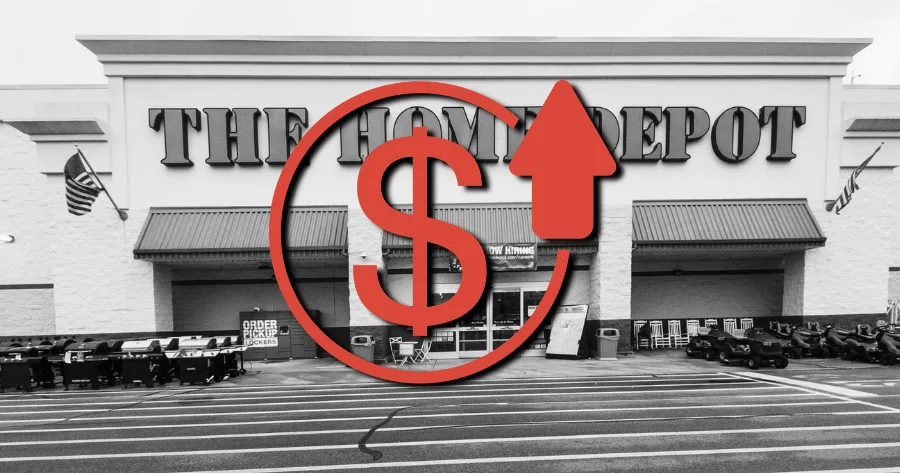
Home Depot, America’s largest home improvement retailer, has confirmed that tariffs are beginning to creep into its business model. While the company has previously downplayed the direct effects of U.S. trade policies on its pricing, its latest quarterly update marks a shift. Chief Financial Officer Richard McPhail told the Wall Street Journal—a comment later confirmed to CNN—that tariffs are forcing the company to implement “modest price movement in some categories.”
The timing matters. President Trump’s trade agenda, especially his renewed reliance on import tariffs, is reshaping supply chains and cost structures across industries. For Home Depot and its investors, the implications are significant: pricing flexibility, consumer spending habits, and the resilience of its supply chain are now center stage.
Tariffs and Home Depot’s Price Dilemma
From Silence to Caution
Three months ago, Home Depot executives declined to speculate on whether tariffs would translate into higher prices. Instead, they suggested that tariffs might simply force the company to stop carrying certain products. Now, the company is openly acknowledging that prices will move upward in some categories.
McPhail explained that “for some imported goods, tariff rates are significantly higher today than they were at this time last quarter.” He was careful to add that the increases won’t be “broad-based,” but investors should note that even selective price hikes can ripple across consumer behavior.
The Supply Chain Factor
Home Depot’s exposure to tariffs is not uniform. Less than half of its inventory comes from foreign suppliers, and the company has actively pursued a strategy of diversification. The goal has been to ensure that no single country accounts for more than 10% of its supply base. This approach insulates Home Depot from overreliance on any single foreign market—particularly China, which has historically been the focus of U.S. tariff battles.
Still, tariffs are a tax on imports. Whether or not Home Depot succeeds in passing those costs to consumers, margins will be pressured if tariffs remain elevated.
The Macro Backdrop: Trump’s Tariff Playbook
Tariffs have always been a controversial tool in U.S. trade policy. President Trump has leaned heavily on them to pursue what he calls “fair trade” and “America First” policies.
In 2025, Trump has doubled down with sweeping tariffs that affect goods ranging from Chinese manufactured products to European steel and Canadian lumber. For a retailer like Home Depot—whose shelves are stocked with everything from power tools to building materials—the exposure is significant.
Investors should recognize that tariffs function as a hidden tax. Consumers ultimately bear the burden through higher prices, while businesses face tighter margins unless they can push costs downstream.
Why This Matters for Investors
1. Pricing Power Will Be Tested
Home Depot has long enjoyed strong pricing power thanks to its scale, brand reputation, and customer loyalty. But in an environment where inflation has already stressed consumer budgets, even “modest” price hikes can test elasticity. If homeowners and contractors choose cheaper substitutes or delay big-ticket purchases, revenue growth could slow.
2. Supply Chain Diversification Is Key
The company’s plan to limit any single country to less than 10% of its supply is smart risk management. For investors, it signals that Home Depot is aware of geopolitical risk and is taking proactive steps. However, supply diversification is costly and may require reshaping vendor relationships, logistics, and procurement—all of which can weigh on short-term profitability.
3. Impact on Margins and Earnings
Margins are the real story. Investors should watch whether Home Depot’s gross margin contracts in the coming quarters as tariffs bite. If the company can offset costs with operational efficiencies and selective pricing, earnings may hold up. If not, analysts may trim forecasts.
4. The DIY vs. Pro Divide
Home Depot’s customer base is split between do-it-yourself (DIY) consumers and professional contractors. Professionals are less price-sensitive—they buy what they need to finish projects, often passing costs on to clients. DIY shoppers, however, are highly cost-conscious. A slowdown in DIY demand could dent same-store sales growth.
Market Reactions and Analyst Outlook
Wall Street has been split on how tariffs affect major retailers. Some analysts argue that companies like Home Depot, Lowe’s, and Walmart have enough scale and leverage to absorb costs or push them through in small increments. Others warn that prolonged trade disputes could erode consumer confidence and hurt sales volumes.
Historically, Home Depot has proven resilient in downturns. During the 2018–2019 trade war with China, it navigated tariffs without significant margin erosion. But the current tariff regime is broader and more aggressive.
Competitive Landscape
Lowe’s: A Direct Rival Facing the Same Pressures
Lowe’s, Home Depot’s closest competitor, faces a similar exposure to tariffs. If both companies raise prices simultaneously, consumers may have fewer opportunities to “trade down,” allowing margins to hold steadier. But if one company is more aggressive in absorbing costs, it could steal market share.
Walmart and Amazon: The Cross-Sector Threat
Retail behemoths like Walmart and Amazon also compete for wallet share in categories like tools, home goods, and building materials. If Home Depot raises prices while these giants manage to keep theirs stable, competitive pressures could intensify.
Investor Takeaways
For investors, the situation at Home Depot offers both caution and opportunity.
- Short-Term Risk: Tariffs could pressure margins, leading to modest earnings downgrades. Watch for guidance changes in upcoming quarters.
- Medium-Term Strategy: Supply chain diversification is a long-term positive, but execution risk remains high.
- Long-Term Strength: Home Depot remains a dominant player in a structurally solid industry. Demand for home improvement is tied not just to housing cycles but also to aging housing stock in the U.S., which ensures a steady baseline of demand.
Actionable Insights for Investors
- Monitor Earnings Calls Closely
Investors should track management commentary on tariff impacts, supply chain adjustments, and pricing strategies in upcoming quarters. Subtle shifts in language often foreshadow margin trends. - Compare Against Lowe’s
Relative performance between Home Depot and Lowe’s will be a key indicator of competitive resilience. If Home Depot maintains margins better, it could be the safer bet in a tariff-heavy environment. - Consider Macro Hedge Plays
Tariff exposure makes Home Depot a microcosm of broader trade tensions. Investors may want to hedge with positions in companies less exposed to imports or even beneficiaries of tariffs (e.g., U.S.-based manufacturers). - Watch Consumer Sentiment
Rising prices in the home improvement space could cool discretionary DIY projects. If consumer confidence weakens, it may ripple into sales trends.
A Bellwether?
Home Depot’s confirmation that tariffs are beginning to shape its pricing strategy is more than a passing note in its quarterly earnings—it’s a bellwether for how trade policy is reshaping American retail. Investors should see it as a reminder that global supply chains remain deeply intertwined with U.S. economic policy.
The big picture: Home Depot is still a strong company with dominant market share, but tariffs represent a headwind that investors cannot ignore. Whether the company can pass costs along without losing volume will determine whether its stock continues to outperform—or whether it faces a period of margin compression.
For investors, the message is clear: tariffs aren’t just a Washington story—they’re a Wall Street story too.
About Author