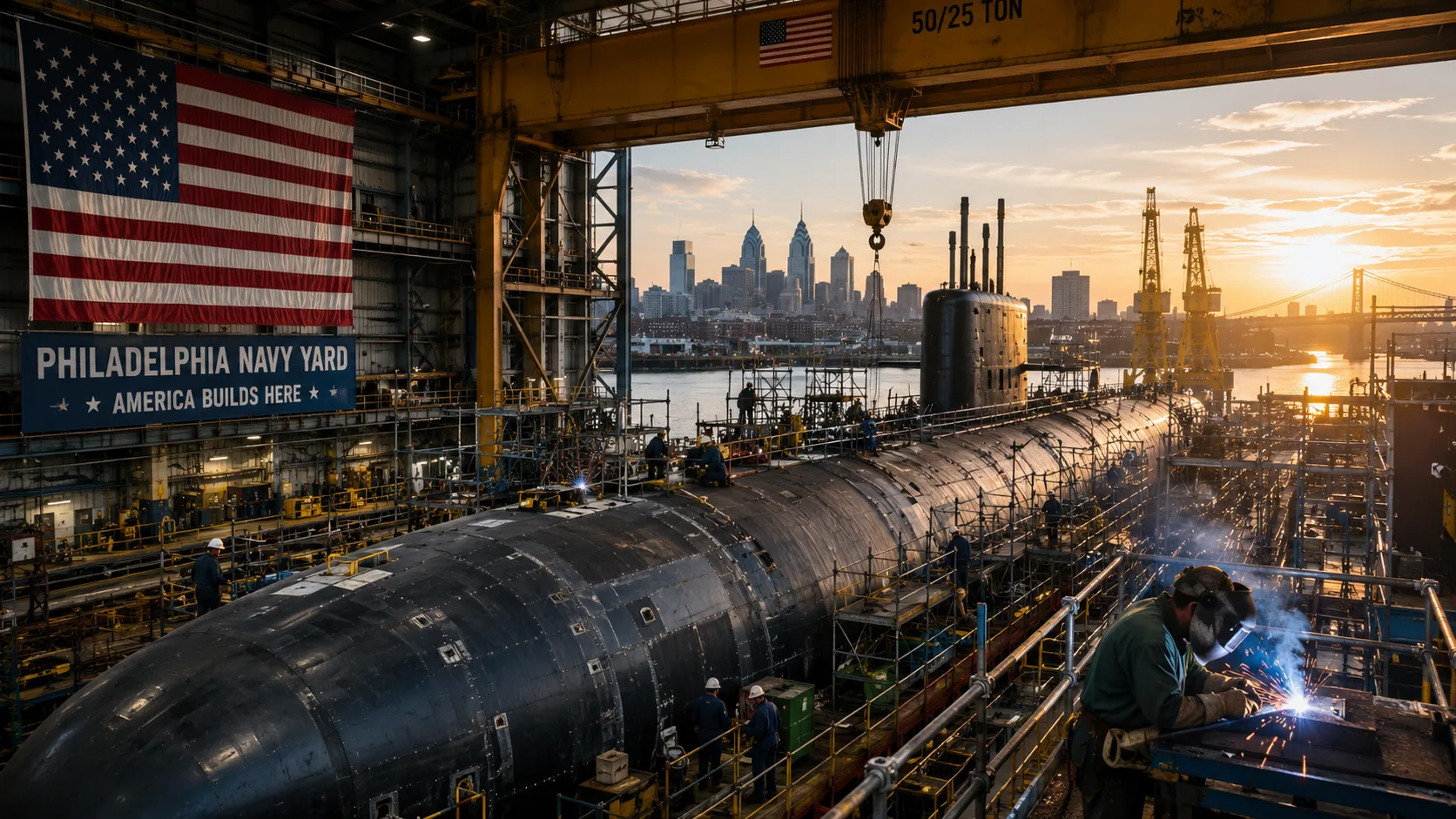
America’s effort to rebuild its industrial base received another major boost Wednesday after JPMorgan Chase CEO Jamie Dimon announced a $24 million investment initiative aimed at strengthening U.S. shipbuilding and the nation’s maritime manufacturing sector.
The announcement is part of JPMorgan Chase’s broader $1.5 trillion economic and national security financing initiative, which focuses on industries viewed as essential to America’s long-term competitiveness, defense capabilities, and supply chain resilience.
Dimon said the investment reflects a broader shift underway as both government and private industry move to rebuild manufacturing capacity after decades of overseas production.
“The arsenal of democracy has been reignited.”
The phrase echoes President Franklin D. Roosevelt’s famous description of America’s industrial machine during World War II and signals how national security has become an increasingly important investment theme.
Defense Manufacturing Returns to Philadelphia
The largest portion of the new funding will help finance a new submarine manufacturing facility at the Philadelphia Navy Yard, where Rhoads Industries is expanding operations.
The package includes:
- $18 million in loans and investments
- $6 million in grants
- Financing for submarine manufacturing
- Expanded lending to maritime-related small businesses
- Support for regional defense and industrial suppliers
The effort also highlights the growing role of private capital in rebuilding America’s defense manufacturing base.
According to JPMorgan, strengthening suppliers throughout the maritime ecosystem is just as important as financing large shipyards themselves, helping smaller manufacturers expand alongside major defense contractors.
Why Shipbuilding Has Become a National Priority
The renewed focus on American shipbuilding comes as governments worldwide dramatically increase defense spending amid growing geopolitical instability.
Ongoing conflicts in Ukraine and the Middle East, rising tensions in the Indo-Pacific, and increasing competition among global powers have renewed attention on naval strength and domestic industrial capacity.
Military leaders have repeatedly warned that America’s shipbuilding output has struggled to keep pace with long-term strategic needs.
Modern naval vessels require thousands of suppliers producing everything from steel components and propulsion systems to electronics and precision manufacturing equipment.
Expanding production capacity therefore requires investment across an entire industrial ecosystem rather than simply constructing new shipyards.
International Investment Meets American Manufacturing
Dimon also highlighted the growing involvement of South Korean industrial giant Hanwha, which has significantly expanded its investment in U.S. shipbuilding through its Philadelphia operations.
The partnership illustrates a broader trend of allied nations investing alongside American industry to increase defense production while strengthening shared supply chains.
Rather than replacing U.S. manufacturing, foreign investment is increasingly being directed toward expanding domestic production capacity and creating American jobs.
JPMorgan’s Expanding National Security Strategy
The shipbuilding announcement is one piece of JPMorgan Chase’s much larger strategy to finance industries considered critical to economic and national security.
The bank launched its $1.5 trillion initiative last year, targeting sectors such as:
- Defense manufacturing
- Shipbuilding
- Critical infrastructure
- Advanced manufacturing
- Strategic technologies
- Energy security
Earlier this year, JPMorgan expanded portions of the program into Europe as allied nations similarly ramp up investment in defense and industrial resilience.
The initiative represents one of the largest private-sector commitments aimed at strengthening industries viewed as strategically important to Western economies.
Why Investors Are Paying Attention
For investors, the announcement reinforces a longer-term theme that extends well beyond traditional defense contractors.
A sustained revival of U.S. industrial capacity could benefit companies involved in:
- Naval construction
- Industrial manufacturing
- Specialty metals
- Engineering services
- Maritime logistics
- Defense supply chains
- Infrastructure development
- Industrial automation
Banks and institutional investors are increasingly viewing these sectors as long-duration investment opportunities supported by government spending, private capital, and geopolitical priorities.
If current defense spending trends continue, rebuilding America’s manufacturing base could become one of the defining industrial investment stories of the decade.
About Author