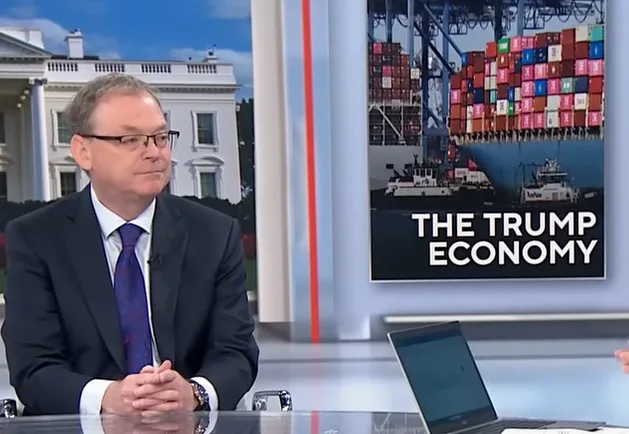
Kevin Hassett, a frontrunner to replace Jerome Powell as Fed Chair, says the central bank must remain “100% independent” — even from President Trump. His remarks come as the White House’s pressure campaign on the Federal Reserve intensifies. Here’s what investors need to know, and why Fed independence is on the line.
A Critical Statement at a Critical Time
On September 7, 2025, Kevin Hassett, the director of the White House National Economic Council and a leading candidate to replace Jerome Powell, told CBS’s Face the Nation:
“I would say 100% that monetary policy needs to be fully independent of political influence, including from President Trump.” (Reuters)
It was a carefully chosen phrase — and a revealing one. Hassett isn’t just another White House insider. He’s viewed as a steady, market-friendly candidate who could soon be running the world’s most powerful central bank. His insistence on Fed independence is therefore both reassurance and warning: reassurance to financial markets that the institution won’t become a political puppet, and warning that history shows political interference breeds “inflation and misery for consumers.”
Trump’s Ongoing Clash With the Fed
Hassett’s comments come against the backdrop of one of the most contentious chapters in modern Fed history. President Trump has clashed openly with the central bank:
- Firing of Governor Lisa Cook — Trump’s decision to oust Cook sparked legal and political firestorms, with critics saying the move undermined the Fed’s autonomy.
- Attacks on Powell — Trump has repeatedly called Jerome Powell a “fool,” accusing him of wrecking economic growth with high rates.
- Push for Lower Rates — The White House has pressured the Fed to cut aggressively, even as inflation data remains uneven.
These moves have unsettled investors who view Fed independence as a cornerstone of U.S. financial stability. Hassett’s remarks are the first high-profile attempt from within the administration to draw a boundary line.
Why Independence Matters
Central banks aren’t just bureaucracies — they’re shock absorbers. When markets panic, when inflation surges, when credit freezes, the Federal Reserve steps in. For that to work, the Fed needs the trust of global investors. History offers clear lessons:
- Turkey and Argentina: When central banks became political arms of their governments, inflation spiraled and capital fled.
- 1970s U.S.: President Nixon’s pressure on Fed Chair Arthur Burns to keep rates low fueled stagflation that haunted the economy for a decade.
Hassett’s warning — that political control of the Fed is “a recipe for inflation and misery” — is more than rhetoric. It’s a statement of fact that investors understand too well.
Hassett’s Tightrope Walk
Hassett is walking a delicate line. On one hand, he’s a Trump insider, running the National Economic Council and working closely with the White House. On the other, he’s signaling to Wall Street that he won’t be a rubber stamp if elevated to Fed Chair.
He also left room for ambiguity. While rejecting political interference, he acknowledged Treasury Secretary Scott Bessent’s calls for more scrutiny of the Fed. But he stopped short of endorsing reforms or structural changes, saying:
“I don’t have a plan to overhaul the Fed right now. I’m just happy to do my job.” (CBS News)
That line suggests continuity — at least for now.
Investor Lens: What to Watch
For investors, the stakes couldn’t be higher. The Fed’s next moves will shape inflation, bond yields, equity markets, and currencies. Hassett’s remarks provide clues about what comes next.
1. Fed Chair Transition Risk
Jerome Powell’s term is winding down, and Trump is considering replacements. If Hassett takes the helm, markets will watch closely to see if his independence rhetoric holds up against political pressure.
2. Inflation Trajectory
A Fed bent to political will would likely cut rates too quickly, risking a second inflation spike. Hassett’s stance reassures markets that runaway inflation isn’t in his playbook.
3. Bond Market Implications
Treasury yields reflect confidence in U.S. fiscal and monetary policy. Any sign the Fed is losing its autonomy could push yields higher and weaken the dollar — bad news for debt-heavy corporations and emerging markets tied to the greenback.
4. Global Confidence
Foreign central banks and sovereign wealth funds rely on the Fed as a neutral, rules-based institution. If it turns partisan, global capital may seek safer ground — gold, commodities, or even digital assets like Bitcoin.
The Legal Question: How Independent Is the Fed, Really?
Hassett’s remarks touch on more than just economics — they hit the legal core of Fed independence. Trump’s attempt to fire Lisa Cook exposed a gray area. The courts have historically upheld the Fed’s semi-independent status, but recent Supreme Court rulings lean toward expanding presidential power.
Financial historian Peter Conti-Brown has warned that the Fed’s independence score has already slipped to “a 5 out of 10.” Without congressional action, the central bank may find itself more vulnerable to executive overreach than at any point in modern history. (FT)
The Bottom Line for Investors
Kevin Hassett’s call for a “100% independent Fed” is both reassurance and red flag. On one hand, it signals to markets that even Trump insiders recognize the dangers of politicizing monetary policy. On the other, it highlights just how fragile Fed independence has become under current political pressure.
For investors, the implications are clear:
- Stay Alert to Fed Chair Politics: Who leads the Fed matters as much as the policies themselves.
- Hedge Against Inflation Risk: Commodities, gold, and inflation-linked bonds remain critical safeguards if independence erodes.
- Watch Yields and the Dollar: These are the first markets to react if the Fed’s autonomy is compromised.
- Global Repercussions: A politically captured Fed could weaken U.S. credibility — opening space for other reserve assets like the euro, yen, or even Bitcoin.
Final Word
Hassett’s remarks are a message to two audiences: one in Washington, and one on Wall Street. To Trump, he’s loyal but cautious. To markets, he’s a potential Fed Chair who values independence. Whether those two positions can coexist in practice remains to be seen.
For now, investors should take his words as a temporary backstop — but prepare for volatility if actions don’t match rhetoric.
About Author