Investors hoping new Federal Reserve Chairman Kevin Warsh would quickly pivot toward lower interest rates received a very different message Wednesday.
The Fed left interest rates unchanged, as expected, but several surprises from Warsh’s first meeting at the helm of the central bank rattled markets and raised fresh questions about where monetary policy is headed next.
Stocks fell sharply following the announcement and during Warsh’s press conference, while Treasury yields surged as investors digested what many viewed as a more hawkish-than-expected debut from the new chairman.
More importantly, the meeting offered the clearest look yet at how Warsh intends to reshape the Federal Reserve.
The Fed Kept Rates Steady, But Investors Heard Something Else
The Federal Open Market Committee voted unanimously to leave the federal funds rate unchanged at a target range of 3.50% to 3.75%.
On the surface, there was little drama.
Beneath the headlines, however, the Fed’s latest projections suggested policymakers are becoming increasingly concerned about inflation and less confident that rate cuts will arrive anytime soon.
The Fed’s closely watched “dot plot” revealed a surprisingly hawkish split among policymakers.
Nine officials projected rates would either remain unchanged or move slightly lower this year. The other nine anticipated at least one rate increase.
The median projection pointed toward a quarter-point rate hike before year-end.
For investors who entered the meeting expecting a more dovish Fed under Warsh, the message was unmistakable: higher rates remain a possibility.
Why the Dot Plot Surprise Matters
One of the biggest mysteries heading into the meeting involved Warsh himself.
Many analysts wondered whether he would participate in the Fed’s Summary of Economic Projections, commonly known as the dot plot.
The answer was no.
Warsh confirmed that he intentionally declined to submit his own interest-rate forecast.
His reasoning stems from long-standing criticism of the Fed’s use of forward guidance.
According to Warsh, policymakers should avoid locking themselves into future decisions based on uncertain economic conditions.
Instead, he encouraged other committee members to continue providing projections while reserving his own judgment.
The move signals that investors may receive fewer clues about Warsh’s future policy intentions than they became accustomed to under previous Fed leadership.
That could make interpreting future Fed meetings considerably more challenging.
A New Chairman Begins Reshaping the Federal Reserve
While interest rates dominated the headlines, some of the most significant developments occurred outside traditional monetary policy.
Warsh announced the creation of five separate task forces that will review key aspects of how the Federal Reserve operates.
The groups will focus on:
- Federal Reserve communications
- The central bank’s balance sheet
- Economic data collection and analysis
- Productivity and labor market trends
- Artificial intelligence and emerging technologies
- The Fed’s broader inflation framework
The initiative represents the first major structural reform effort of Warsh’s tenure.
Rather than maintaining the status quo, the new chairman appears intent on reevaluating how the institution functions from the ground up.
For investors, that could mean meaningful changes in how policy decisions are communicated and implemented over the coming years.
Warsh’s Inflation Focus Caught Markets Off Guard
Perhaps the most important takeaway from the meeting was Warsh’s repeated emphasis on inflation.
Throughout his press conference, he referenced “price stability” roughly a dozen times.
That language stood out because Warsh had previously been viewed by many market participants as potentially more supportive of lower interest rates.
Instead, his comments suggested a chairman deeply focused on ensuring inflation remains under control.
Warsh described the committee’s commitment to restoring price stability as both “unambiguous” and “unanimous.”
Markets reacted immediately.
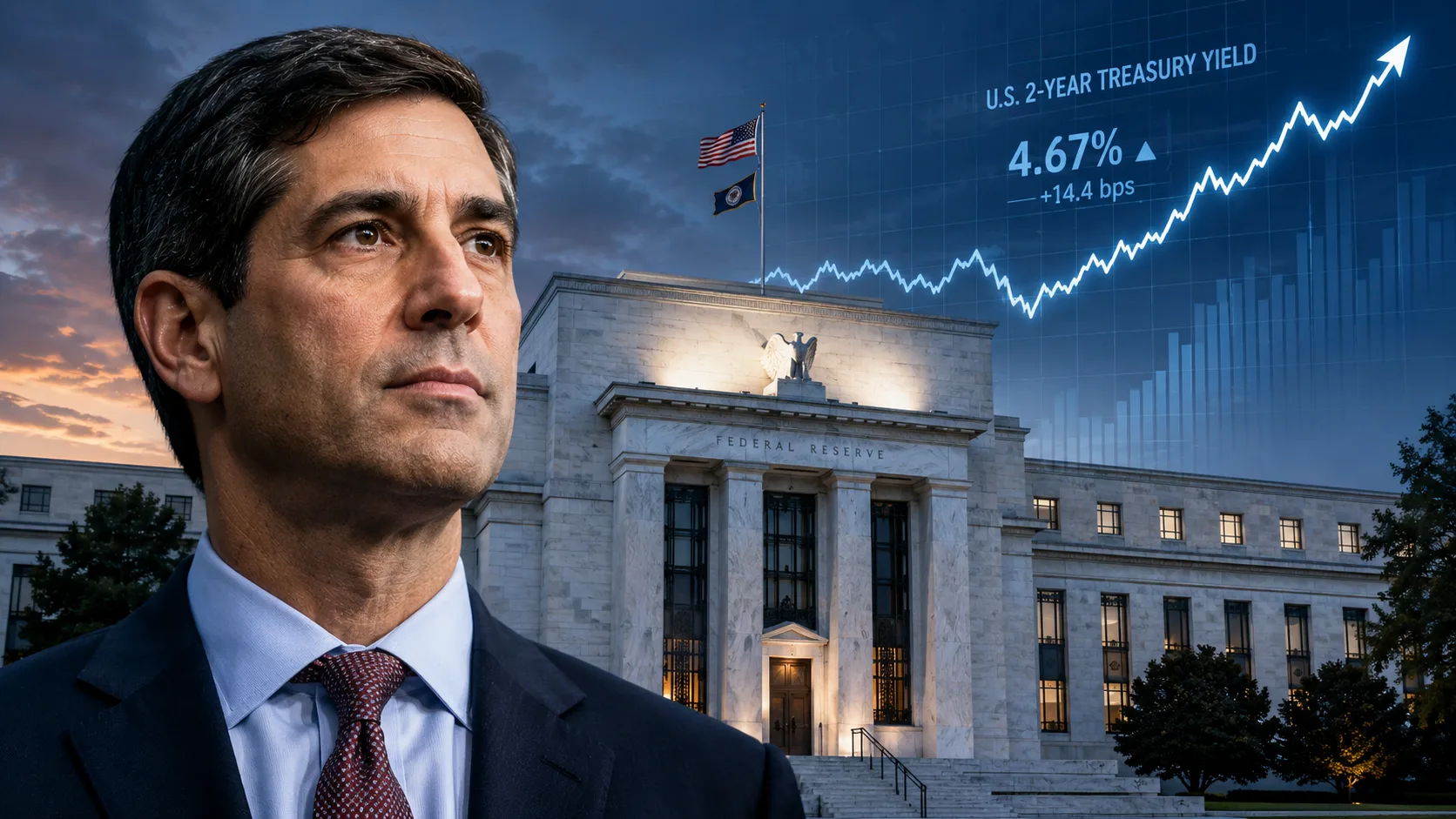
The yield on the two-year Treasury note, which closely reflects expectations for future Fed policy, jumped more than 14 basis points following the meeting.
That move reflected growing investor concern that interest rates could remain elevated for longer than previously anticipated.
The Fed’s New Communication Strategy
One of Warsh’s most visible changes was surprisingly simple.
The Fed dramatically shortened its post-meeting statement.
Under previous leadership, policy statements frequently exceeded 300 words and often contained language that analysts spent days dissecting.
Wednesday’s statement totaled just 130 words.
The streamlined approach appears designed to reduce ambiguity and make policy decisions easier to understand.
Whether investors ultimately prefer shorter statements remains to be seen, but the change offers another indication that Warsh intends to put his own stamp on the institution quickly.
Wall Street Sees the Beginning of a New Era
Several prominent market strategists described the meeting as a turning point for the Federal Reserve.
Rick Rieder, head of fixed income at BlackRock, said the meeting “ushered in a new era of monetary policy in the United States.”
Krishna Guha, vice chairman of Evercore ISI, noted that Warsh sounded remarkably hawkish during the press conference, repeatedly emphasizing the Fed’s commitment to price stability.
Jason Pride, chief investment strategist at Glenmede, argued that the task force announcements signal an institution undergoing active review rather than simply maintaining existing policies.
Meanwhile, Dario Perkins of TS Lombard suggested that Warsh’s reform efforts could make Fed watching considerably more difficult for investors.
What Investors Should Watch Next
Kevin Warsh’s first meeting as chairman delivered a clear message: assumptions about the future direction of Federal Reserve policy may need to be reconsidered.
The Fed did not raise rates Wednesday.
But policymakers also did little to signal that rate cuts are imminent.
Instead, investors were presented with a central bank focused on inflation, open to keeping rates higher for longer, and preparing for potentially significant institutional reforms.
The combination leaves Wall Street facing greater uncertainty than many expected when Warsh took over.
For investors, the key question now is whether the Fed’s increasingly hawkish tone reflects temporary caution or the beginning of a fundamentally different approach to monetary policy.
The answer could determine the direction of stocks, bonds, and the broader economy over the next several quarters.
About Author