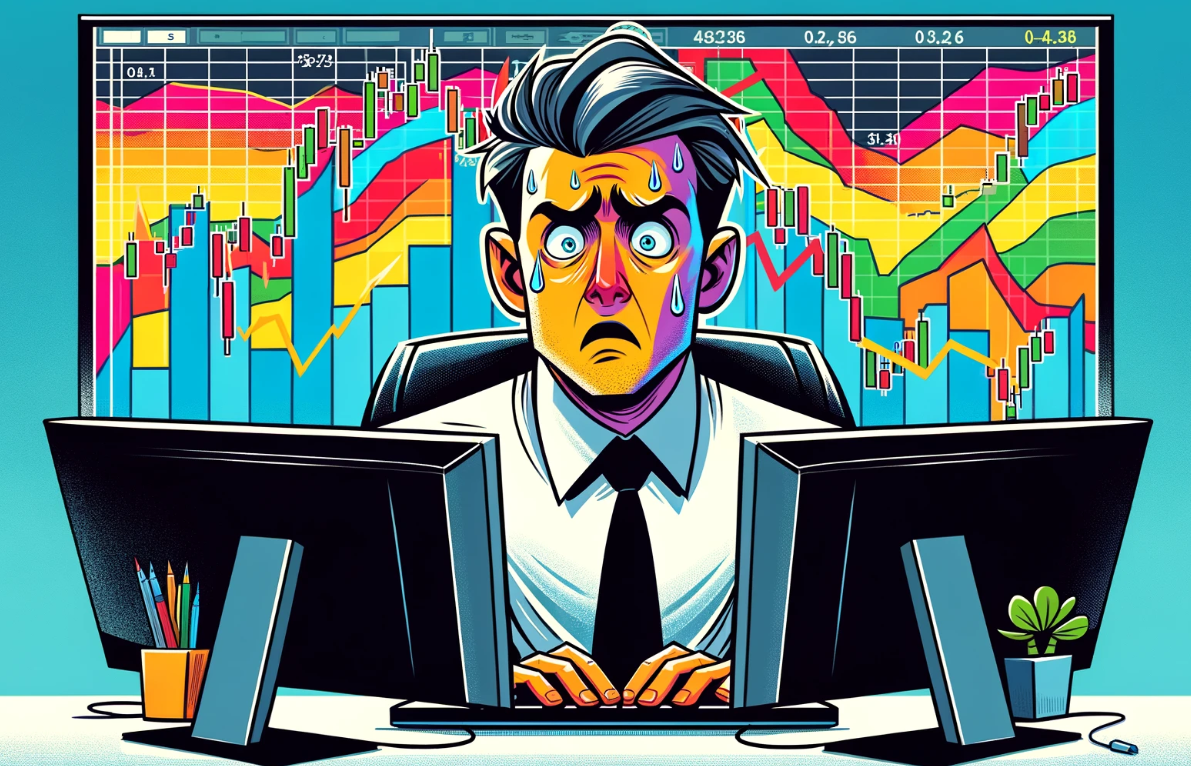
Wall Street opened the week on shaky footing as fear gripped multiple corners of the market. Stocks fell sharply on Monday and bitcoin dropped below a critical level, signaling that investors are growing uncomfortable heading into a high stakes stretch for both tech and macro data.
The Dow slid 557 points, a loss of 1.18 percent. The S&P 500 dropped 0.92 percent and the Nasdaq fell 0.84 percent. Volatility surged as the VIX jumped 13 percent. CNN’s Fear and Greed Index dropped into extreme fear territory, hitting its lowest point since early April.
Investors are staring down two major catalysts. Nvidia reports earnings on Wednesday and the delayed September jobs report will be released Thursday. The combination of a market-leading megacap stock and fresh labor data is creating a powder keg scenario.
José Torres, senior economist at Interactive Brokers, said the two events speak directly to the issues that are “top of mind” for Wall Street.
Tech Stocks Lose Momentum as Valuation Fears Build
Traders are questioning whether the most crowded trade of 2024 and 2025 has run too far. The Nasdaq is down nearly 5.5 percent since its late October record. Concerns are growing about lofty valuations, slower revenue growth, and the enormous capital spending commitments required to keep the AI boom alive.
The market is trying to determine whether the AI trade is built on solid fundamental footing or whether investors have priced in too much perfection too quickly. At the same time, questions are intensifying over whether the Federal Reserve will pause its interest rate cuts at the December meeting. A pause would be a sharp reversal from market expectations just a month ago.
FactSet data showed that both the S&P 500 and Nasdaq fell below their 50 day moving averages on Monday. For many technical strategists, that threshold represents a key support level. Breaking below it increases the odds of additional volatility.
Craig Johnson, chief market technician at Piper Sandler, wrote that “while the long-term uptrend is intact, we believe a corrective pullback or consolidation phase is already underway after the market’s six-month winning streak.”
Bitcoin Breaks Below 90,000 and Gives Back All Its Gains for the Year
Crypto investors also took a hit. Bitcoin plunged below 90,000 for the first time in seven months, wiping out its gains for all of 2025. The digital asset has fallen more than 28 percent in six weeks after peaking above 126,000 in early October.
The move comes as speculative tech, AI heavy equities, and crypto have all shown similar selling patterns. Traders are rotating out of high beta assets and moving toward value, defensive stocks, and cash-like vehicles. Coinbase fell more than 7 percent Monday as crypto-linked equities led the S&P 500 lower.
Bitcoin’s decline matters for more than just crypto traders. Many institutional investors have been using bitcoin as a leveraged proxy for AI driven tech momentum. When bitcoin falters, it often reflects a broader unwind of risk appetite.
Nvidia Earnings Loom Large as Investors Search for a New Catalyst
This earnings report is not just another corporate update. Nvidia now accounts for roughly 8 percent of the S&P 500’s total market value. Any disappointment in sales, margins, or forward guidance would ripple through every major index.
Nvidia shares slipped 1.83 percent on Monday as traders braced for the midweek announcement.
Chris Larkin, managing director at Morgan Stanley’s E-Trade, summed up the tension in a note: “The monthly jobs report would normally dominate this week’s economic calendar, but with the AI trade struggling the past couple of weeks, Nvidia’s earnings are once again looking like a key piece of the market’s momentum puzzle.”
Investors are asking whether Nvidia can continue carrying the AI boom alone or whether the high growth narrative is now too stretched for the market to support.
Fed Expectations Shift as December Becomes a Wild Card
Optimism about aggressive rate cuts fueled much of the stock market rally this year. But traders are recalibrating. According to CME FedWatch data, the probability of a December rate cut has fallen from 94 percent one month ago to just 45 percent today.
Inflation remains sticky in several service categories and the Fed appears hesitant to take its foot off the brake too quickly. Any signal that the central bank is more concerned about inflation than growth could introduce even more market volatility.
Mohit Kumar, chief strategist and economist for Europe at Jefferies, cautioned that upcoming data is critical. “Data releases starting this week should provide a clearer picture for one of the key risks over the coming weeks — the December Fed meeting,” he said.
A Market Rotation Takes Shape
Investors have spent much of the month pulling money out of the year’s biggest winners and reallocating toward sectors that have lagged. Industrials, energy, financials, and traditional value names have seen renewed interest as traders look for more attractive valuations.
Sam Stovall, chief investment strategist at CFRA Research, believes the shift is healthy. “This rotation is both expected and welcome, as it should unwind some of the frothiness and allow this bull market the opportunity to catch its breath before resuming its advance,” he said.
For investors, this signals an important shift. It suggests the market may be transitioning from momentum driven trading to fundamentals driven stock selection, a trend that historically benefits patient, long term buyers.
Why This Matters for Investors
The week ahead could set the tone for markets through the rest of the year. The combination of Nvidia earnings, the long delayed jobs report, shifting Fed expectations, and a violent move in bitcoin highlights a market searching for direction.
Key takeaways for investors:
• Volatility is rising across risk assets, not just tech
• Nvidia earnings could drive short term market direction for indexes and for the AI trade
• Bitcoin falling below 90,000 confirms a broader risk reduction underway
• A pause in Fed rate cuts would pressure growth stocks
• Rotation into value and defensive sectors is gaining steam
• The 50 day moving average breach raises the odds of short term turbulence
• Dip buyers stepped in last week, suggesting the bull trend is bruised but not broken
A decisive move in either direction will likely come from Nvidia on Wednesday or the jobs report on Thursday. Until then, expect a jittery market with sharp swings in both directions.
About Author