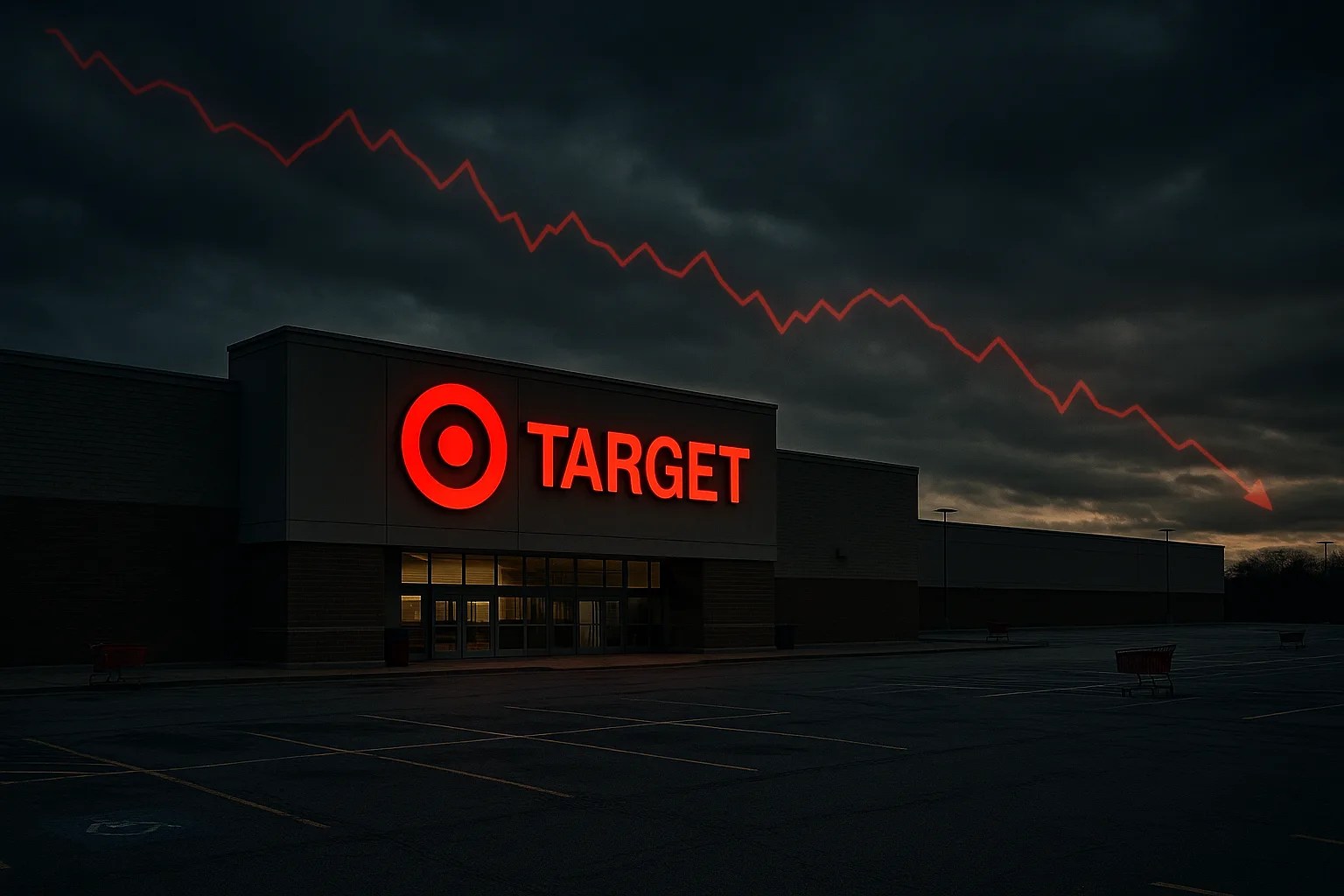
Target’s troubles are getting harder to ignore. The retailer just posted another quarter of falling sales, cut its full-year profit outlook, and confirmed that it will lay off roughly 1,000 corporate employees. After four years of stagnant performance, Target appears to be approaching a breaking point.
The company is betting that new leadership and stepped-up investments can spark a recovery. But the latest earnings report makes one thing clear. Target’s turnaround is not coming fast.
A Business Model Out of Sync With the New Consumer
Target has spent years building its identity around affordable style. Cheap chic apparel, seasonal décor, and curated home goods were once its sweet spot. But the post-pandemic consumer is different.
Inflation has pushed shoppers to prioritize groceries, household basics, and the best possible price. Instead of browsing for impulse purchases, many are now laser-focused on value. That shift has favored Walmart, Amazon, Aldi, TJ Maxx, and dollar stores. Target has struggled to adapt.
The company itself acknowledged that customers no longer see Target as the destination for the sharpest deals. That perception gap is hitting hard. Target shares are down about 35 percent this year, and the stock dipped another 1 percent in pre-market trading after Wednesday’s results.
Neil Saunders of GlobalData Retail put it bluntly. “Target is really struggling and does not seem to be able to climb out of the hole it has dug itself into,” he said.
Cultural Backlash and Brand Confusion
Target’s challenges extend beyond merchandise strategy. The company has been caught in the crossfire of culture-war politics after scaling back some of its diversity and inclusion programs. The move angered customers who support DEI efforts and triggered waves of online protests.
Target later acknowledged that the backlash contributed to weaker sales. For a company whose brand once leaned heavily on broad consumer goodwill, the reputational hit came at a time when it could least afford it.
Leadership Shift Arrives at a Crucial Time
After eleven years leading the company, CEO Brian Cornell announced in August that he will step down. Some analysts expected Target to bring in an external change agent with a fresh perspective. Instead, the retailer opted for continuity.
Michael Fiddelke, Target’s current chief operating officer, will step into the top role next year. That decision signals the board’s desire to preserve Target’s internal culture while accelerating strategic changes from within.
Fiddelke inherits a difficult landscape. Store traffic has softened, margins remain under pressure, and Target must recalibrate its assortment to fit new economic realities.
A Rush of New Investments Ahead of the Holidays
The company is moving quickly to reassure customers and investors before the critical holiday season. Target has reduced prices on 3,000 everyday items and is doubling the number of new holiday products compared with last year. The goal is to bring value-oriented shoppers back into stores while giving higher-income customers a reason to browse.
The retailer is also making a major push to improve the store experience. Target plans to increase capital spending by 25 percent next year to roughly 5 billion dollars in order to remodel locations and modernize layouts. These upgrades are aimed at improving traffic flow, boosting cross-merchandising, and revamping categories that have failed to resonate.
Another major move is its new partnership with OpenAI. The integration will allow customers to shop Target directly through ChatGPT, a sign that the retailer is trying to stay relevant as AI begins reshaping online commerce. For Target, this collaboration is also a bet that digital personalization can help win back shoppers who have strayed to Amazon and Walmart.
Fiddelke emphasized the urgency behind these initiatives. “We’re acting with urgency to make the changes and investments to position Target for sustainable and profitable growth,” he told analysts on Wednesday.
Why This Matters for Investors
Target is still a large retailer with strong brand recognition, but its weaknesses are becoming more exposed as the consumer economy splits. Households at the top end are trading up for premium goods and experiences. Lower and middle income consumers are hunting for rock-bottom prices. Target is caught in the middle, where the pressure is most intense.
Investors should watch three areas closely:
- Merchandise mix resets. If Target cannot shift quickly toward higher-velocity essentials and value-priced goods, market share losses to Walmart and Amazon will accelerate.
- Margin protection. Heavy discounting and higher remodeling costs may squeeze profitability through 2025 unless traffic improves meaningfully.
- Digital competitiveness. Partnerships like the one with OpenAI show Target is trying to innovate, but execution will determine whether it translates into real sales gains.
The next two quarters will be critical. Target either stabilizes or continues slipping deeper into a long-term structural decline. The retailer is now in a fight to reclaim relevance in an economy that has rapidly moved away from its old strengths.
About Author