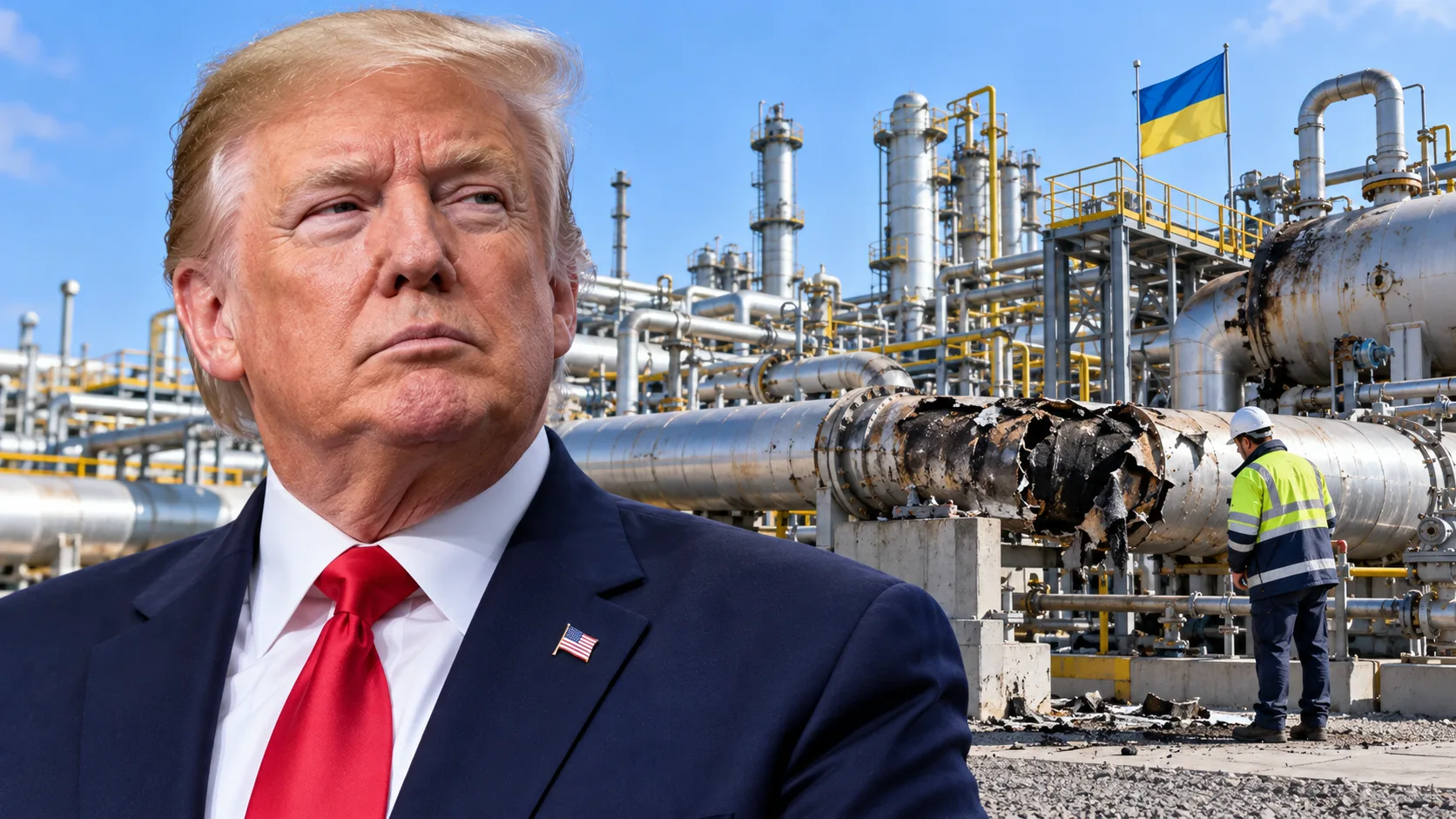
Oil prices moved sharply higher Tuesday after President Donald Trump canceled all meetings with Iranian officials and publicly signaled support for anti government protesters inside Iran, raising fresh concerns about potential supply disruptions from a major oil producing nation.
U.S. crude oil climbed nearly 3 percent during mid day trading, while global benchmark Brent also posted strong gains as traders priced in increased geopolitical risk tied to the Middle East.
West Texas Intermediate crude rose $1.96, or about 3.3 percent, to roughly $61.46 per barrel. Brent crude gained $1.99, or about 3.1 percent, to approximately $65.86 per barrel.
The rally came as markets reacted to escalating political unrest inside Iran and a sharp shift in U.S. diplomatic posture toward Tehran.
Trump Cancels Meetings and Issues Warning to Iranian Government
President Trump said Tuesday that he had canceled all scheduled meetings with Iranian officials until the government stops what he described as violent repression of demonstrators.
In a Truth Social post, Trump wrote:
“Iranian Patriots, KEEP PROTESTING – TAKE OVER YOUR INSTITUTIONS!!! Save the names of the killers and abusers.”
He followed that message with another post warning Iranian leaders directly:
“They will pay a big price. I have cancelled all meetings with Iranian Officials until the senseless killing of protesters STOPS. HELP IS ON ITS WAY. MIGA!!!”
The White House has not yet released details on what form that “help” might take, but Trump has previously suggested that the United States could apply additional sanctions or take other measures if Iranian security forces continue to use violence against civilians.
Markets are now watching closely to see whether the crisis escalates into broader international action, which could further strain global energy supplies.
Protests in Iran Raise Risk of Oil Supply Disruptions
Iran is one of the world’s largest oil producers and remains a key member of OPEC, even though U.S. and European sanctions have limited how much of its oil can reach global markets legally.
Large scale protests have reportedly spread across multiple cities, with human rights organizations and opposition groups claiming that hundreds of people may have been killed. The Iranian government has restricted internet access nationwide, making independent verification difficult.
From an oil market perspective, the concern is not only whether Iran’s production could be directly affected, but also whether unrest could spill into shipping routes or provoke retaliation that impacts the broader region.
Roughly one fifth of the world’s oil passes through the Strait of Hormuz, a narrow shipping channel bordering Iran. Any military activity, blockades, or naval confrontations in that area could quickly send oil prices much higher, even if actual supply losses are limited.
Energy traders typically react quickly to perceived risk in this region because past conflicts have shown how fast shipping and insurance costs can spike.
Why Markets React Even Without Immediate Supply Cuts
It is important to note that no confirmed oil production outages have been reported in Iran so far. However, oil markets are forward looking, and prices often move on expectations rather than confirmed shortages.
Traders are factoring in several overlapping risks:
- Potential labor disruptions if protests expand to oil producing regions
- Tighter sanctions or enforcement actions by the United States
- Retaliatory moves by Iran that affect shipping lanes
- Broader regional instability involving neighboring producers
Even the possibility of these outcomes can drive short term price jumps, particularly when global inventories are already tightening.
Recent data from the U.S. Energy Information Administration has shown declining crude stockpiles in key storage hubs, which means the market has less buffer if supply suddenly drops.
OPEC Policy and Global Supply Are Already Tight
This geopolitical shock comes at a time when oil supply is already constrained by policy decisions from major producers.
OPEC and its allies, including Russia, have maintained production limits in recent months in an effort to support prices after demand weakened earlier in the year. Several members are still producing below their official quotas due to infrastructure and investment challenges.
At the same time, U.S. shale production growth has slowed as companies focus on shareholder returns instead of aggressive drilling expansion.
That combination leaves less spare capacity available to absorb sudden disruptions, making geopolitical events more impactful on price movements.
In short, the oil market does not have much room for error right now.
What This Means for Energy Stocks and Investors
For investors, rising oil prices tend to benefit energy producers while putting pressure on transportation, airlines, and consumer facing businesses that rely heavily on fuel.
Energy sector stocks often move ahead of commodity prices when geopolitical risk rises, especially companies with strong cash flow and low production costs.
Potential beneficiaries include:
- U.S. shale producers with stable output and low debt
- Integrated oil majors with strong refining operations
- Oil services firms if producers increase drilling budgets
However, investors should also be cautious. Geopolitical driven rallies can reverse quickly if tensions ease or diplomatic channels reopen.
Short term spikes can create trading opportunities, but long term investors typically focus on whether higher prices will persist long enough to materially change earnings forecasts.
Broader Market Impact Beyond Energy
Higher oil prices can also influence inflation expectations, which matters for interest rate policy and bond markets.
If energy costs rise sharply, that can push up transportation and manufacturing expenses, feeding into consumer prices over time. That dynamic could complicate efforts by policymakers to keep inflation under control.
For equity markets, rising energy prices often act as a tax on consumers, reducing discretionary spending and pressuring sectors like retail and travel.
That is why geopolitical shocks tied to oil supply tend to ripple across the entire market, not just energy stocks.
What Investors Should Watch Next
Markets will be watching several developments closely in the coming days:
- Any signs of production or export disruptions from Iran
- Additional statements or actions from the Trump administration
- Responses from OPEC members regarding supply policy
- Naval or shipping activity near the Strait of Hormuz
If unrest intensifies or foreign involvement increases, oil prices could continue climbing. If tensions cool and no supply impact materializes, prices could settle back toward recent ranges.
For now, the oil market is reacting to rising uncertainty, and uncertainty is something energy traders price aggressively.
About Author