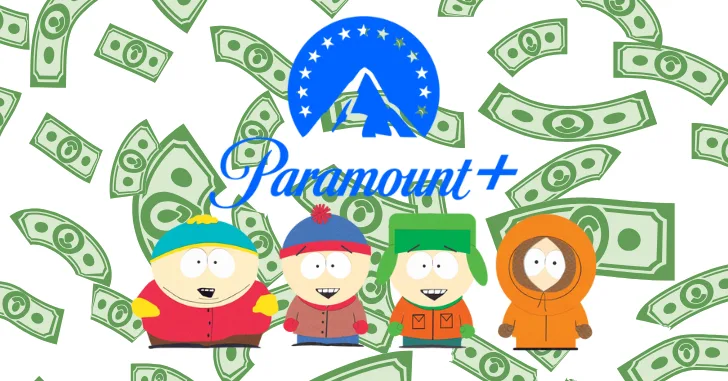
On July 22, 2025, Paramount Global made headlines by inking a monumental $1.5 billion streaming rights agreement with Trey Parker and Matt Stone, the creators of the long-running animated franchise South Park. The five-year deal—averaging $300 million per year—grants Paramount+ exclusive global streaming rights to new South Park episodes and marks a pivotal moment in the ongoing streaming wars.
The implications are far-reaching for Paramount Global ($PARA), which has been under intense pressure amid takeover talks, declining linear TV revenues, and a high-stakes pivot toward digital content. With South Park now front and center in its streaming arsenal, Paramount is signaling that it’s not bowing out of the fight—it’s doubling down.
Deal Overview: What $1.5 Billion Buys
Under the agreement, Paramount+ will gain global streaming rights for 10 new episodes of South Park per year for the next five years, starting with Season 27. These episodes will continue to debut linearly on Comedy Central, another Paramount subsidiary, before landing on the streaming platform.
The deal was originally pitched as a 10-year, $3 billion commitment, but sources told the Los Angeles Times and Reuters that Skydance Media—Paramount’s soon-to-be majority stakeholder—insisted on revising the scope due to financial prudence. Despite the shortened term, this remains one of the largest animated content deals in history.
A Deal Born from Turmoil
The road to this agreement was anything but smooth. Over the past year, Parker and Stone had expressed frustration with Paramount’s handling of their IP, especially amid confusing international distribution agreements involving Warner Bros. Discovery. At one point, negotiations broke down entirely, resulting in a two-week delay in South Park’s Season 27 premiere.
Legal threats were reportedly exchanged between Paramount executives and the creators’ production entity, Park County. According to Polygon, tensions ran so high that Stone and Parker considered shopping South Park elsewhere—until a late-stage intervention from Paramount leadership saved the deal.
PARA Stock Reacts: Signs of Market Confidence
The market responded positively to the news. In the week leading up to and following the deal’s announcement, Paramount Global’s stock price climbed over 11.7%, reflecting investor optimism about the long-term streaming potential of a fan-favorite franchise.

Source: Yahoo Finance (PARA historical prices, July 16–23, 2025)
As the above chart shows, Paramount’s stock price rose from $11.32 to $12.65 over a seven-day period, illustrating that Wall Street views the South Park deal as a step in the right direction—especially given the broader volatility of media stocks in 2025.
Why Paramount Needs This Win
Paramount is at an inflection point.
1. Skydance Takeover Looms
Skydance Media is finalizing its $8 billion acquisition of Paramount Global. Industry insiders told MarketWatch the deal represents an effort to stabilize the content slate ahead of the transaction.
Skydance CEO David Ellison has emphasized a leaner, more IP-focused strategy. Locking in South Park—a globally recognizable brand—fits that vision and reassures shareholders that Paramount is not becoming an also-ran in the content wars.
2. Streaming Is Still Bleeding Cash
Despite growth in subscribers, Paramount+ remains a money-losing enterprise. In Q1 2025, the division posted a $238 million loss. The hope is that South Park, with its massive international fan base and proven bingeability, can boost engagement and lower churn rates.
As TechRadar put it, Paramount is banking on familiar brands to drive its streaming future—because it can’t afford too many failed originals.
3. Competitor Content Pressure
Netflix continues to dominate in terms of subscriber volume and has aggressively pursued animated adult content (Big Mouth, BoJack Horseman, etc.). Hulu, owned by Disney, has a lock on Family Guy and The Simpsons. Securing South Park keeps Paramount relevant in a niche that performs exceptionally well with the coveted 18-34 demographic.
What This Means for Investors
✅ Bull Case
- Retention engine: Long-term fans of South Park are known to rewatch entire seasons, which could lower Paramount+ churn—a critical KPI in streaming.
- Global IP strength: With over 150 countries streaming South Park, this IP offers international revenue potential.
- High-margin library asset: Unlike costly new shows, South Park has relatively low production costs and high licensing value.
❌ Bear Case
- Debt burden: Paramount is already carrying over $15 billion in debt. Committing $1.5 billion to a single franchise raises questions about resource allocation.
- Reliance on legacy IP: Investors may worry that Paramount is over-relying on aging brands instead of cultivating new hits.
- Integration uncertainty: The Skydance acquisition is not yet finalized. Strategic shifts could disrupt content plans or require contract renegotiations.
Long-Term Strategic Takeaway
Paramount is making a bet—a large one—that deep fan loyalty to South Park will translate into subscription retention, brand differentiation, and perhaps even cross-platform content extensions (e.g., mobile games, live events, merchandise).
More importantly, it signals to Wall Street and Hollywood that Paramount isn’t going quietly. It still sees itself as a contender in the streaming space—and is willing to back up that claim with billion-dollar checkbooks.
A Step in the Right Direction
For investors evaluating Paramount’s turnaround prospects, the South Park deal is a net positive. It won’t solve the conglomerate’s structural issues overnight, but it secures a stable, monetizable asset that complements both linear and digital strategies. If paired with disciplined cost management and successful Skydance integration, this could represent the first meaningful step in Paramount’s streaming-era reinvention.
Sources:
- Reuters – South Park creators reach $1.5 billion streaming deal
- LA Times – Inside the $1.5 billion South Park deal
- TechRadar – South Park staying on Paramount+
- MarketWatch – South Park deal resolves Paramount sale chaos
- Polygon – What the South Park deal really means
About Author