PayPal stock jumped more than 14% after the company announced a major partnership with OpenAI that will make it the first payments wallet integrated into ChatGPT. The move signals a bold shift toward AI-driven e-commerce and could mark a turning point for PayPal’s long-term growth story.
PayPal’s New Role Inside ChatGPT
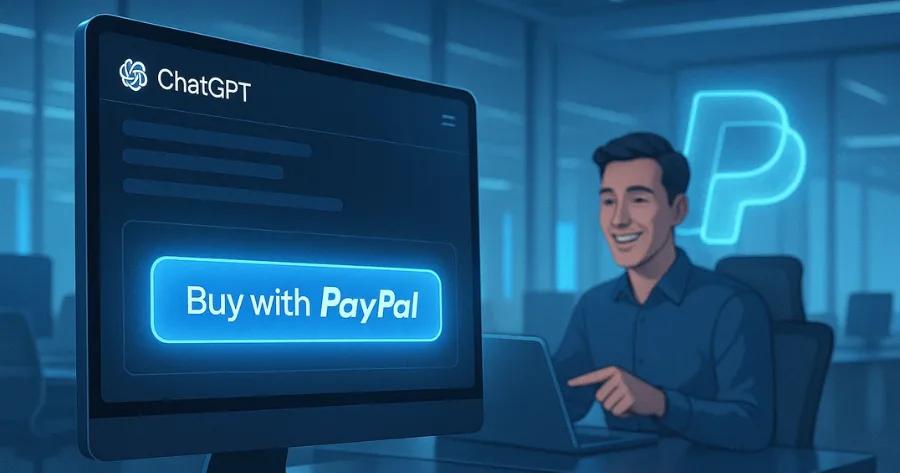
Starting next year, ChatGPT users will be able to make purchases directly through PayPal’s digital wallet. According to PayPal CEO Alex Chriss, the integration will allow millions of PayPal users to buy products they discover through the AI platform while merchants can list and sell their products there as well.
“We’ve got hundreds of millions of loyal PayPal wallet holders who now will be able to click the ‘Buy with PayPal’ button on ChatGPT and have a safe and secure checkout experience,” Chriss told CNBC.
The agreement allows PayPal to handle payment routing, fraud protection, and validation for all transactions made through ChatGPT. Merchants who already accept PayPal will not need separate contracts with OpenAI, which streamlines the process.
Chriss emphasized that both consumers and merchants using PayPal are verified, helping minimize fraud risk. Customers can pay using linked bank accounts, credit cards, or stored balances and will benefit from PayPal’s standard buyer protections, dispute resolution, and package tracking.
“It’s not just that a transaction can happen,” Chriss said. “It’s that this is a trusted set of merchants, the largest merchant network in the world from PayPal, that are verified, with the largest set of verified consumers in a consumer wallet.”
A Push Into AI-Driven Shopping
This move positions PayPal at the center of what many call “agentic commerce,” where AI assistants act like personal shoppers that find and recommend products automatically. ChatGPT now reaches more than 700 million weekly users, giving PayPal enormous exposure to a potential wave of AI-powered consumer activity.
OpenAI has been moving quickly into e-commerce. Last month, it partnered with Shopify and Etsy merchants to enable AI-based shopping recommendations. Two weeks ago, it announced a similar integration with Walmart. PayPal’s inclusion now cements its position as one of the early payment providers shaping this new digital shopping experience.
“This is a whole new paradigm for shopping,” Chriss said. “It’s hard to imagine that agentic commerce isn’t going to be a big part of the future.”
What It Means for PayPal Stock
Investors have been looking for signs that PayPal can reignite growth after years of margin pressure and slowing user growth. The OpenAI partnership provides both a new narrative and a tangible channel for expanding transaction volume.
- Expanding Revenue Streams
Embedding PayPal directly into ChatGPT could create a fresh source of checkout traffic and transaction fees. If AI-assisted shopping takes off, PayPal could see sustained increases in payment volume without the traditional customer acquisition costs. - Restoring Investor Confidence
PayPal’s stock has been under pressure for much of the past two years as competition from Apple Pay, Google Wallet, and Stripe intensified. This deal signals that PayPal is not standing still and is positioning itself to serve as the payments backbone of the AI economy. - Margin Expansion Potential
By automating much of the merchant onboarding and fraud prevention process, PayPal may be able to reduce costs per transaction. The additional volume from ChatGPT sales could improve operational leverage and boost earnings. - Reputation as a Trusted Player
PayPal’s verified consumer and merchant network gives it a competitive advantage as AI commerce scales. Security and trust are still the biggest barriers to mass adoption of AI-based payments, and PayPal is positioning itself as a reliable solution.
The Broader Trend
PayPal’s collaboration with OpenAI follows other AI partnerships the company has announced in recent months, including deals with Google and Perplexity AI. These alliances suggest that PayPal is aggressively aligning itself with the technology companies driving next-generation commerce.
The company is also using OpenAI’s enterprise AI tools internally to speed up product development and improve employee workflows. This may help PayPal innovate faster and compete more effectively in the crowded fintech space.
Risks and Realities
While the market reaction was positive, investors should be cautious. It remains unclear how many ChatGPT users will actually buy through PayPal or how fast merchants will adopt the integration. The full rollout will not begin until next year, so any revenue impact will likely appear later in 2025.
Competition also looms large. Other digital wallets and payment processors are expected to pursue similar partnerships with major AI platforms. If Apple or Google integrate their wallets more deeply into AI systems, PayPal’s early advantage could narrow.
There is also the risk of technical or security challenges as AI commerce scales. Managing fraud, verifying merchants, and ensuring smooth checkout across millions of users will test PayPal’s infrastructure.
The Investor Outlook
Still, the potential upside is significant. Analysts say PayPal’s ability to monetize AI commerce could help lift its valuation multiples if the company can demonstrate measurable results. The stock’s strong premarket reaction shows that investors are eager for signs of renewal.
For now, PayPal’s partnership with OpenAI gives shareholders a reason for optimism. It positions PayPal at the intersection of payments, AI, and e-commerce at a time when investors are looking for credible growth catalysts.
PayPal stock will likely remain volatile in the short term as traders digest the news and await details on implementation. But for long-term investors, this move may signal the start of PayPal’s reinvention as a key infrastructure player in the emerging AI economy.
Bottom Line
PayPal’s deal with OpenAI could redefine how digital payments work inside AI environments. If the company executes effectively, “paypal stock” could see meaningful upside as AI-driven commerce becomes mainstream. However, the story will depend on real adoption, not just headlines.
About Author