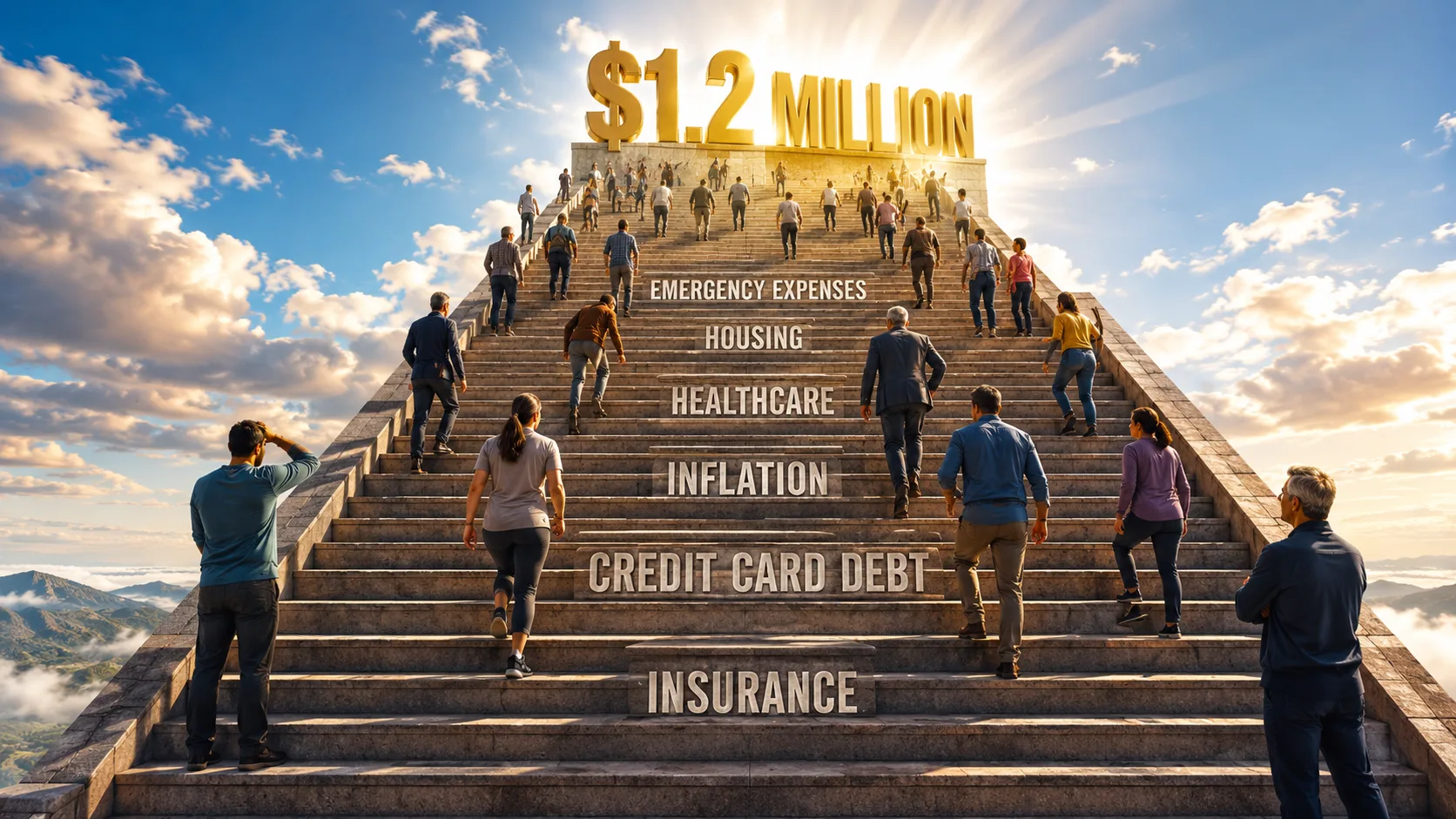
A new survey from global asset manager Schroders reveals that Americans have a clear idea of how much they’ll need for retirement, but far less confidence that they’ll actually get there.
Respondents said they believe $1.2 million is needed to retire comfortably.
Yet only 30% expect to retire with at least $1 million saved.
The numbers become even more concerning from there.
More than half of those surveyed believe they won’t accumulate even $500,000, while nearly one-quarter expect to retire with less than $250,000.
The survey questioned 1,500 U.S. workers between ages 30 and 79 who participate in employer-sponsored retirement plans.
For investors, the data suggests that retirement confidence continues moving in the opposite direction of retirement needs.
Inflation and Everyday Costs Are Becoming the Biggest Retirement Threat
The survey found that Americans increasingly see everyday living expenses as the primary obstacle preventing them from building adequate retirement savings.
Nearly 69% of respondents said rising costs for:
- Housing
- Healthcare
- Insurance
- Utilities
will make retiring comfortably significantly more difficult.
According to Deb Boyden, head of Schroders’ U.S. defined contribution business, many workers are being forced to make difficult financial decisions.
“Rising costs are forcing tough trade-offs, and saving for retirement is often the first thing that gets deprioritized.”
That tradeoff is becoming increasingly visible in retirement contribution rates.
More than 55% of respondents said they are unable to save 10% of their paycheck toward retirement because their monthly expenses consume too much of their income.
Credit Card Debt Is Crowding Out Retirement Savings
Perhaps the survey’s most alarming finding involves consumer debt.
Roughly one in three Americans surveyed said they currently have more credit card debt than retirement savings.
While Schroders did not provide an age-by-age breakdown, all participants were at least 30 years old, suggesting this is not simply an issue affecting younger workers.
High-interest debt creates a double financial burden.
Monthly payments reduce the ability to invest for retirement while compound interest works against households instead of for them.
Financial advisors have increasingly warned that persistent revolving credit card balances can delay retirement readiness by years, especially when combined with higher living costs.
Workers Are Raiding Retirement Accounts Earlier
The survey also found that many Americans are using retirement accounts as emergency financial lifelines rather than long-term investments.
Among respondents who withdrew money early from retirement plans, the most common reasons included:
- 36% used the money to pay off credit card debt or other loans.
- 31% covered unexpected emergency expenses.
- 27% needed help managing higher everyday living costs.
While workplace retirement plans remain the most valuable retirement asset for most Americans, the survey suggests increasing financial pressure is causing many workers to reduce contributions or borrow against those accounts.
Early withdrawals not only reduce current balances but can significantly diminish decades of future compound growth.
Retirement Planning Is Becoming About More Than Investments
Schroders argues that retirement readiness can no longer be viewed simply as an investment problem.
Instead, overall household financial health has become equally important.
According to Boyden:
“We can’t look at retirement savings in isolation. Credit card debt, rising costs, and emergency expenses are all part of the same equation.”
That broader perspective reflects a growing shift among financial planners, many of whom now emphasize budgeting, debt reduction, emergency savings, and cash flow management alongside traditional retirement investing.
For employers offering retirement plans, the survey suggests financial wellness programs may become increasingly important in helping workers improve long-term retirement outcomes.
Why This Matters for Investors
The survey paints a picture of an American retirement system under increasing strain.
While markets have delivered solid long-term returns, many households are struggling with problems that investing alone cannot solve.
Persistent inflation, elevated healthcare expenses, expensive housing, and growing consumer debt are reducing the amount workers can consistently save during their highest earning years.
For investors, several trends are worth watching:
- Rising demand for retirement income and financial planning services.
- Continued pressure on household discretionary spending.
- Greater reliance on employer-sponsored retirement plans.
- Increasing importance of debt management alongside investing.
- Potential growth in financial wellness programs offered by employers.
If these trends continue, the retirement savings gap could widen further as millions of Americans approach retirement with significantly less than they believe they’ll need.
The Bigger Picture
The survey highlights a growing disconnect between retirement goals and financial reality.
Americans understand that achieving financial security in retirement likely requires seven-figure savings. Yet rising living costs, debt burdens, and unexpected expenses are making that goal feel increasingly out of reach for many households.
As inflation continues reshaping household budgets, retirement planning is becoming less about choosing investments and more about managing the financial pressures that prevent people from investing consistently in the first place.
About Author