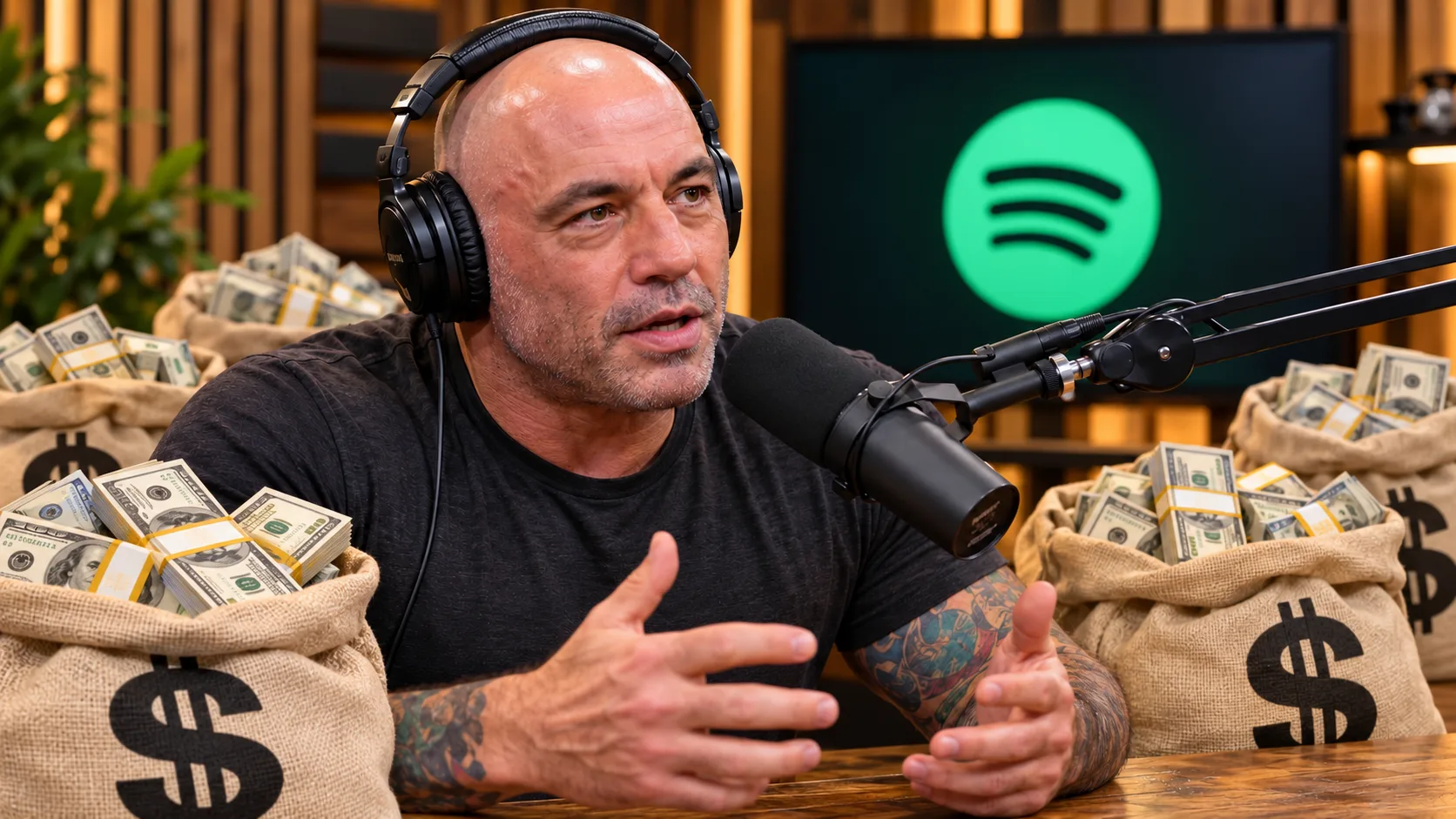
Joe Rogan is staying with Spotify, extending a partnership that helped turn his podcast into one of the most valuable properties in online media. The agreement shows how much companies will pay for a host whose audience keeps coming back.
Spotify announced the new multiyear licensing agreement on October 8. The Wall Street Journal reports that it includes licensing rights and advertising sales, with terms similar to Rogan’s previous agreement, which carried an estimated $250 million earnout. The price of the new deal has not been disclosed. Spotify
For listeners, little changes immediately. For Spotify shareholders, the renewal raises a more interesting question: How much money can the company make from a show that people can also watch on competing platforms?
The Audience Behind the Deal
“The Joe Rogan Experience” reached approximately 28.4 million Americans in the second quarter of 2026, according to Edison Research figures reported by the Journal. That compares with about 6.6 million at the beginning of 2020, meaning its U.S. reach has more than quadrupled.
The show also has more than 18 million followers on Spotify and more than 21 million on YouTube. Those figures measure different things and include overlapping audiences, so adding them together would exaggerate its reach. Even considered separately, they demonstrate the scale of the business.
Rogan’s interviews can run for several hours and cover everything from comedy and science to business and presidential politics. That variety matters commercially. The show gives advertisers access to an audience that follows the host across subjects, rather than tuning in only when one particular topic makes headlines.
Why Spotify Lets People Listen Elsewhere
Spotify’s original 2020 agreement made Rogan’s show exclusive to its platform. The 2024 renewal opened distribution to other services, including YouTube and Apple Podcasts. Today’s agreement continues that broader availability. KFGO
That can sound counterintuitive. Why maintain an expensive partnership if listeners can get the program somewhere else?
The advertising rights help explain it. A show distributed widely can reach more people, giving the company selling its advertising a larger audience to offer sponsors. Spotify can therefore benefit from its relationship with Rogan without requiring every listener to become a paying Spotify subscriber.
Exclusivity and profitability are separate questions. Keeping a program behind one platform’s walls may help attract users, while wider distribution may expand its advertising opportunity. The economics depend on what Spotify pays, what advertisers pay and how the revenue is shared. Those details have not been publicly disclosed for the renewed agreement.
Rogan’s Appeal Goes Beyond Politics
Rogan interviewed and endorsed Donald Trump before the 2024 election, making his show an important political platform. He has subsequently criticized the administration on some issues. The Journal also notes that several of his biggest recent episodes featured nonpolitical guests, including actors, entertainers and other widely followed personalities.
That gives the partnership appeal beyond any single election or political position. Spotify is retaining a host whose audience follows a broad range of conversations.
For advertisers, that consistency can be valuable. It also creates a business risk: When much of a show’s appeal rests on one person, controversial comments or a change in audience loyalty can affect the commercial relationship. A famous host brings both drawing power and dependence.
What Spotify Shareholders Should Watch
Advertising Revenue and Costs
A large audience creates an opportunity to sell advertising. It does not establish how much profit remains after the host’s compensation, revenue sharing and other expenses.
The renewal secures a major program for Spotify, but shareholders still need evidence that its podcast business can grow revenue while controlling costs. Publicly disclosed contract terms would make that assessment easier.
The Company Beyond One Podcast
Spotify reported 300 million premium subscribers and 777 million monthly active users in its second-quarter results, released August 4. Revenue increased 14% from a year earlier, and operating income reached €655 million. Those are companywide figures, covering a much larger business than Rogan’s show. Spotify
The renewal protects an important relationship. Its financial significance should be judged alongside subscription growth, advertising performance and overall profitability. Rogan’s popularity alone cannot establish whether Spotify shares are attractively priced.
The Next Test Is Turning Attention Into Earnings
In upcoming results, watch for stronger advertising revenue, management’s comments on podcast profitability and any further disclosure about major content costs. Continued audience growth would support the commercial opportunity; improving margins would provide better evidence that Spotify is capturing it.
Rogan has demonstrated that one host can build a remarkably large audience. Spotify’s task is to turn that audience into durable earnings at a price that works for shareholders.
About Author