
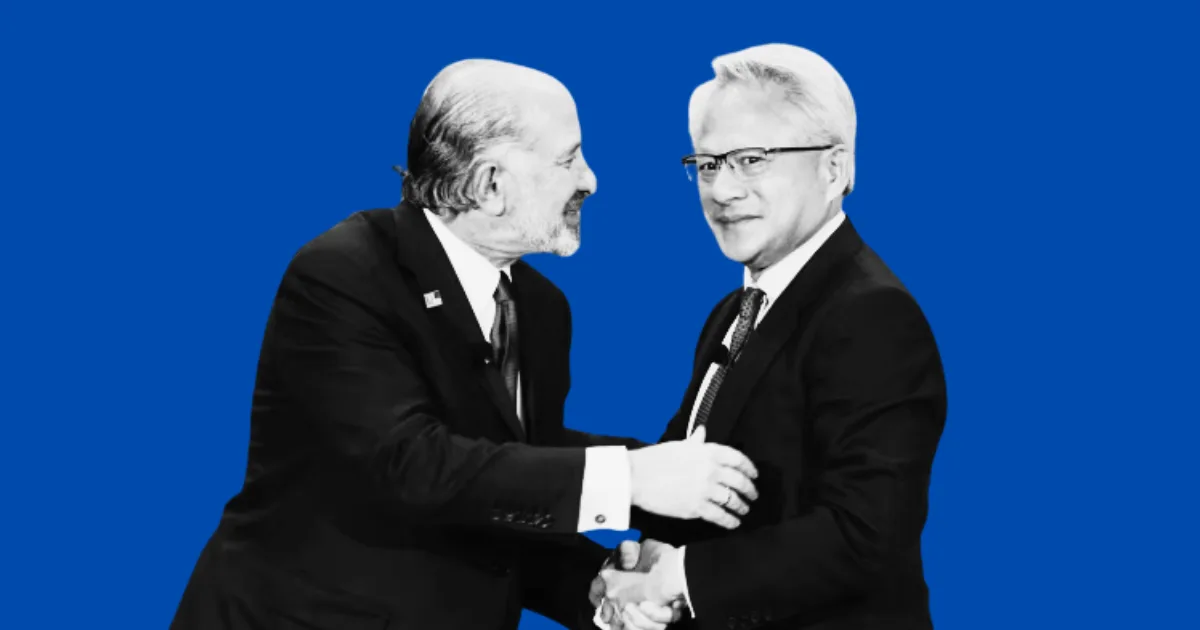
The scandal that forced Nvidia CEO Jensen Huang from power is now threatening to engulf President Donald Trump’s Cabinet. Commerce Secretary Howard Lutnick is facing growing demands for answers over his handling of sensitive AI-chip exports to China, with some administration officials reportedly discussing whether he should remain in his job.
What began as a controversy involving one of America’s most powerful technology executives has become a confrontation over national security, government oversight, and the future of the world’s most valuable AI-chip business.
Trump Advisers Turn on Lutnick as Nvidia Scandal Explodes
According to reporting from The Wall Street Journal and Reuters, senior White House officials have discussed Lutnick’s future as criticism mounts over his department’s handling of Nvidia-related export restrictions.
The central allegation is serious: Lutnick allegedly delayed efforts to prevent advanced American AI technology from reaching China, even as intelligence officials raised concerns about the personal relationship between Jensen Huang and a woman suspected of working for Chinese intelligence.
Several administration officials reportedly believe Lutnick’s close relationship with Huang influenced his approach to restrictions involving Nvidia and companies linked to China.
The White House, however, is standing behind him.
President Trump maintains complete confidence in Lutnick, according to administration statements, even as lawmakers from both parties demand congressional testimony and investigations.
The president’s support may provide political protection. It does little to resolve the questions now surrounding the Commerce Department.
The Suspected Chinese Spy at the Center of the Scandal
At the center of the controversy is Alice Huang, a former executive at Singapore-based Megaspeed International and a woman U.S. intelligence officials reportedly suspect of working for Chinese intelligence.
Jensen Huang, Nvidia’s longtime chief executive and co-founder, acknowledged having an affair with her. He resigned Thursday as revelations about his personal relationships intensified scrutiny of the company’s leadership.
The controversy extends far beyond Huang’s personal conduct.
Megaspeed has been investigated over allegations involving the diversion of restricted American semiconductor technology to China. The company has denied wrongdoing.
U.S. investigators are examining whether sensitive Nvidia technology reached unauthorized Chinese customers through companies operating outside mainland China.
There has been no public finding establishing that Jensen Huang knowingly compromised national security or that Alice Huang was acting as a Chinese intelligence operative. Those distinctions matter as the investigations continue.
The larger question is whether U.S. officials had enough warning to prevent potential security breaches and whether the necessary safeguards were enforced.
Did Lutnick Protect Nvidia From Tougher Restrictions?
The Commerce Department oversees crucial rules governing the export of advanced American technology.
That responsibility places Lutnick directly in the middle of the controversy.
According to Axios, Trump approved tougher action against companies suspected of diverting Nvidia chips to China on multiple occasions this year. Yet Lutnick and other Commerce officials allegedly resisted implementing some proposed restrictions.
One major point of disagreement involved Megaspeed.
Despite investigations into its activities, the company had not been placed on a key U.S. export-control blacklist that can sharply restrict access to American technology.
Officials concerned about national security reportedly viewed that failure as a dangerous enforcement gap.
Lutnick’s critics argue that his department allowed business and diplomatic concerns to delay necessary safeguards.
His defenders point to the complexities of export policy, the involvement of several federal agencies, and the administration’s broader desire to maintain American technological leadership in China.
Trump himself has supported allowing certain Nvidia chips to be sold to China, reflecting an argument advanced by Huang that continued American technology sales could discourage Chinese customers from developing competing domestic alternatives.
That makes accountability more complicated.
Lutnick is responsible for Commerce Department policy, but the administration’s overall China strategy ultimately rests with the president.
Scott Bessent Confronts Lutnick Over China
The political conflict reportedly intensified during a high-level administration meeting involving Treasury Secretary Scott Bessent and other senior officials.
According to Axios, Bessent challenged Lutnick over the Commerce Department’s failure to impose tougher restrictions on Megaspeed and other businesses suspected of helping Chinese customers obtain advanced AI chips.
The disagreement exposed divisions within the administration over one of its most consequential economic and security policies.
On one side are officials concerned that American technology is strengthening China’s AI capabilities, including potential military applications.
On the other are policymakers worried that aggressive restrictions could damage American semiconductor companies, reduce U.S. market share, and provoke retaliation from Beijing.
Bessent and Lutnick have also experienced political tensions dating back to the formation of Trump’s Cabinet.
The Nvidia controversy has brought those disagreements into sharper public view.
And the accusations are moving in both directions.
Some administration officials have questioned why Treasury itself has not imposed sanctions on Alice Huang or Megaspeed, underscoring the fact that export enforcement involves more than one department.
Congress Is Now Demanding Answers
The pressure on Lutnick has moved beyond the White House.
Republican lawmakers are openly questioning why the Commerce Department did not act more aggressively to restrict access to sensitive American chip technology.
Sen. Thom Tillis has criticized Lutnick’s handling of Huang’s access to the president, while Sen. Jim Banks has questioned whether the commerce secretary resisted Trump’s own export-control objectives.
Senate Banking Committee Chairman Tim Scott has requested testimony from both Jensen Huang and Howard Lutnick.
The requested dates are December 3 for Huang and December 10 for Lutnick.
Scott has warned that the committee is prepared to use subpoenas if voluntary cooperation is not forthcoming.
Meanwhile, Democrats are pursuing records related to Nvidia, Chinese chip exports, and the administration’s knowledge of the alleged intelligence risks.
Senators Elizabeth Warren and Chris Coons have called for the preservation of relevant government communications and documents.
The scrutiny could intensify when Democrats assume control of Congress in January.
For Lutnick, the immediate political danger is that lawmakers across party lines are demanding answers about the same national security failures.
Why Nvidia Investors Should Be Paying Close Attention
For Wall Street, this controversy presents risks beyond the departure of Jensen Huang.
Nvidia has been central to the artificial-intelligence investment boom, benefiting from extraordinary demand for the advanced processors used to train and operate AI systems.
Now investors must assess whether Washington’s reaction could materially change the company’s ability to serve international markets.
1. China Sales Could Face Additional Restrictions
Tighter export controls could reduce Nvidia’s access to Chinese customers and businesses operating through intermediary markets.
The risk extends to Singapore, Malaysia, Thailand, Indonesia, and other countries hosting data centers that may provide computing services to customers in China.
Even when physical chips remain outside China, remote access to their computing power can create serious enforcement questions.
New regulations addressing those arrangements could affect chip sales, customer relationships, and international data-center investments.
2. Nvidia Faces Leadership and Regulatory Uncertainty
Huang’s departure introduces a major leadership transition at a company whose technology, customer relationships, and business strategy were closely associated with its co-founder.
The company must now manage that transition while addressing congressional investigations and questions about its export-compliance controls.
Investors should watch whether Nvidia maintains its financial guidance, retains key customers, and provides greater transparency about regulatory exposure.
3. The Entire AI Supply Chain Could Feel the Effects
Nvidia is only one part of a much larger industry.
Stricter controls could affect semiconductor manufacturers, advanced chip packaging, networking equipment, data-center operators, and companies building AI infrastructure across Asia.
The financial consequences will depend on how broadly new rules are written.
A narrow restriction targeting suspected diversion channels would have different implications from a sweeping licensing system affecting major regional markets.
The Bigger Problem: America’s AI Strategy Is Divided
The deeper issue is a contradiction at the center of U.S. technology policy.
Washington wants American companies to dominate global artificial intelligence. At the same time, national security officials are concerned that American-made processors could help China’s military and technology industries advance.
Those objectives are increasingly difficult to reconcile.
Restricting exports may protect sensitive technology, but it can also sacrifice revenue and accelerate China’s efforts to build competing semiconductor systems.
Allowing more sales may strengthen American companies while increasing the possibility that advanced computing power reaches buyers Washington considers dangerous.
The Nvidia controversy has exposed how difficult it is to maintain that balance when corporate lobbying, personal relationships, national security intelligence, and Cabinet politics intersect.
And a change in Commerce Department leadership would not automatically settle that conflict.
The same economic and security tradeoffs would remain.
December Could Determine How Far the Scandal Spreads
Several developments could reshape this controversy in the coming weeks.
December 3: Jensen Huang’s requested Senate testimony. Lawmakers want answers about his relationship with Alice Huang, Nvidia’s dealings with Megaspeed, and whether sensitive technology or information was compromised.
December 10: Howard Lutnick’s requested Senate testimony. Questions are expected to focus on export-control decisions, internal warnings, and why certain restrictions were delayed.
New Commerce Department export rules. Officials are reportedly preparing tighter restrictions involving Southeast Asian markets. The final scope could have significant implications for Nvidia and other AI companies.
Federal investigations. Additional findings could clarify whether export laws were violated, who knew about potential risks, and whether enforcement failures occurred.
The incoming Congress. Democratic control beginning in January could bring broader investigations, additional document requests, and more aggressive oversight of the administration’s technology policies.
Trump Has a Decision to Make as the Scandal Grows
Lutnick remains in office, and Trump continues to defend him.
But the controversy has already expanded from Nvidia’s corporate leadership into the highest levels of the federal government.
The questions facing Lutnick now involve what the Commerce Department knew, why certain export restrictions were delayed, and whether America’s most strategically important technology was adequately protected.
For investors, the consequences could extend well beyond one Cabinet secretary’s future.
Congressional investigations and tighter export controls could reshape Nvidia’s international business and alter the economics of the global AI industry.
Jensen Huang has already lost his position at Nvidia. The question now is how much further the fallout will reach into Washington, and what it will cost America’s AI industry.
About Author