After years of promises, delays, and eyebrow-raising predictions, Tesla has finally launched its long-awaited robotaxi service — not with a flashy new vehicle, but with a small fleet of modified Model Ys quietly hitting the streets of Austin, Texas.
The milestone marks a critical moment for CEO Elon Musk’s grand vision of a fully autonomous future — a future he’s been publicly predicting since at least 2014, often with aggressive timelines that Wall Street has learned to take with caution. But this time, it’s real: Tesla’s robotaxis are officially in operation, albeit in a limited form, and the implications for the company’s future — and its volatile stock — are massive.
Robotaxi Rollout: A Long Time Coming
Originally scheduled for June 12, Tesla’s autonomous ride-hailing debut was pushed back, with Musk citing safety concerns. “We’re being super paranoid about safety, so the date could shift,” he wrote on X (formerly Twitter) ahead of the launch. That level of caution, while not typical of Musk’s bold style, likely reflects just how high the stakes are — both from a regulatory and investor confidence standpoint.
Now that the pilot program has launched, Tesla is starting small: just 10 vehicles, geofenced to operate within specific areas of Austin. According to Musk, the fleet will gradually expand to around 1,000 vehicles in the coming months, with plans to roll out the service in other U.S. cities soon after.
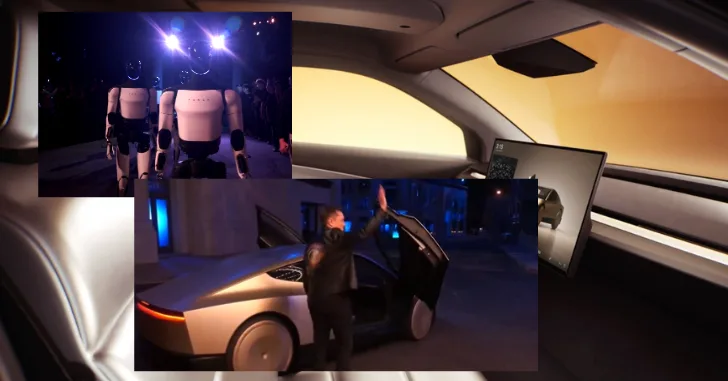
The cars being used aren’t the futuristic “Cybercabs” Musk unveiled last year — those are still in development. Instead, the initial robotaxi fleet will consist of factory-standard Tesla Model Ys, enhanced with Tesla’s Full Self-Driving (FSD) software and upgraded sensors.
“These are unmodified Tesla cars coming straight from the factory,” Musk recently emphasized in a tweet.
Bold Claims — Again
In typical Elon fashion, the robotaxi launch comes bundled with another ambitious claim: 1 million fully autonomous Teslas on the road by the end of next year. If that sounds familiar, it should. Musk made a similar promise back in 2019, predicting the same milestone for 2020 — a goal that clearly never materialized.
This time, however, the groundwork may finally be in place. Tesla has spent years refining its FSD software, even as critics and regulators scrutinize the company’s use of the term “self-driving.” While Tesla’s vehicles are not yet approved as fully autonomous by U.S. regulators, Musk believes it’s only a matter of time — and data — before the system surpasses human-level driving reliability.
Analysts Are Paying Attention
Despite the skepticism Musk’s timeline invites, Tesla’s move into robotaxis is not being taken lightly by the market.
“This is the beginning of the golden era of autonomous for Tesla,” said Dan Ives, Managing Director and Senior Equity Analyst at Wedbush Securities. A long-time Tesla bull, Ives argues that the company’s pivot into autonomy and AI should not be seen merely as a side hustle — it’s the core of Tesla’s valuation going forward.
“The autonomous chapter is one of the most important for Musk and Tesla in its history,” Ives noted. “The AI future at Tesla is worth $1 trillion to the valuation alone over the next few years.”
That’s a staggering projection, especially given that Tesla’s current market cap is hovering under $600 billion. If Ives is right, the upside from self-driving technology could be the single most valuable lever Tesla has ever pulled — bigger than batteries, energy storage, or even its best-selling Model Y.
Politics, Policy, and Damage Control
The robotaxi launch also comes at a politically sensitive moment for Musk. After a very public and messy falling-out with President Donald Trump earlier this month — which many believe contributed to a sharp dip in Tesla’s share price — Musk appears to be in damage control mode.
The rift reportedly stemmed from disagreements over trade and tariffs, but given Tesla’s need for regulatory clarity on autonomous vehicles, cooling tensions with the Trump administration may be a strategic move. In fact, insiders suggest that Tesla’s future in autonomous driving may hinge on White House support, particularly as federal agencies probe Tesla’s driver-assistance tech in connection with several high-profile accidents.
Wall Street sees any thaw in relations with Trump as a positive for Tesla, especially given the administration’s deregulatory stance on emerging technologies. For now, Tesla’s ability to stay in good standing with Washington could be as crucial to the robotaxi program as any technical advancement.
The Stock Picture: Bruised but Not Broken
Tesla shares have been volatile all month, down nearly 8% in June alone and off around 21% year-to-date. That contrasts sharply with the S&P 500, which is up roughly 1.5% in the same timeframe.
The launch of the robotaxi service could serve as a narrative pivot — a “proof point” Musk needs to re-anchor investor confidence. A successful, safe, and eventually scalable rollout might not just boost Tesla’s stock but also reinforce its long-term positioning as more than just a car company.
Whether investors believe the vision is another story. The market has seen this movie before, and many have grown weary of Musk’s moving goalposts.
Still, there’s no denying the power of a working product in the market.
What This Means for Tesla Investors
For retail and institutional investors alike, the robotaxi rollout offers several key takeaways:
1. Short-Term Volatility Likely to Persist
Until Tesla proves it can operate robotaxis safely and at scale, expect the stock to swing on every new headline, especially in a politically charged regulatory environment.
2. Regulatory Tailwinds Could Be Decisive
If the Trump administration eases the path to national AV approvals, Tesla could gain a crucial first-mover advantage. But any federal crackdown — or a high-profile accident — could stall momentum fast.
3. New Revenue Streams Are Emerging
Robotaxis represent a radical shift in Tesla’s business model — from a one-time vehicle sale to recurring ride-hailing revenue, more in line with Uber or Airbnb. If successful, it could create a powerful annuity-like stream with strong margins.
4. Tech Valuation Narrative Reignited
For years, bulls have argued Tesla is undervalued as a tech company and over-scrutinized as a carmaker. The robotaxi initiative, combined with Tesla’s AI and Dojo supercomputer ambitions, could finally justify that tech-premium thesis.
Swinging for the Fences
Elon Musk is once again swinging for the fences, and this time he’s doing it with actual vehicles on actual roads. While skepticism is warranted — especially given past delays and bold proclamations — the launch of Tesla’s robotaxi program represents a genuine inflection point.
Whether it will revolutionize transportation, send the stock soaring, or stall in the face of regulation and public scrutiny remains to be seen. But for now, Tesla has crossed the starting line of what could be its most transformative race yet.
Investors betting on Tesla now are no longer just buying into electric vehicles — they’re betting on a future where software eats the steering wheel, and where Elon Musk finally makes good on one of his biggest promises.
About Author