For millions of Americans, the dream of homeownership is slipping further out of reach.
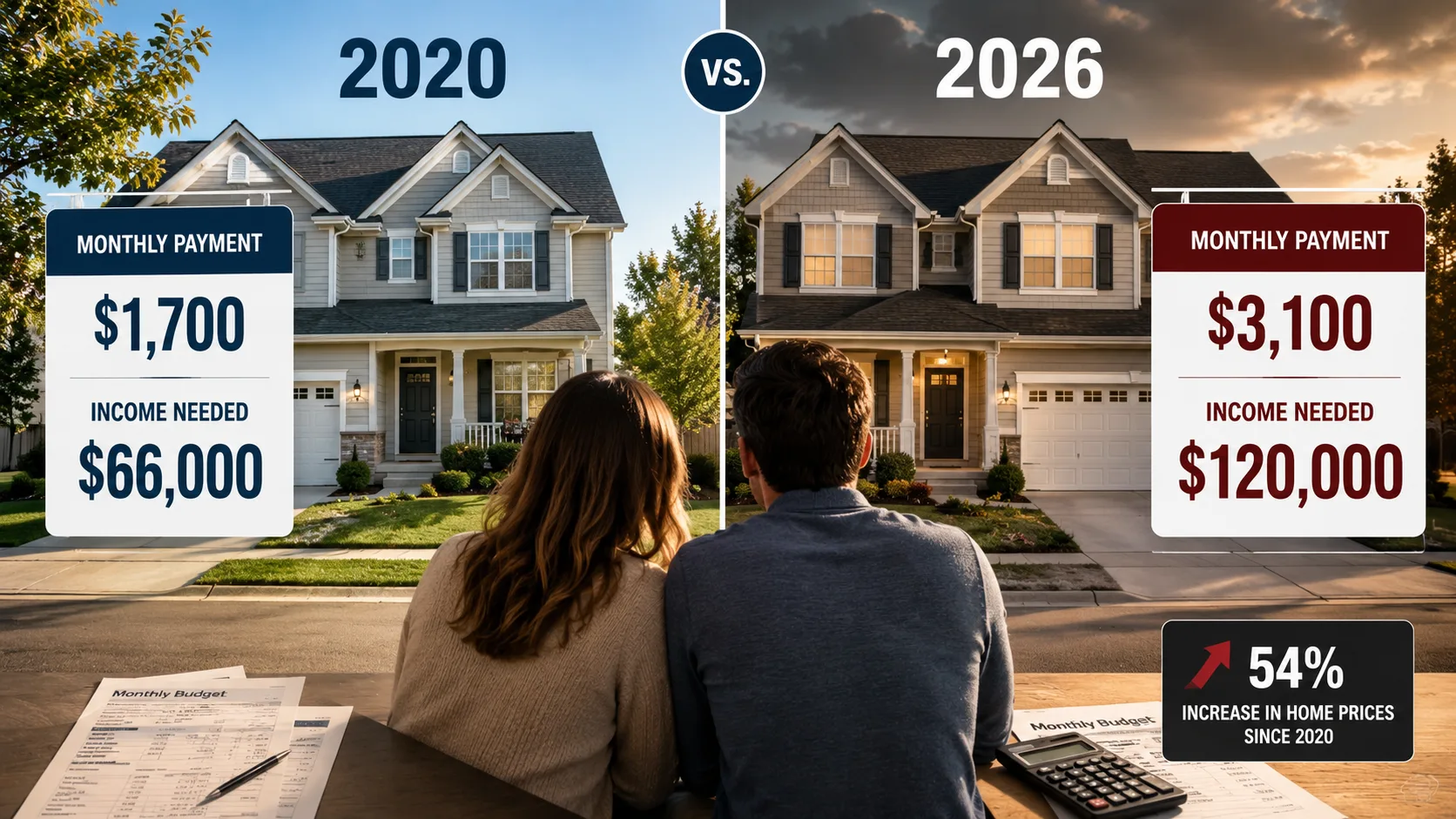
A new report from Harvard University reveals that the income required to purchase a median-priced home has surged from roughly $66,000 in 2020 to more than $120,000 today. At the same time, home sales remain stuck near 30-year lows, signaling that high prices and elevated mortgage rates continue to freeze large portions of the housing market.
The findings highlight a growing challenge for younger buyers, families looking to move, and even retirees hoping to downsize. While existing homeowners have benefited from rising home values, the affordability crunch is creating broader economic concerns that could ripple through consumer spending, labor mobility, and long-term wealth creation.
Homeownership Is Becoming Increasingly Expensive
According to Harvard University’s Joint Center for Housing Studies, both new and existing homes now carry median prices above $400,000.
The report found that existing home prices have climbed 54% since 2020, far outpacing wage growth during the same period.
Perhaps more striking is the relationship between home prices and household income. Existing homes now cost roughly five times the median household income, a dramatic increase from the ratio of about three times income that prevailed throughout much of the 1990s.
That shift has fundamentally changed the economics of homeownership.
A family that could comfortably qualify for a mortgage several years ago may now find itself priced out entirely, even if its income has increased.
Mortgage Rates Have Changed the Math
While rising home prices receive most of the attention, mortgage rates have become an equally important factor.
Mortgage rates remain above 6%, more than double the ultra-low rates many buyers locked in during 2020 and 2021.
The result is a dramatic increase in monthly housing costs.
The report found that the monthly payment on a median-priced home rose from roughly $1,700 in early 2020 to approximately $3,100 by late 2025.
That increase explains why the income required to afford a typical home has jumped to more than $120,000 annually.
For many middle-income households, the challenge isn’t simply qualifying for a mortgage. It’s finding enough room in the monthly budget to absorb housing costs that have risen far faster than wages.
Why Housing Activity Remains Stuck
Normally, lower demand would eventually push prices down.
That hasn’t happened.
Instead, the housing market has entered an unusual stalemate.
Many current homeowners remain locked into mortgage rates between 2% and 4% and are reluctant to sell their homes and take on a new mortgage at today’s rates.
That has limited inventory and helped support prices despite weaker demand.
As a result, existing home sales remain near the lowest levels seen in three decades, according to Harvard’s report.
New home sales have also struggled to gain meaningful momentum, while housing construction remains constrained.
Single-family housing starts declined 7% over the past year, contributing to ongoing supply shortages.
The combination of limited inventory and weakened demand has produced one of the most frozen housing markets in recent memory.
Economic Uncertainty Is Making Buyers Even More Cautious
Housing affordability isn’t the only challenge facing prospective buyers.
The report points to broader economic uncertainty as another major headwind.
Employment growth slowed dramatically from 1.5 million jobs added in 2024 to just 116,000 in 2025.
Meanwhile, consumer confidence fell sharply during 2025 and continued declining during the first part of 2026 amid concerns surrounding economic growth and geopolitical tensions.
Harvard researchers noted that uncertainty about employment often delays major life decisions.
Young adults may postpone moving out on their own. Families may delay relocation plans. Potential buyers may choose to remain renters rather than commit to a large mortgage payment.
These decisions can have significant downstream effects throughout the economy.
Housing activity supports a wide range of industries, including construction, home improvement, furniture, appliances, insurance, and financial services.
When housing slows, many of those sectors feel the impact.
The Wealth Gap Between Owners and Renters Continues to Grow
One of the most important long-term implications may be what this means for wealth accumulation.
For decades, homeownership has served as the primary wealth-building vehicle for middle-class families.
Those who purchased homes before the pandemic have generally seen substantial increases in home equity.
Those who didn’t may face a much steeper path to ownership today.
As affordability declines, the gap between homeowners and renters continues to widen.
Higher rents make it more difficult to save for down payments, while rising home prices require larger upfront investments.
For younger Americans in particular, this dynamic could delay homeownership by years and potentially alter lifetime wealth accumulation patterns.
What Investors Should Watch Next
Housing remains one of the most important sectors of the U.S. economy.
The direction of mortgage rates will likely determine whether affordability improves meaningfully over the next several years.
A decline in rates could bring sidelined buyers back into the market and improve affordability even if home prices remain elevated.
However, if rates remain above 6% and home prices continue rising faster than incomes, affordability pressures could persist well into the future.
Investors should also watch construction activity, housing inventory levels, and employment trends, all of which will play critical roles in determining whether the market can eventually return to a healthier balance.
For now, the numbers tell a striking story.
Just five years ago, a household earning roughly $66,000 could afford a typical American home.
Today, that same home requires more than $120,000 in annual income.
That shift may prove to be one of the defining economic stories of the decade.
About Author