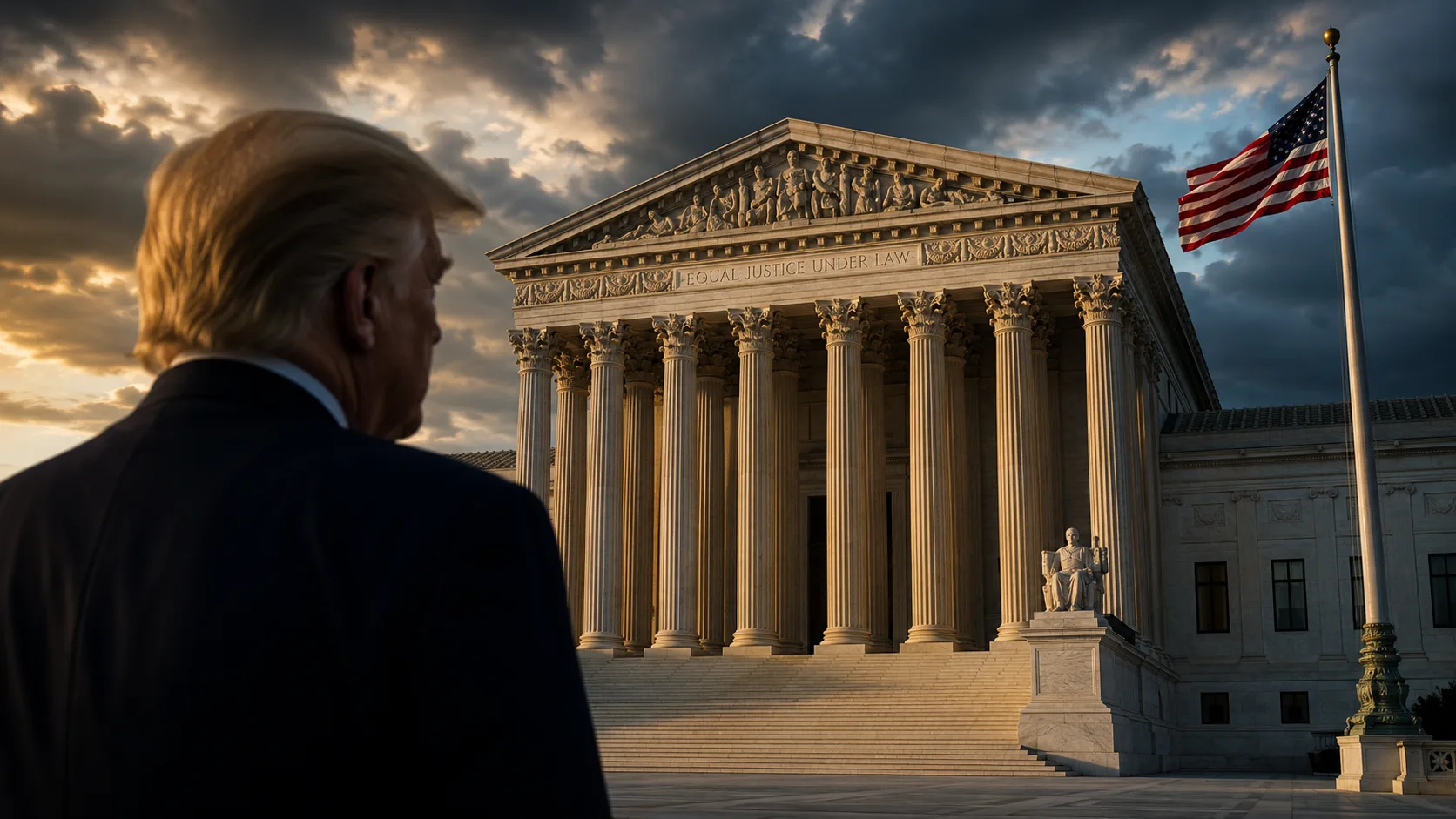
The U.S. Supreme Court is entering the final stretch of its term, and four pending decisions could have far-reaching consequences for President Donald Trump’s agenda, financial markets, immigration policy, and the balance of power in Washington.
Over the next two weeks, the court is expected to issue rulings on a series of high-profile cases involving birthright citizenship, Federal Reserve independence, executive authority over federal agencies, and protections for hundreds of thousands of immigrants.
Taken together, the decisions could help define how much authority a president can exercise over the federal government and whether the Supreme Court is willing to place meaningful limits on executive power.
Why Investors Should Be Paying Attention
While Supreme Court cases are often viewed through a political lens, several of these rulings carry significant implications for markets and the economy.
One case could determine whether a president can remove Federal Reserve officials at will, potentially affecting the independence of the nation’s central bank. Another could influence immigration policy and labor force dynamics. Others could shape the future structure of federal agencies that oversee everything from antitrust enforcement to financial regulation.
The decisions arrive at a time when investors are already monitoring tensions between the White House, Congress, and the courts as policy uncertainty continues to influence markets.
Birthright Citizenship Faces Its Biggest Test in Decades
Perhaps the most closely watched case involves Trump’s executive order seeking to end automatic citizenship for certain children born in the United States.
The order argues that children born on U.S. soil should not automatically receive citizenship if their parents are undocumented immigrants or temporary visitors.
Critics contend that the policy conflicts directly with the Citizenship Clause of the 14th Amendment, which has long been interpreted as guaranteeing birthright citizenship to nearly all individuals born in the United States.
During oral arguments, several justices from across the ideological spectrum expressed skepticism toward the administration’s position. Even Trump has publicly suggested he may not ultimately prevail in the case.
A ruling against the administration would preserve the current interpretation of birthright citizenship and could establish an important constitutional limit on executive authority.
A Critical Decision for Federal Reserve Independence
Another major case centers on Trump’s attempt to remove Federal Reserve Governor Lisa Cook.
At stake is whether presidents have broad authority to dismiss members of independent regulatory bodies or whether certain officials enjoy legal protections that shield them from political pressure.
For investors, the case could be particularly important because it touches on the long-standing independence of the Federal Reserve.
Financial markets generally view central bank independence as a cornerstone of monetary policy credibility. Any indication that future presidents could exert greater influence over interest-rate decisions would likely attract significant attention from investors, economists, and global financial institutions.
Many legal observers believe the court may rule against Trump in this dispute, though the scope of the decision remains uncertain.
The Battle Over Independent Agencies
Trump may have stronger odds in a separate case involving independent agencies such as the Federal Trade Commission.
Congress intentionally designed agencies like the FTC to operate with a degree of independence from the White House. Their leaders can typically only be removed under specific circumstances.
The administration argues that these restrictions improperly limit presidential authority over the executive branch.
The Supreme Court’s conservative majority has previously signaled support for expanding presidential control over federal agencies, leading many court watchers to believe Trump could prevail.
Such a ruling could significantly reshape the structure of government by giving future presidents greater control over agencies responsible for consumer protection, competition policy, communications regulation, and other areas.
Temporary Protected Status Also Hangs in the Balance
The fourth major case involves Temporary Protected Status (TPS), a federal program that allows certain immigrants to remain legally in the United States when conditions in their home countries make returning unsafe.
The Trump administration has sought to narrow the program and argues that courts should have limited authority to review executive branch decisions regarding who qualifies for TPS protections.
The outcome could affect hundreds of thousands of immigrants currently living and working in the United States.
The case is viewed as one of the most difficult to predict because it sits at the intersection of immigration law, executive authority, and judicial oversight.
The Court’s Relationship With Trump Is Under the Microscope
The rulings arrive amid growing scrutiny of the Supreme Court’s relationship with the president.
Since Trump’s return to office, the court has often allowed administration policies to move forward while legal challenges continue through lower courts. At the same time, the justices have occasionally drawn clear boundaries.
Most notably, the court blocked Trump’s attempt to deploy the National Guard into Chicago and later struck down his global tariff program in a decision that generated significant political backlash.
Those rulings demonstrated that while the court’s conservative majority may often agree with the administration on broad legal principles, it is not necessarily willing to endorse every assertion of presidential power.
What Comes Next
By the time the Supreme Court concludes its term before the July Fourth holiday, investors, policymakers, and voters will have a much clearer picture of how the justices intend to approach Trump’s second-term agenda.
The decisions will help answer some of the most consequential questions facing Washington today:
How much authority does a president have over independent agencies?
Can a president reshape long-standing interpretations of constitutional rights through executive action?
How much independence should the Federal Reserve maintain from political influence?
And what role should courts play in reviewing executive decisions on immigration?
The answers could shape not only the remainder of Trump’s presidency but also the future balance of power between the White House, Congress, and the courts for years to come.
About Author