Most investors are trained to fear crashes.
They think about Wall Street Crash of 1929. Black Monday. The 2008 housing collapse. The dot-com wipeout.
That instinct may be completely wrong for retirees.
According to financial researcher William Bengen, the worst year to retire in modern market history was not 1929.
It was 1968.
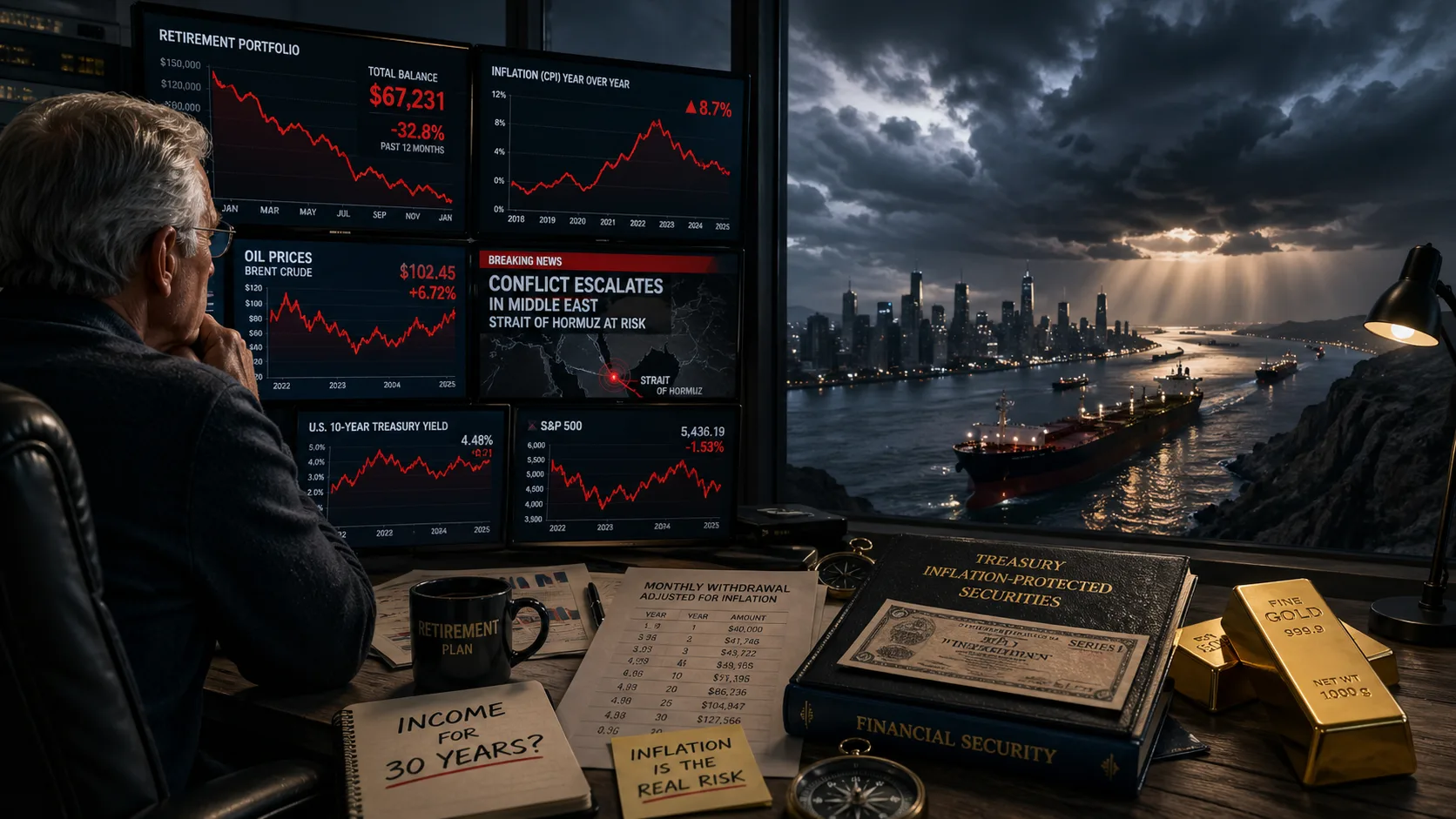
That should get your attention because parts of today’s market environment are beginning to rhyme with that era in uncomfortable ways: elevated valuations, stubborn inflation, geopolitical instability in the Middle East, rising energy risks tied to the Strait of Hormuz, massive federal deficits, and growing questions about whether the Federal Reserve can fully tame inflation without damaging growth.
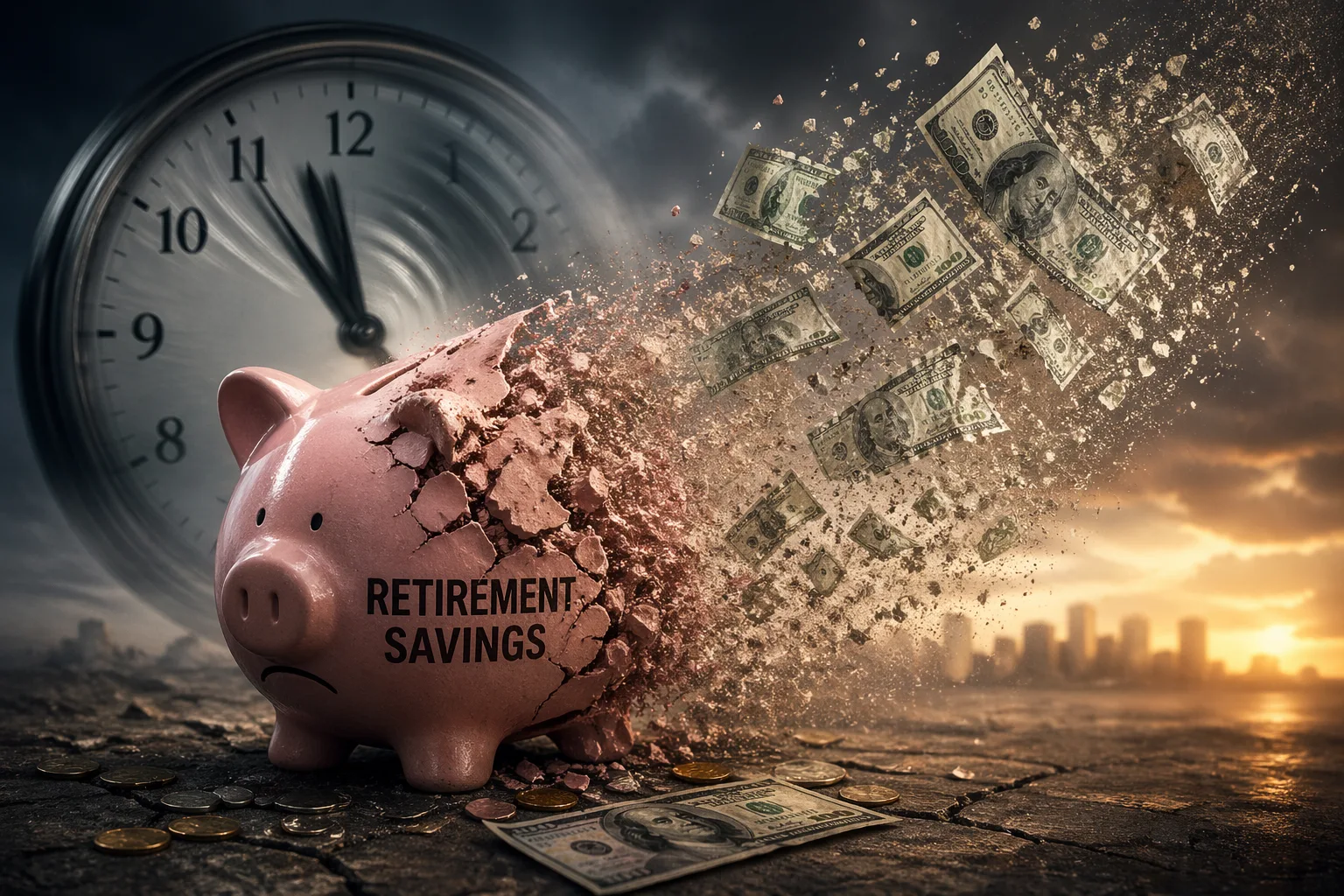
A market crash can destroy wealth quickly.
Inflation destroys wealth slowly, quietly, and often permanently.
That distinction matters enormously if you’re nearing retirement, already retired, or managing capital meant to generate future income.
And right now, many investors may be protecting themselves from the wrong threat.
What Actually Happened: Why 1968 Was Worse Than 1929
Bengen’s original research created what became known as the “4% rule,” one of the most widely referenced retirement planning frameworks in America.
The concept was straightforward:
A retiree could withdraw 4% of their portfolio annually, adjust that withdrawal upward each year for inflation, and reasonably expect their savings to last 30 years.
Later research pushed that figure closer to 4.7% when additional asset classes were included.
But his historical testing uncovered something surprising.
A hypothetical retiree who entered retirement in October 1929 with:
- 65% stocks
- 30% bonds
- 5% cash
…actually survived the worst stock crash in modern history better than someone who retired in 1968.
Why?
Because the early 1930s brought severe deflation.
Prices fell.
That meant retirees needed less income to maintain their standard of living.
Withdrawals declined.
Their portfolios eventually recovered as markets rebounded.
By contrast, someone retiring in 1968 got trapped in a brutal combination of:
- Rising oil prices
- Stagnant economic growth
- Persistent inflation
- Weak equity performance
- Rising interest rates
That combination became known as 1970s stagflation.
From 1968 to 1983:
- Consumer prices nearly tripled
- Inflation peaked at 13.5% in 1980
- Stocks struggled for years
- Bonds were crushed by rising rates
This was the nightmare scenario.
Retirees were forced to withdraw more money every year because living costs kept rising.
But their portfolios weren’t generating enough returns to offset those withdrawals.
That math becomes deadly fast.
A portfolio that began at $100,000 in 1968 fell below $41,000 in just six years.
By year 24, it had dropped to roughly $20,000.
By year 30?
Zero.
Meanwhile, the 1929 retiree finished with more money than they started with in inflation-adjusted terms.
That should completely reshape how investors think about retirement risk.
The Hidden Story: Investors Are Still Fighting the Last War
Most financial media still focuses on crashes because crashes create headlines.
Inflation creates slower pain.
That pain gets underestimated.
The average investor is still psychologically preparing for another 2008-style event when the bigger risk may be a prolonged period of:
- Higher-for-longer inflation
- Flat equity returns
- Rising geopolitical commodity shocks
- Fiscal instability
- Lower real returns
This is exactly what made the 1970s so dangerous.
And several ingredients are quietly reappearing.
Energy Risk Is Back
The conflict involving Iran and ongoing concerns over the Strait of Hormuz matter far beyond oil traders.
Roughly 20% of global oil flows through that route.
If prolonged instability disrupts supply:
- Oil prices rise
- Transportation costs rise
- Food costs rise
- Manufacturing costs rise
- Consumer inflation rises
That pressure spreads fast.
Brent Crude Oil becomes one of the most important inflation indicators investors should watch.
The U.S. Debt Problem Is Getting Harder to Ignore
The U.S. government continues running enormous deficits.
Higher deficit spending can stimulate short-term growth.
But it can also fuel long-term inflation if productivity growth doesn’t keep pace.
This is one reason Bengen flagged deficits as a growing concern.
Investors often assume the government can spend endlessly without consequences.
History suggests otherwise.
Stocks Are Expensive
Bengen also raised another issue investors are largely ignoring:
valuation risk.
The S&P 500 remains historically expensive relative to earnings by several valuation measures.
Meanwhile, major technology leaders like Nvidia, Microsoft, and Apple continue carrying massive index weightings.
That concentration creates vulnerability.
If earnings disappoint while inflation remains elevated, investors could face compressed multiples and weaker long-term returns.
That combination hurts retirees relying on portfolio withdrawals.
Why This Matters for Investors
Stocks
High valuations do not automatically mean a crash.
They often lead to mediocre long-term returns.
That matters more than short-term volatility for retirees.
Watch:
- Dividend stocks
- Defensive healthcare names
- utilities
- consumer staples
- lower-volatility ETFs
Bonds
Traditional bonds may not provide the protection investors expect if inflation resurges.
That’s why many investors are increasingly looking at:
Treasury Inflation-Protected Securities
These securities adjust with inflation and may help preserve purchasing power.
Gold
Bengen personally owns gold for inflation protection.
Gold tends to perform well when investors lose confidence in fiat purchasing power.
It also benefits during geopolitical instability.
That helps explain why many institutional investors continue treating gold as strategic insurance.
Energy Stocks
This may be the biggest overlooked hedge.
If oil volatility persists:
Exxon Mobil
Chevron
Occidental Petroleum
could benefit from prolonged pricing pressure.
Real Assets
Infrastructure, commodities, and real estate with pricing power may outperform in prolonged inflation periods.
Not all real estate works equally well.
Highly leveraged commercial property remains vulnerable.
The Retirement Survival Triangle
Here’s a simple framework investors should remember:
1. Inflation Risk
Can your portfolio outpace rising living costs?
2. Sequence Risk
Are you retiring during weak market years?
3. Withdrawal Risk
Are you pulling too much capital too early?
When all three happen simultaneously, retirement plans break.
That’s exactly what happened in 1968.
And it’s why investors should stop viewing retirement planning through a “stock crash only” lens.
Recession Good for Retirees?
Ironically, a mild recession could actually help retirees.
Why?
Because recessions often destroy inflation faster than they destroy long-term purchasing power.
Falling inflation could eventually push the Federal Reserve toward rate cuts.
That could help bonds recover.
It could also reset overheated equity valuations.
The bigger danger may be an economy that remains just strong enough to keep inflation elevated.
That was the 1970s trap.
Slow growth.
Persistent inflation.
Weak real returns.
That environment quietly destroys retirement portfolios.
What Investors Should Watch Next
Oil prices
Watch the Strait of Hormuz situation closely.
CPI data
Inflation reports matter more than ever.
Federal Reserve policy
Higher-for-longer rates change retirement math.
Treasury yields
Rising yields can pressure both stocks and bonds.
Consumer spending trends
A weakening consumer often signals broader economic slowdown.
Bottom Line
Most investors fear dramatic collapses.
They should spend more time preparing for slow financial erosion.
That’s what made 1968 so brutal.
And that’s why today’s inflation risks deserve far more attention than they’re getting.
A crash can be survived.
Thirty years of shrinking purchasing power is far harder to escape.
For retirees, that may be the real bear market.
About Author