

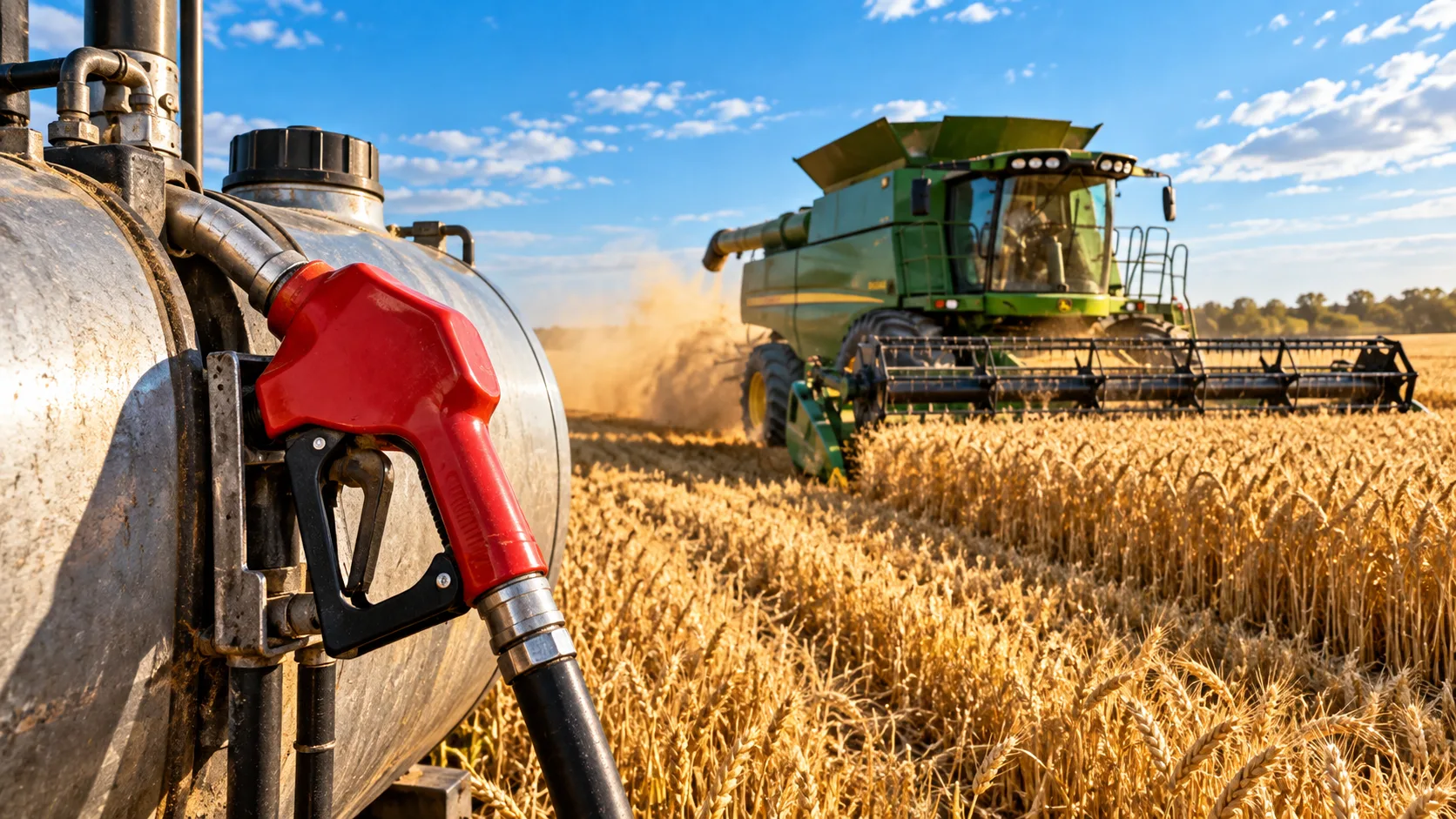
President Donald Trump has announced $8 billion in new federal assistance for American farmers, offering financial relief as soaring diesel prices and rising production costs put additional pressure on the agricultural industry.
The new Harvest Fuel Relief program, announced Monday night during a campaign rally in Kansas, will provide one-time payments to farmers struggling with higher operating expenses during the 2026 harvest season.
The announcement comes as the ongoing conflict with Iran continues to disrupt global energy markets, driving up diesel prices and increasing costs for farmers already facing tighter profit margins.
$8 Billion in New Relief for American Farmers
Speaking at a rally in Park City, Kansas, on October 19, Trump said the Department of Agriculture would distribute $8 billion to help farmers manage rising fuel costs.
The president credited Republican Sen. Roger Marshall of Kansas, who is seeking reelection, with pushing for the additional assistance.
The new funding adds to a series of federal agricultural support programs introduced during Trump’s administration. Earlier this year, the government distributed $12 billion through the Farmer Bridge Assistance program, reaching more than 560,000 farmers nationwide.
Farmers have also received nearly $14 billion in recent payments through the Agriculture Risk Coverage and Price Loss Coverage programs, according to the USDA.
Agriculture Secretary Brooke Rollins said the latest assistance is intended to provide some financial stability during a particularly difficult harvest season.
“This $8 billion dollar investment will help bring certainty to our farmers during this harvest so they can continue to feed our nation,” Rollins said in a statement.
Why Diesel Prices Are Putting Farmers Under Pressure
Diesel is one of the most important operating expenses in American agriculture. Farmers depend on it to power tractors, combines, irrigation systems and other heavy equipment used to plant, maintain and harvest crops.
Higher diesel prices also increase transportation costs, making it more expensive to move agricultural products from farms to storage facilities, processing plants and distribution centers.
The financial pressure has intensified as the conflict with Iran disrupts global energy supplies. Reduced availability and uncertainty in oil markets have contributed to sharp increases in diesel prices across the United States.
The national average diesel price has climbed to approximately $6.32 per gallon, compared with $3.62 a year earlier, according to AAA figures reported Tuesday by CBS News. That represents an increase of roughly 75%.
The USDA’s September forecast also projected that farm fuel and oil expenses would rise nearly 30% in 2026, while overall agricultural production costs would increase 4.5%.
At the same time, lower prices for some major crops have added pressure to farm revenue. That combination of higher expenses and weaker commodity prices has made it increasingly difficult for producers to maintain profitability.
How the $8 Billion Farmer Relief Program Will Work
According to the USDA, the Harvest Fuel Relief program will provide one-time payments based on estimated financial losses during the 2026 crop year.
The agency will use a standardized formula that considers several factors:
- The number of acres planted by each producer.
- USDA estimates of crop production costs.
- Expected agricultural yields.
- Commodity prices and projected financial losses.
The Farm Service Agency will administer the program, with funding provided through the Commodity Credit Corporation, an existing federal mechanism for supporting agricultural producers.
The USDA expects to announce payment rates for major commodity crops in November. Additional details for specialty crops and other eligible agricultural products will follow.
Importantly, the program does not require farmers to participate in federal crop insurance to qualify. Eligible producers are being encouraged to establish a Login.gov account linked to USDA services ahead of the application period.
The government has not yet announced an exact payment distribution date.
Trump Also Moves to Lower Diesel Costs
The new assistance follows an October 5 executive order intended to reduce fuel expenses for farmers, truckers and other diesel users.
The order temporarily permits highway use of red-dyed diesel, which is normally restricted to off-road equipment, while deferring the applicable federal diesel excise tax through the end of 2026.
The federal diesel tax currently stands at 24.4 cents per gallon. The White House has estimated that the change could provide meaningful savings for operators purchasing large quantities of fuel.
However, the tax measure provides relatively limited relief compared with the overall increase in diesel prices over the past year.
Trump has suggested that energy prices could fall significantly once the Middle East conflict ends, potentially providing additional relief to the agricultural industry.
That outcome remains uncertain and will depend on how quickly global oil supplies and transportation routes return to more normal conditions.
What the Farmer Bailout Means for the Economy and Investors
Although the program directly supports agricultural producers, its economic implications extend beyond farming.
Agricultural Equipment and Farm Suppliers
Higher fuel costs and reduced farm profitability can force farmers to delay purchases of tractors, combines and other expensive machinery.
Companies such as Deere & Company (NYSE: DE), CNH Industrial (NYSE: CNH) and AGCO Corporation (NYSE: AGCO) are exposed to agricultural equipment spending. Additional government support could help some farmers maintain operating budgets, although the size and timing of payments will determine how much assistance reaches equipment demand.
Food Prices and Inflation
Agricultural production costs can eventually influence food prices, particularly when higher fuel and transportation expenses persist.
The $8 billion program may help farmers absorb a portion of those expenses, but it does not directly lower the cost of diesel or guarantee that grocery prices will decline.
For consumers, the more important development may be whether energy prices begin falling as geopolitical tensions ease.
Agricultural Commodities
Corn, soybean and wheat producers are among the agricultural groups facing a combination of elevated costs and commodity price pressure.
Federal assistance could improve short-term cash flow for some producers, helping them cover expenses and manage debt obligations. However, government payments are unlikely to fundamentally change global crop supplies or demand.
For commodity investors, energy prices, weather conditions, export demand and USDA production forecasts will remain the more important drivers of agricultural markets.
The Bigger Concern: Farmers Are Becoming More Dependent on Federal Assistance
The latest $8 billion package highlights the growing financial challenges facing American agriculture.
Government payments can provide critical relief when farmers experience unexpected disruptions. But repeated assistance programs also raise questions about the industry’s ability to remain profitable when operating costs stay elevated and commodity prices remain under pressure.
The USDA has projected a 2.6% decline in net farm income for 2026, even as agricultural producers continue to receive substantial government support.
Another challenge is the structure of the new relief program. Because payments will be based on modeled losses rather than each farmer’s actual diesel purchases, assistance may not perfectly reflect the financial pressure experienced by individual operations.
Some producers could receive meaningful support, while others with particularly high fuel consumption may find that payments cover only a fraction of their increased expenses.
The timing also matters. The announcement came just ahead of the November midterm elections, during a period when rising farm costs have become an important political issue in agricultural states.
The Bottom Line
Trump’s $8 billion Harvest Fuel Relief program offers another financial lifeline to American farmers struggling with soaring diesel prices and rising production costs.
The payments could provide valuable short-term support during harvest season, particularly for producers facing declining margins and mounting operating expenses.
However, the industry’s longer-term recovery will depend heavily on energy prices, agricultural commodity markets and the direction of the broader economy.
For investors, the most important question is whether the new federal assistance signals temporary relief from an energy-driven crisis or another year of financial pressure for American agriculture.
About Author