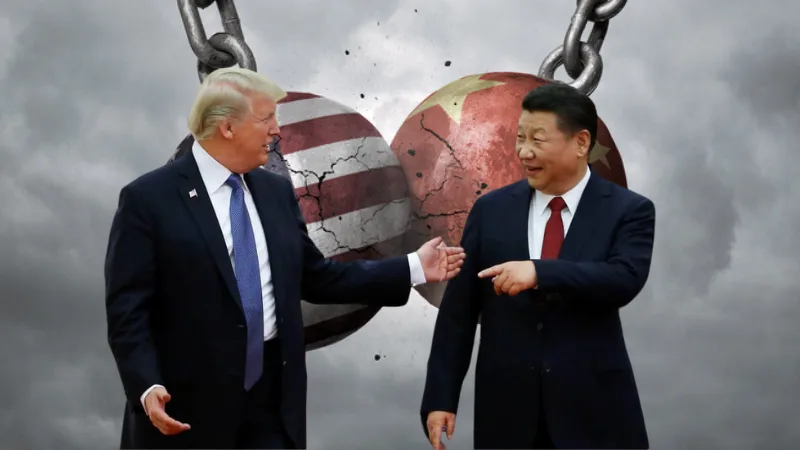
President Trump departs for Asia this weekend with stops in Malaysia, Japan, and South Korea, capped by a Trump–Xi bilateral on Thursday, October 30 in South Korea on the margins of APEC. The trip will test whether Washington and Beijing can de-escalate after fresh tariff threats and export controls. For investors, the outcomes touch everything from semiconductors and EVs to FX and commodities.
Quick Take (why this matters)
- A scheduled Trump–Xi meeting is on for Oct 30 in South Korea. Markets will trade every headline about tariffs, tech carve-outs, and fentanyl enforcement that could influence Congress and agencies.
- Tariff path is the swing factor. The White House has floated 100% tariffs on Chinese imports. Any signs of phased implementation, sector exemptions, or “standstill” language would be bullish for cyclicals and risk assets. Escalation would hit global beta, retail, and China-exposed semis.
- APEC/ASEAN optics could add side deals. Expect signals on supply chain resilience, rare earths, and dual-use tech, with knock-on effects for autos, defense, and clean-energy hardware.
- North Korea risk is a wild card. Missile activity in the run-up adds geopolitical volatility to KRW, JPY, and regional equities.
What is Officially Confirmed
- Itinerary window: The White House and host governments have said Trump will be in Asia in the Oct 26–30 period, with Malaysia and Japan ahead of South Korea. The Trump–Xi bilateral is scheduled for Thursday, Oct 30 in South Korea, ahead of APEC leaders’ events that begin Oct 31.
- Venue context: APEC 2025 is in South Korea with leaders’ events Oct 31–Nov 1, alongside the APEC CEO Summit Oct 28–31. The Xi meeting is slated before the formal leaders’ program.
Bottom line: The date, location, and bilats are no longer speculation. The meeting is on the calendar barring last-minute changes that sometimes hit summitry.
The Negotiation Map: Six Live Issues
- Tariffs and sequencing
The administration has threatened 100% tariffs on Chinese imports. Watch for any sequencing language such as “phased” or “conditional on progress,” and sector-specific relief for critical inputs. A tariff standstill or phased timeline would likely pop cyclicals and EM beta. A hard trigger would be a headwind to global growth proxies and multinationals with China exposure. - Chips and advanced computing
U.S. export controls already constrain advanced GPUs and lithography tools. Markets will look for clarity on foundry services, equipment service contracts, and cloud access rules, especially for AI training. Any carve-outs for legacy nodes used in autos and industrials would ease supply chains; tighter guardrails would hit selected semi names and Asia suppliers. (Background briefings and previews emphasize tech as a top-tier agenda item.) - EVs, batteries, and rare earths
China’s export control posture on critical minerals and processing tech has tightened. A reciprocal step-down or managed-trade channel for cathode materials, permanent magnets, or graphite would be a clear positive for auto OEMs and Tier-1s. No movement keeps re-shoring narratives alive, supporting U.S. onshoring beneficiaries and defense suppliers. - Fentanyl enforcement
The White House has signaled fentanyl will be raised with Xi. If China commits to stronger precursor controls and joint enforcement, it could lower domestic political pressure and smooth the runway for trade de-escalation. - North Korea risk management
Missile tests ahead of the trip add event risk to KRW and JPY, with potential safe-haven flows to USD and gold if rhetoric spikes. Any U.S.–ROK–Japan statement on extended deterrence would stabilize sentiment. - Energy and Russia-linked flows
Expect the U.S. to press China on Russian oil purchases. Even modest language about transparency or caps could move crude differentials and tanker routes. Conversely, a stalemate lifts the risk premium in energy.
The Calendar and Market Timing
Working schedule (local time, subject to change):
- Sun–Mon, Oct 26–27: Malaysia, ASEAN-related engagements. Tariff commentary and any early deliverables could hit futures Sunday night U.S. time.
- Mon–Wed, Oct 27–29: Japan bilats. Watch for semiconductor, supply chain, and defense posture announcements that affect Tokyo-listed suppliers and U.S. semis.
- Wed–Thu, Oct 29–30: South Korea. Trump–Xi bilateral Thursday morning, Oct 30, in South Korea. APEC leaders’ events Oct 31–Nov 1.
Trading implication: The headline window is wide open from late Sunday ET through Thursday Asia hours, with U.S. equities reacting each pre-market. Consider whether to hedge Tuesday–Thursday exposure in China-sensitive sectors.
What Could Happen and Who Benefits
Base case: managed cooling without a grand bargain
- Tariffs: Language pointing to talks continuing, with hints of phased implementation or targeted exemptions.
- Tech: No big loosening, but greater clarity on legacy-node allowances and service contracts.
- Impact: Relief rally in cyclicals, regional exporters, and semis with legacy exposure. Modest KRW and JPY strength as tail risk fades.
Bull case: mini-deal
- Tariffs: Standstill for 60–90 days tied to enforcement milestones, plus sector carve-outs.
- Tech/minerals: Working group on rare earths and EV inputs; limited pilot for customs pre-clearance on industrial parts.
- Impact: Outperformance for autos, machinery, and memory suppliers. EM rebounds, DXY softens, gold drifts lower.
Bear case: escalation or no-show optics
- Tariffs: Fresh 100% tariff timeline with limited exemptions.
- Tech: Expanded entity restrictions and tighter cloud access.
- Impact: Drawdown in global beta. High-China-revenue tech underperforms; defensive sectors, gold, and energy outperform. KRW and JPY weaken, VIX pops.
Investor Playbook
1) Position sizing and timing
- Use options to define risk around the Oct 30 bilateral. Consider call spreads on cyclicals if you expect a de-escalation signal, or put spreads on China-exposed consumer and semi names as protection into Thursday Asia hours. (Time decay is real; structure expiries that capture Thursday headlines.)
- For international exposure, hedge KRW and JPY swings if you carry unhedged positions in Korea or Japan ETFs.
2) Sector watchlist
- Semiconductors: Memory (Korea) benefits most in bull/base outcomes. U.S. logic names with China revenue concentration are more sensitive in the bear case. Policy clarity on equipment service and legacy nodes is the catalyst.
- Autos and EV supply chain: Any movement on graphite, cathodes, magnets or broader customs facilitation helps OEMs and Tier-1s. If nothing changes, onshoring winners and rare-earth miners retain the upper hand.
- Defense: Stronger U.S.–Japan–ROK deterrence language, or additional North Korea tests, support defense names.
- Retail and general importers: A tariff standstill is relief. An escalation compresses margins and raises price-elasticity risk.
3) FX, rates, and commodities
- FX: KRW and JPY are high-beta to diplomacy headlines. Base/bull scenarios support both against USD; bear favors USD and CHF.
- Rates: A constructive outcome can steepen curves via growth optimism; an escalation does the reverse as risk-off grows.
- Gold and oil: De-escalation is modestly negative for gold, while fresh friction or North Korea surprises are positive. Energy pivots on any signals about China’s Russia barrels and shipping routes.
What to Watch for in the Communiqués
- Verbs that signal intent: “resume,” “advance,” “standstill,” “phase,” “pilot,” “working group,” “milestone.”
- Narrow wins: Even a single sector carve-out or customs pilot can be investable if it reduces uncertainty for a large capex category.
- Fentanyl enforcement text: Stronger language can grease the rails for Congressional and agency follow-through that stabilizes trade channels.
- North Korea lines: Any trilateral phrasing about extended deterrence is a risk-moderator for the region.
Politics and Optics
- First Trump–Xi in-person meeting since 2019: The symbolism matters as much as substance. Even a modest deliverable can anchor additional rounds of staff-level talks into November.
- Host signals: South Korea’s schedule framing and the APEC CEO Summit agenda on trade, energy transition, AI, and biotech point to an economic lens that markets will reward if cooperation beats confrontation. apecceosummitkorea2025.com
- Think-tank read: Policy shops frame this visit as a test of whether the two powers can set guardrails while they compete. Translation for investors: position for volatility, but do not ignore upside tails. Brookings
About Author