Oil is screaming higher again, and Wall Street’s brief hope for a fast end to the U.S.-Iran conflict is starting to evaporate.
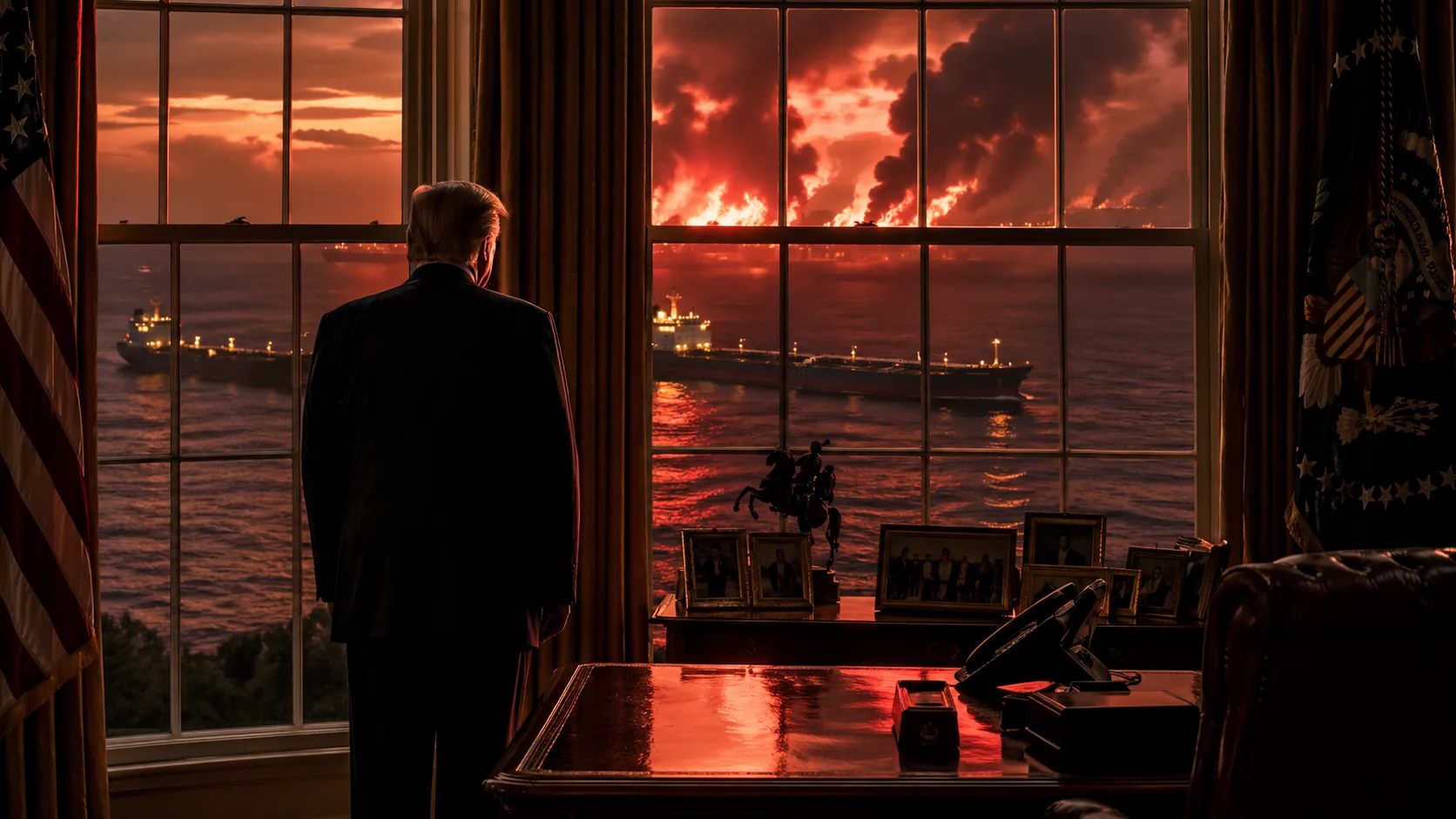
After President Donald Trump called Iran’s response to a U.S. peace proposal “unacceptable” on Sunday, traders immediately began repricing the risk that the Strait of Hormuz could remain effectively crippled for far longer than markets had expected just days ago. Brent crude surged back above $103 a barrel Monday, while U.S. crude nearly reclaimed the $100 level before pulling back slightly.
This matters because the entire global economy still runs on oil, and the market is beginning to realize this may not be a short disruption.
The Market’s “Peace Trade” Just Got Hit
Last week, oil prices fell sharply on optimism that diplomacy could reopen the Strait of Hormuz and restore normal energy flows. That optimism now looks premature.
Trump’s public rejection of Iran’s proposal changed the tone overnight. Energy traders who had been betting on de-escalation suddenly found themselves facing the possibility of a prolonged supply squeeze.
The Strait of Hormuz remains one of the most important shipping chokepoints on earth. Roughly a fifth of the world’s oil normally passes through it. Even partial disruption creates immediate pricing pressure because refiners, shipping companies, and governments begin competing for replacement barrels.
Brent crude rose as high as $105.99 Monday before settling lower. U.S. crude briefly topped $100 a barrel.
Behind the scenes, the situation appears even more fragile than headlines suggest.
PVM Oil Associates analyst John Evans said, “Despite reassuring noises that back channels are still open and the parties are talking, our take is that the U.S. and Iran are as far away from agreement as when this supposed ceasefire started.”
That is the line markets are starting to price in.
Energy Markets Are Entering a New Phase
The real issue now is not simply whether the Strait reopens.
It is whether the global oil system can recover quickly even if it does.
Saudi Aramco CEO Amin Nasser warned Sunday that the world has effectively lost about 1 billion barrels of oil supply over the past two months. That is an extraordinary number. Energy infrastructure disruptions create cascading effects across shipping, refining, insurance markets, and inventories.
Even if tanker traffic resumes normally tomorrow, inventories across the system have already been drained.
That explains why JPMorgan now expects oil to remain in the low $100 range for much of the remainder of the year, with an average of roughly $97 expected in 2026.
In other words, Wall Street increasingly believes this is becoming a structural energy problem rather than a temporary geopolitical spike.
The Quiet Panic Happening in Global Shipping
One of the most important developments in the Reuters report barely made the headlines.
Tankers are now moving through the Strait with tracking systems turned off.
That is highly unusual and signals growing fear among shipping operators about becoming targets. According to Kpler shipping data, at least three crude tankers recently exited the Strait without active transponders.
That creates enormous uncertainty for energy traders because transparency in shipping routes is critical for oil pricing models and supply forecasting.
Meanwhile, LNG shipments are still attempting passage, including a Qatari tanker heading toward Pakistan.
The market is now watching whether Iran escalates attacks on commercial shipping or whether naval escorts become necessary.
If either happens, energy prices could move sharply higher again.
Why Investors Should Pay Attention Beyond Oil Stocks
The obvious winners are energy producers, refiners, and select defense stocks.
But the second-order effects are where things get dangerous.
Higher oil prices act like a tax on consumers and businesses. Transportation costs rise. Manufacturing costs rise. Airline margins get squeezed. Inflation pressures reaccelerate.
That creates a major complication for the Federal Reserve.
For months, markets had been leaning toward lower interest rates later this year. Sustained oil above $100 threatens that entire thesis because rising energy costs can quickly bleed into broader inflation data.
This is exactly the kind of environment where market leadership can suddenly rotate.
Energy producers with strong free cash flow could continue outperforming. Airlines, transport companies, and consumer discretionary names could face renewed pressure. Industrials dependent on fuel-intensive logistics may also struggle.
One particularly interesting development came from FANG parent Diamondback Energy, which reportedly bought options tied to the spread between Brent and WTI crude. The trade appears designed to hedge against the possibility that the U.S. could eventually restrict oil exports.
That is not a normal hedge.
That is a company preparing for an extreme market dislocation scenario.
Beijing May Become the Wild Card
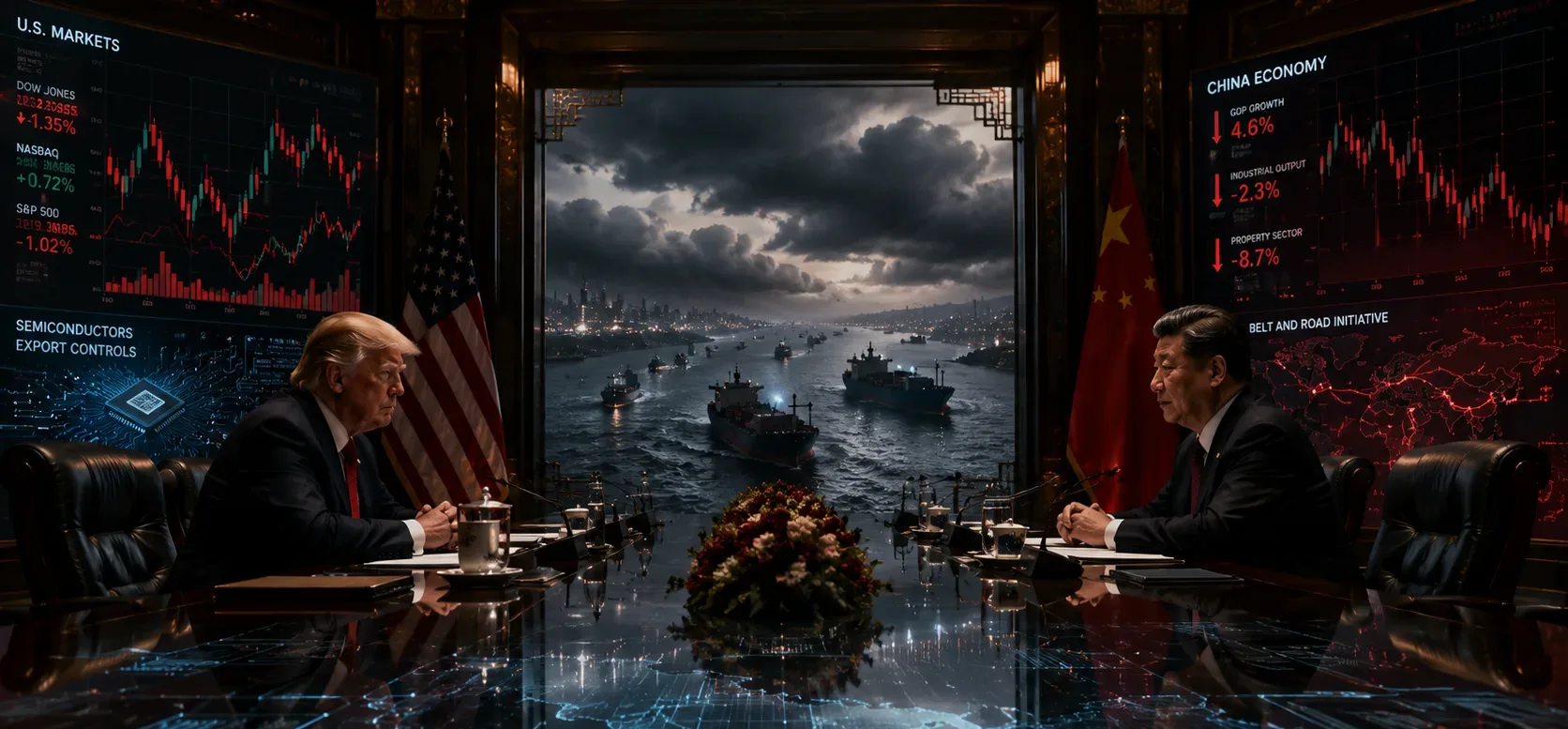
Trump is scheduled to arrive in Beijing this week to meet with Chinese President Xi Jinping.
That meeting suddenly carries enormous significance for energy markets.
China remains one of Iran’s most important economic relationships and one of the few countries with potential leverage capable of pressuring Tehran behind closed doors.
According to John Evans, markets increasingly believe meaningful progress may not occur until Trump directly seeks Beijing’s help.
That means investors are no longer just trading Middle East headlines.
They are trading U.S.-China geopolitical coordination risk as well.
The Bigger Story Wall Street May Be Missing
The market keeps treating each oil spike like a temporary geopolitical event.
But something larger may be developing underneath.
For years, investors operated under the assumption that globalization created enough redundancy to absorb regional conflicts. The Iran crisis is exposing how fragile the energy system still is despite years of diversification efforts.
The world still depends heavily on a handful of strategic shipping corridors.
And when one of them breaks, the economic consequences arrive fast.
That realization may be starting to reshape how institutional investors think about energy security, domestic production, LNG infrastructure, tanker companies, and defense spending over the next decade.
Key Catalysts Investors Should Watch Next
Diplomatic Developments
- Trump’s meetings in Beijing this week
- Any indication China will pressure Iran
- Signs of direct U.S.-Iran backchannel negotiations
Strait of Hormuz Activity
- Whether tanker traffic increases or declines
- Additional vessels disabling tracking systems
- Potential naval protection efforts
Oil Market Reactions
- Brent crude sustaining levels above $100
- WTI-Brent spread widening further
- Strategic petroleum reserve discussions
Federal Reserve Implications
- Inflation expectations moving higher
- Bond yields reacting to energy costs
- Rate-cut expectations being delayed
Final Take
The market wanted a quick resolution.
Instead, investors are now confronting the possibility that this conflict could reshape energy pricing for the rest of 2026.
Oil above $100 does not just impact gas stations. It changes inflation expectations, central bank policy, corporate margins, consumer spending, and geopolitical alliances all at once.
And right now, the market still does not appear fully positioned for that reality.
About Author