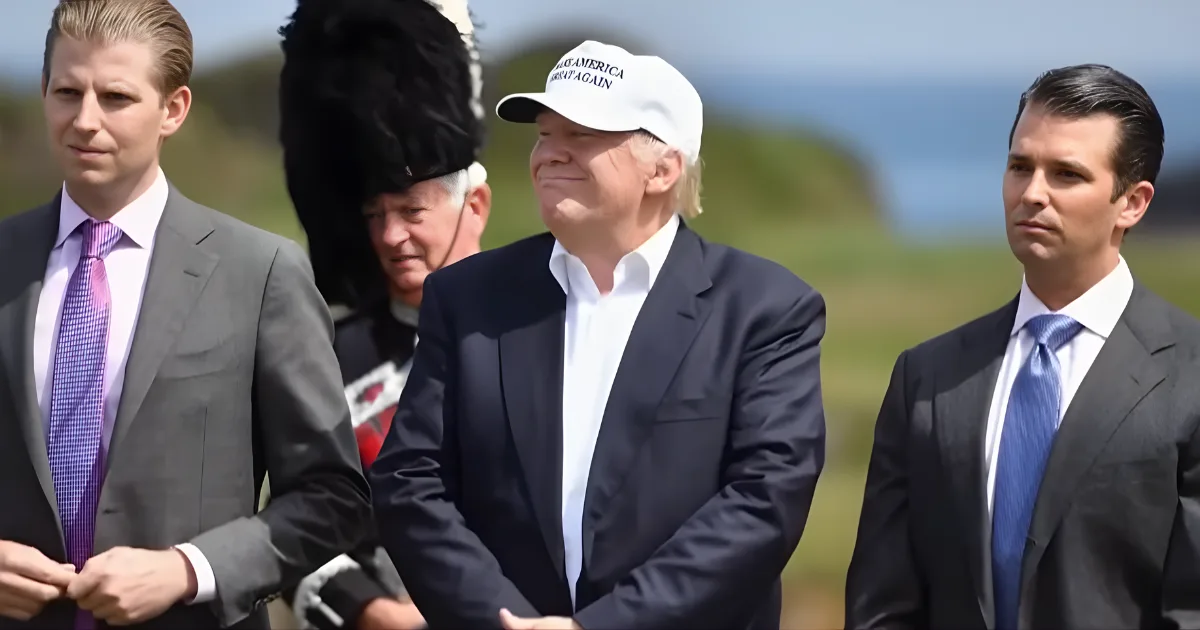
President Donald Trump, his two eldest sons, and the Trump Organization have filed a sweeping federal lawsuit against the Internal Revenue Service and the U.S. Treasury Department, alleging catastrophic failures that allowed confidential tax records to be illegally disclosed to the media.
The lawsuit, filed in federal court in Miami, seeks at least $10 billion in damages, accusing federal agencies of negligence and systemic breakdowns that enabled a former contractor to access and leak highly sensitive tax information without authorization.
The plaintiffs include President Trump, Donald Trump Jr., Eric Trump, and the Trump Organization, which is run by Trump’s sons.
Allegations Center on IRS Safeguards Failure
According to the civil complaint, the IRS and Treasury failed in their statutory duty to protect confidential taxpayer information, allowing a politically motivated individual to exploit internal access to leak private data during 2019 and 2020.
The lawsuit centers on the actions of Charles Littlejohn, a former IRS contractor who admitted to stealing and disclosing tax return information belonging to President Trump and thousands of other taxpayers.
Littlejohn ultimately pleaded guilty in October 2023 to one count of unlawful disclosure of tax return information and is currently serving a five year federal prison sentence.
The plaintiffs argue that Littlejohn’s actions were not isolated misconduct but the direct result of lax oversight, inadequate internal controls, and failures by senior federal agencies tasked with safeguarding taxpayer data.
Media Disclosure and Alleged Reputational Harm
The lawsuit specifically references disclosures made to New York Times and ProPublica, which published reporting based on the leaked tax documents.
A spokesperson for Trump’s legal team said in a statement:
“The IRS wrongly allowed a rogue, politically-motivated employee to leak private and confidential information about President Trump, his family, and the Trump Organization to the New York Times, ProPublica and other left-wing news outlets, which was then illegally released to millions of people.”
The spokesperson added:
“President Trump continues to hold those who wrong America and Americans accountable.”
The lawsuit claims the resulting coverage caused severe reputational and financial damage, unfairly portraying Trump and his businesses in a false and damaging light.
Dispute Over ProPublica Reporting
A key section of the lawsuit challenges ProPublica’s reporting, particularly claims suggesting potential fraud or irregularities in Trump’s tax filings.
The complaint states that ProPublica’s reporting falsely implied wrongdoing by highlighting what it described as unexplained inconsistencies in the tax records.
While the term “versions of fraud” does appear in ProPublica’s October 2019 reporting, the lawsuit notes that the phrase originated from commentary by a third party, not from the documents themselves.
That language came from Nancy Wallace, a finance and real estate professor at the University of California, Berkeley’s Haas School of Business, who was one of multiple experts interviewed by ProPublica. According to the report, those experts said they saw no clear explanation for several inconsistencies, though no definitive fraud finding was made.
The Trump lawsuit argues that the way the information was presented misled readers and amplified reputational harm.
Claims of Broad Financial and Public Damage
The lawsuit asserts that the federal government’s failure to prevent the leaks resulted in extensive damage across multiple dimensions.
According to the complaint:
“Defendants have caused Plaintiffs reputational and financial harm, public embarrassment, unfairly tarnished their business reputations, portrayed them in a false light, and negatively affected President Trump, and the other Plaintiffs’ public standing.”
The plaintiffs argue that once confidential tax data is disclosed publicly, the damage cannot be undone, regardless of later corrections or clarifications.
Treasury Actions and Booz Allen Fallout
The lawsuit follows recent developments at the Treasury Department.
Earlier this week, Treasury Secretary Scott Bessent announced that the department had terminated all contracts with Booz Allen Hamilton, the consulting firm that employed Littlejohn as a contractor.
The move came after Bessent said the department was conducting a review of contractor access protocols and internal data security following the revelations surrounding the leak.
While the Treasury Department has not admitted wrongdoing, the timing of the contract cancellations has drawn increased scrutiny and raised questions about whether existing safeguards were sufficient to protect sensitive taxpayer information.
Rare Legal Action by a Sitting President
It is extremely uncommon for a sitting U.S. president to file a civil lawsuit against agencies within the executive branch.
Legal experts note that the size of the damages sought, $10 billion, is also extraordinary and could prompt complex legal debates over sovereign immunity, agency liability, and internal accountability.
However, the lawsuit fits within a broader pattern of aggressive legal action by President Trump aimed at institutions he claims have acted improperly or politically against him.
Pattern of Legal Pushback Against Federal Agencies
The New York Times reported in October that Trump had previously sought $230 million in damages from the Department of Justice over what he described as politically motivated investigations.
Supporters argue that these lawsuits reflect an effort to impose accountability on federal institutions that wield significant power over individuals and businesses.
Critics counter that the cases raise questions about conflicts of interest and executive branch norms.
Why This Case Matters Going Forward
Beyond the political implications, the lawsuit raises serious questions about data security within federal agencies, particularly the IRS, which holds some of the most sensitive personal and financial information in the country.
For taxpayers and investors alike, the case highlights potential vulnerabilities in how confidential financial data is stored, accessed, and protected.
If the lawsuit proceeds, it could lead to increased oversight, tighter contractor access rules, and broader reforms within the Treasury Department and IRS.
At minimum, the case ensures that the issue of taxpayer data protection will remain firmly in the national spotlight as courts weigh responsibility, damages, and the limits of government accountability.
About Author