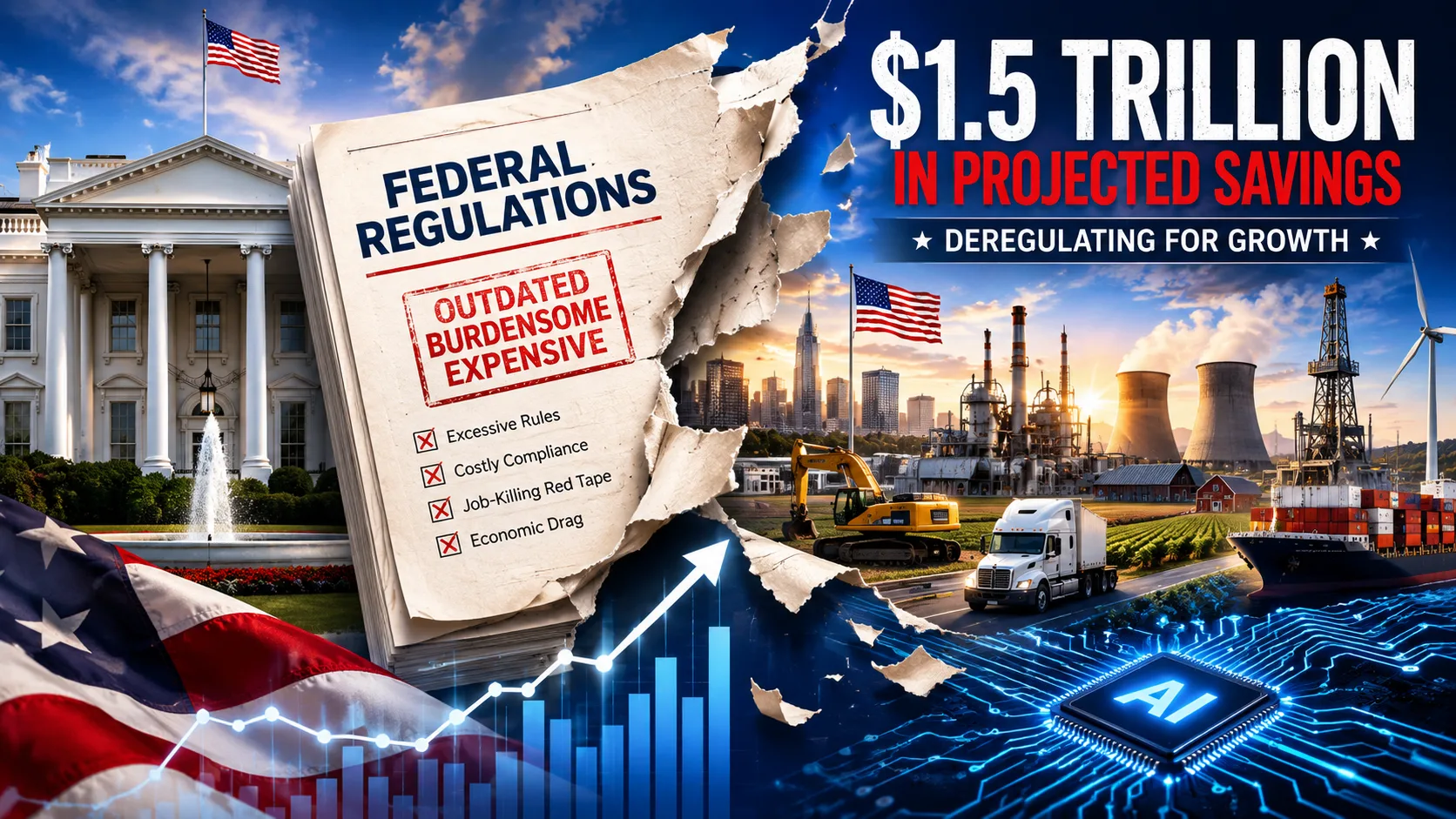
The Trump administration has unveiled one of the most ambitious deregulatory agendas in modern U.S. history, proposing to eliminate or rewrite more than 700 federal regulations while projecting $1.5 trillion in regulatory cost savings during fiscal 2026.
For investors, the announcement isn’t just another Washington policy update.
If implemented, the changes could affect everything from energy producers and automakers to artificial intelligence companies, agriculture, manufacturing, retailers, and defense contractors. It also signals that deregulation remains one of the White House’s highest economic priorities heading into the second half of the year.
The proposal dramatically expands on last year’s regulatory agenda and reflects the administration’s belief that reducing compliance costs will accelerate economic growth, lower prices, and encourage business investment.
The Biggest Deregulatory Agenda Yet
The White House’s Office of Information and Regulatory Affairs (OIRA), part of the Office of Management and Budget, released its 2026 Unified Regulatory Agenda outlining 702 deregulatory actions, up sharply from 482 actions in last year’s plan.
Mark Paoletta, who is serving as OIRA administrator, described the initiative as being focused on improving affordability and economic growth.
“The North Star of this Regulatory Plan is improving the lives of Americans,” Paoletta said.
According to OIRA, the administration expects the new agenda to generate approximately $1.5 trillion in projected regulatory cost savings, dwarfing the previous record of $211.8 billion achieved during fiscal 2025.
If those estimates prove accurate, it would represent the largest regulatory cost reduction ever claimed by a U.S. administration.
Energy Companies Could Be Among the Biggest Winners
One of the most closely watched sections of the plan comes from the Environmental Protection Agency.
The EPA announced it intends to reconsider several Biden-era environmental regulations, including pollution standards for light- and medium-duty vehicles and carbon emissions standards affecting fossil fuel power plants.
Those changes could reduce compliance costs for:
- Oil and gas producers
- Utilities
- Traditional automakers
- Heavy manufacturing companies
- Industrial suppliers
Supporters argue the rollback could improve domestic energy production and reduce costs for businesses.
Critics, however, warn that weakening environmental standards could increase pollution and create longer-term public health and climate-related costs.
Agriculture and Food Policy Face Major Changes
The Department of Agriculture also outlined several significant proposals.
Among them are new rules designed to reduce fraud within the Supplemental Nutrition Assistance Program (SNAP), commonly known as food stamps.
The department also plans to:
- Revise work requirements for certain able-bodied adults receiving SNAP benefits.
- Reevaluate which foods qualify under the program to better align with the administration’s nutrition objectives.
- Modernize food safety inspections by eliminating older inspection procedures that officials say are no longer necessary.
While many of these proposals primarily affect government programs, food manufacturers, grocery chains, agricultural producers, and retailers will likely be watching closely for potential operational impacts.
AI and Export Rules Could Shift
The Commerce Department’s Bureau of Industry and Security also included several notable initiatives.
The agency plans to establish a new framework governing the international distribution of American artificial intelligence technology, seeking to balance national security concerns with continued AI leadership.
Officials also said they intend to ease certain export restrictions on drones shipped to selected U.S. allies while expanding national security tariff rules involving copper.
These proposals could affect companies involved in:
- Artificial intelligence
- Semiconductor manufacturing
- Defense technology
- Drone production
- Industrial metals
As AI becomes an increasingly strategic industry, export policy has become an important factor for investors evaluating technology companies with global operations.
Why Investors Are Paying Close Attention
Regulatory policy rarely produces immediate market moves on its own.
However, over time it can significantly influence corporate profitability by changing compliance costs, permitting timelines, capital investment decisions, and competitive dynamics.
Companies operating in heavily regulated industries often experience substantial earnings impacts when major rules are added—or removed.
The administration’s plan still faces the normal federal rulemaking process, and many proposals are expected to encounter legal challenges or public comment before becoming final.
Even so, the breadth of the agenda sends a clear message about the White House’s economic priorities.
The Bigger Picture
Whether investors support or oppose the administration’s approach, the scale of the proposal is difficult to ignore.
With more than 700 regulatory actions under review and projected savings of $1.5 trillion, the initiative reaches into nearly every major sector of the U.S. economy.
If significant portions of the agenda are ultimately implemented, the effects could extend well beyond Washington, influencing corporate earnings, industry competition, capital spending, and long-term investment opportunities for years to come.
About Author