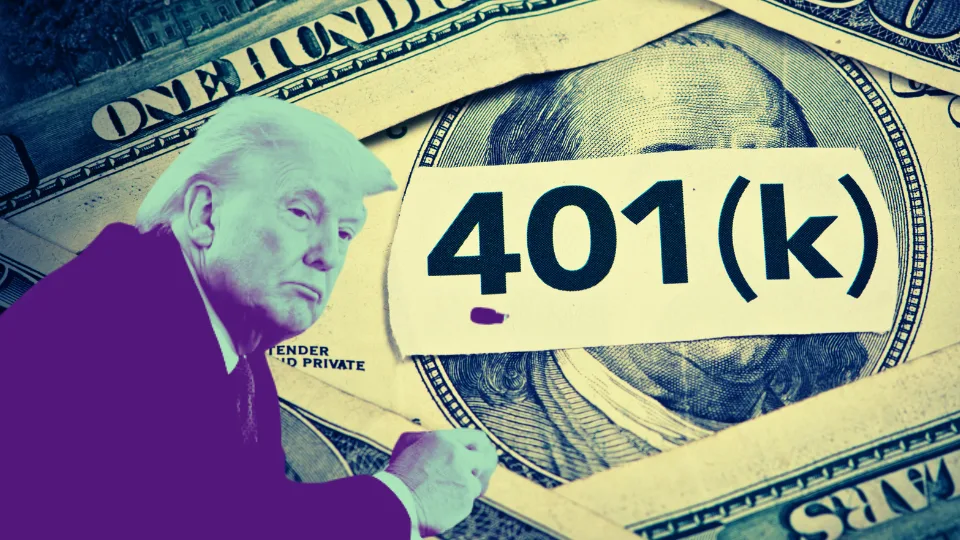
President Donald Trump used his State of the Union address to unveil a major new retirement initiative aimed at tens of millions of Americans who currently lack access to employer-sponsored retirement plans. The proposal would create government-supported, portable retirement accounts with matching contributions of up to $1,000 per year, potentially reshaping the U.S. retirement landscape and opening new capital flows into financial markets.
If implemented, the plan could expand retirement coverage to millions, influence long-term investment trends, and inject billions of dollars into stocks and bonds over time. But significant questions remain about cost, authority, and whether Congress will approve it.
Here is what investors and everyday Americans need to know.
A Major Expansion of Retirement Access
During the address, Trump framed the proposal as an effort to close a long-standing gap in retirement security.
“Half of all of working Americans still do not have access to a retirement plan with matching contributions from an employer. To remedy this gross disparity, I’m announcing that next year, my administration will give these oft forgotten American workers … access to the same type of retirement plan offered to every federal worker,” Trump said. “We will match your contribution with up to $1,000 each year as we ensure that all Americans can profit from a rising stock market.”
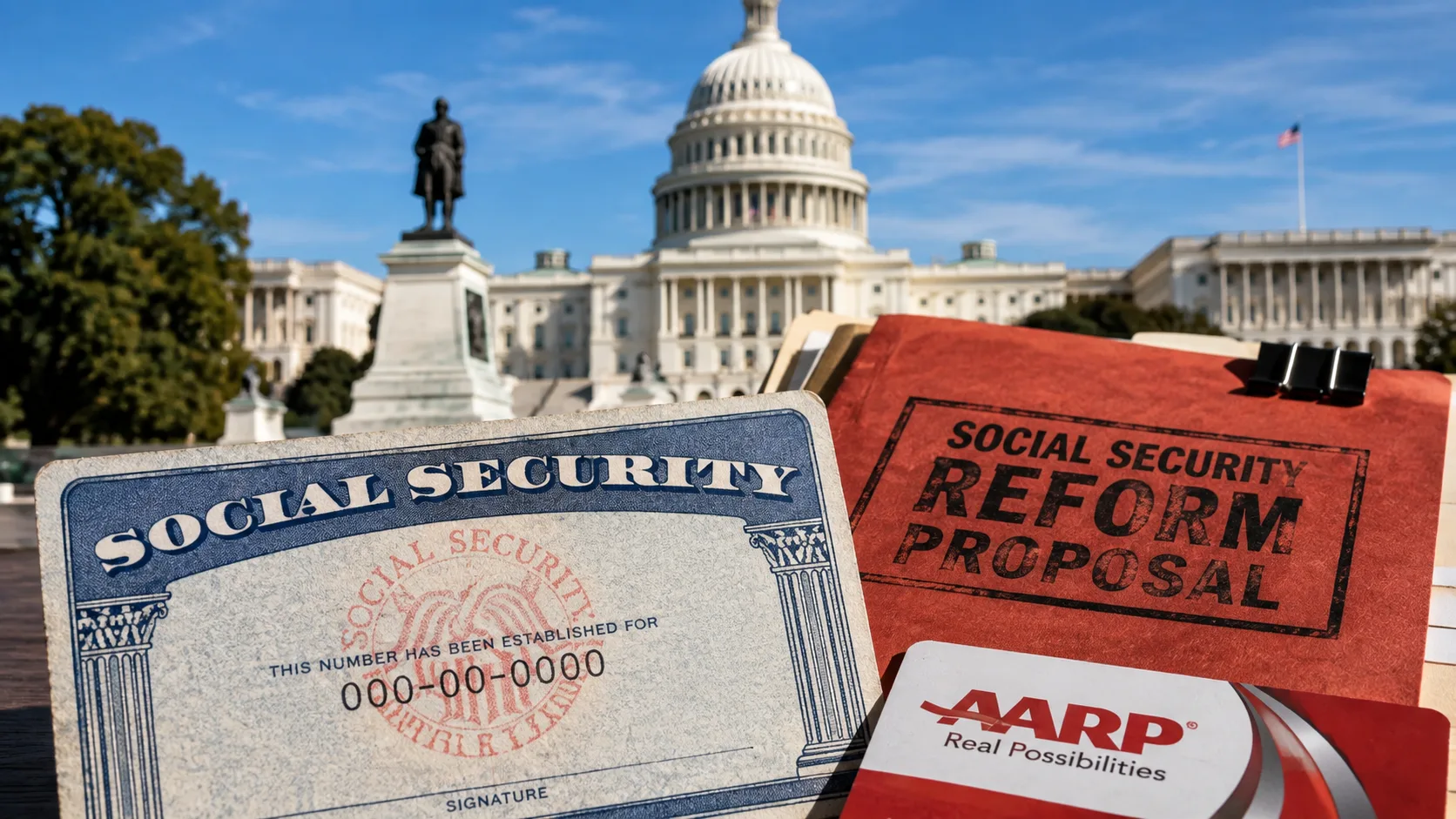
According to AARP, roughly 56 million Americans currently lack access to a workplace retirement plan. Many are part-time workers, gig workers, or employees at small businesses that do not offer retirement benefits.
The proposed system would likely mirror the federal government’s Thrift Savings Plan, which offers low-cost index funds invested in stocks and U.S. Treasury securities. These accounts would follow workers from job to job, making them portable and easier to manage over a lifetime.
Why Retirement Security Is Becoming a National Priority
Trump’s proposal arrives at a time when many Americans are financially unprepared for retirement.
Recent research from the National Institute on Retirement Security shows the median retirement savings for all working-age Americans is just $955, including those with no savings at all. Among people who do have retirement accounts, the median balance is around $40,000.
Meanwhile, Social Security faces serious financial pressure. The trust fund that supports retiree and survivor benefits is projected to be depleted by the fourth quarter of 2032, potentially triggering benefit cuts of around 20 percent unless Congress acts. The current average monthly Social Security payment is approximately $2,071.
These pressures are pushing policymakers to find new ways to increase personal savings and reduce reliance on government benefits.
How the Proposed Retirement Accounts Could Work
Although final details have not been released, early signals suggest the accounts would operate similarly to federal employee retirement plans.
Key features could include:
• Automatic enrollment for workers without employer retirement plans
• Up to $1,000 in annual government matching contributions
• Low-cost investment options in stock and bond index funds
• Portability between jobs
• Optional enrollment through tax filing
• Potential integration with existing Saver’s Match provisions
Economist Teresa Ghilarducci, a longtime expert on retirement policy, emphasized the importance of expanding access.
“Expanding access is a meaningful step,” Ghilarducci said. “For decades, Congress has tolerated a system in which nearly half of full-time workers and most part-time and gig workers lack access to a workplace retirement plan. Addressing that coverage gap is not trivial.”
She also highlighted the behavioral impact of government matching contributions.
“The $1,000 matching contribution from the federal government is a game changer,” she said. “Matches for low-income workers significantly alter savings behavior.”
The Economic Case Behind the Plan
The idea of expanding retirement access is not new. Kevin Hassett, Director of the National Economic Council, has long advocated creating a universal retirement system similar to the federal Thrift Savings Plan.
In a research paper co-authored with economist Teresa Ghilarducci, Hassett argued that broader retirement access could strengthen wealth accumulation across generations.
“Reforms to provide more retirement plan access to less well-off families would not only increase the retirement security of millions of low-income Americans, but would also boost their overall wealth and allow them to pass it along to future generations, thereby helping close the wealth gap in the process.”
Supporters say increased retirement participation could also benefit financial markets by creating a steady stream of long-term investment capital.
Funding Questions and Political Challenges
Despite the potential benefits, critics quickly raised concerns about cost and authority.
Romina Boccia, Director of Budget and Entitlement Policy at the Cato Institute, questioned whether the administration has the legal authority to fund matching contributions.
“Americans are still waiting on their tariff rebate checks and DOGE dividend checks. Not only does the administration lack the fiscal authority to seed 401(k)s with a $1,000 taxpayer match, nor is this a good idea,” Boccia said. “Americans need a simpler system of tax-advantaged savings via universal savings accounts, not more tax-advantaged accounts or related handouts.”
Policy analysts also warn the program could be expensive to launch and sustain, especially if participation is high.
Wolfe Research policy head Tobin Marcus expressed skepticism about its near-term viability, noting the proposal would likely require congressional approval and significant funding commitments.
Possible Path Through Congress
Treasury Secretary Scott Bessent suggested the administration may pursue the proposal through budget reconciliation, a legislative process that requires only a simple majority vote in the Senate.
More details are expected in the coming months, including:
• Eligibility requirements
• Funding sources
• Administrative structure
• Interaction with existing retirement tax credits
• Implementation timeline
Reports suggest the accounts could launch as early as 2027 if approved.
A Broader Retirement Strategy
The new proposal is part of a larger retirement policy push by the Trump administration.
Recent actions include:
• Opening 401(k) plans to alternative investments such as private equity
• Introducing “Trump accounts” for children with $1,000 seed contributions
• Exploring elements of Australia’s mandatory retirement savings system
• Encouraging philanthropic contributions to retirement savings programs
Australia’s superannuation model, which requires employer retirement contributions, has been cited by Trump as a potential inspiration for strengthening U.S. retirement outcomes.
What This Means for Investors
If enacted, the proposed retirement system could have meaningful long-term effects on markets.
Increased Stock Market Flows
New retirement accounts would likely invest heavily in diversified index funds, potentially increasing long-term demand for equities and bonds.
Boost to Asset Managers
Firms managing retirement funds could see expanded assets under management if millions of new accounts are created.
Stronger Long-Term Market Stability
Broad retirement participation historically supports long-term investment trends and can reduce market volatility.
Expansion of Retail Investor Base
More Americans participating in retirement markets could deepen household exposure to equities, strengthening the role of retail investors.
The Bigger Retirement Crisis Remains
Even with expanded access, structural challenges persist.
Ghilarducci warned that the broader retirement system still faces major weaknesses.
“The core weaknesses of the U.S. retirement system remain intact,” she said. “Social Security needs more revenue. Savings is voluntary. Defined-benefit pensions have eroded. Workers are asked to shoulder market, financial and longevity risks that they are least equipped to manage.”
In other words, expanded access may help, but it is unlikely to fully solve the retirement savings gap on its own.
Bottom Line
Trump’s proposed government-backed retirement accounts could represent one of the most significant changes to U.S. retirement policy in decades. If approved, the plan could expand retirement access to millions, reshape long-term savings behavior, and inject new capital into financial markets.
However, the proposal faces significant political, legal, and fiscal hurdles. Funding sources remain unclear, and congressional approval is far from guaranteed.
For investors, the plan is worth watching closely. Expanded retirement participation could strengthen long-term market demand, benefit asset managers, and influence capital flows across equities and fixed income for decades to come.
Sources
Trump Retirement Proposal / Policy Context
• White House official website (policy releases and speeches)
https://www.whitehouse.gov/briefing-room/speeches-remarks/
• U.S. Treasury Department (retirement policy and federal savings programs)
https://home.treasury.gov/policy-issues/economic-policy/retirement-security
Retirement Coverage and Savings Data
• AARP – Workplace retirement plan access statistics (56 million Americans lack access)
https://www.aarp.org/retirement/planning-for-retirement/info-2024/workplace-retirement-plan-access.html
• National Institute on Retirement Security – U.S. retirement savings crisis report
https://www.nirsonline.org/reports/the-retirement-savings-crisis/
Social Security Solvency and Benefit Data
• Social Security Administration Trust Fund Report (insolvency projections and benefit impact)
https://www.ssa.gov/oact/trustfunds/
• Social Security average monthly benefit data
https://www.ssa.gov/news/press/factsheets/basicfact-alt.pdf
Saver’s Match / Secure 2.0 Retirement Legislation
• Official Secure 2.0 Act resource explaining Saver’s Match
https://www.secureact2.com
• U.S. Congress bill information (retirement savings legislation)
https://www.congress.gov/bill/117th-congress/house-bill/2954
Thrift Savings Plan (Federal Retirement System Reference)
• Official Thrift Savings Plan overview
https://www.tsp.gov/
Retirement Policy Research and Wealth Impact
• Aspen Institute Financial Security Program (retirement savings research)
https://www.aspeninstitute.org/programs/financial-security-program/
Criticism / Policy Analysis
• Cato Institute – Budget and entitlement policy research
https://www.cato.org/research/budget-and-entitlement-policy
About Author