One of President Donald Trump’s most dependable voting blocs is sending a warning about the economy.
A new AP-KFF poll of rural registered voters finds that roughly half believe the U.S. economy is worse than when Trump returned to the White House, while concerns about groceries, gasoline and healthcare are putting growing pressure on household budgets. Trump continues to receive considerably stronger support in rural America than he does nationally, but the economic numbers show a constituency increasingly dissatisfied with what it is paying at the grocery store, gas pump and doctor’s office.
That distinction matters heading into the November midterms.
The survey does not show rural America suddenly shifting toward Democrats. Instead, it points to something potentially more complicated for Republicans: voters who continue to identify with the GOP or support Trump while becoming less enthusiastic about the economic results they are seeing around them.
The Economic Numbers Are the Warning
Only about 4 in 10 rural voters approve of Trump’s handling of the economy, according to the AP-KFF survey.
About three-quarters rate the cost of living in their communities as only fair or poor, and approximately half say the economy has become worse since Trump returned to office. Groceries, gasoline and healthcare rank among their biggest financial concerns.
Those pressures appear even among Republicans.
Around 6 in 10 rural Republican voters say Trump has improved the national economy. When the question gets closer to home, however, the number drops. Only 45% say he has made their local economy better.
That gap may be one of the most important numbers in the survey.
A voter can believe Washington is moving in the right direction while simultaneously feeling that his own paycheck is buying less. Eventually, political messaging has to compete with the receipt from Walmart, the cost of filling the truck and the monthly insurance bill.
The broader affordability problem is showing up beyond rural America as well. Earlier KFF polling found healthcare and transportation costs among Americans’ largest financial concerns, while a large majority reported that their overall cost of living had increased during the previous year.
Trump Still Has Considerable Rural Support
There is an important counterweight to the negative economic numbers.
Trump’s overall approval among rural voters stands at 48% in the AP-KFF survey. That is substantially stronger than his approval among U.S. adults overall in separate polling cited by AP. Rural voters also remain considerably more likely to trust Republicans than Democrats on a number of issues.
So the takeaway from this poll is not that Trump has lost rural America.
The more interesting question is whether economic frustration changes enthusiasm.
That distinction becomes particularly relevant during a midterm election, when turnout can matter enormously. A Republican voter does not have to become a Democratic voter to affect an election. Staying home can matter too.
The poll contains several examples of voters who remain sympathetic to Trump or Republicans but express frustration with prices or uncertainty about voting.
That is considerably different from a wholesale political realignment.
Rural America Feels Inflation Differently
There is another reason investors should pay attention to these numbers.
Rural households frequently experience inflation differently from affluent metropolitan consumers. Transportation can consume a larger share of household spending because distances are longer and public transit options are limited. Healthcare access can require longer drives, and many communities have fewer competing hospitals, clinics and retailers.
That makes gasoline especially important.
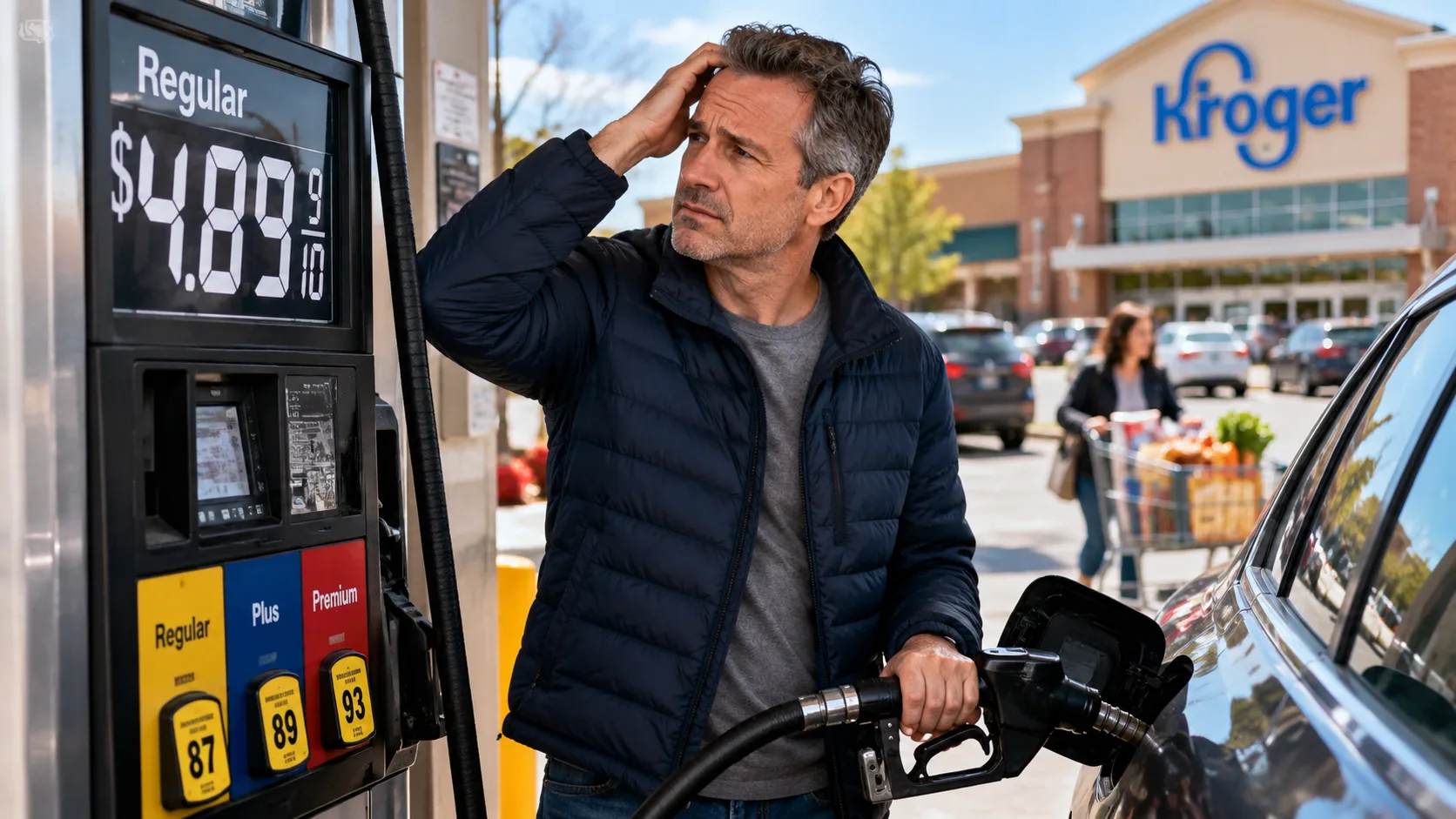
Recent increases in fuel prices connected with the Iran war have intensified affordability concerns across the country. AP reported this week that the national average for gasoline had climbed to about $4.48 per gallon, bringing energy costs directly into the midterm political debate.
For a rural household driving long distances for work, healthcare, groceries or school, another dollar per gallon can have an immediate effect on disposable income.
It can also work its way through the economy indirectly. Higher diesel and gasoline costs increase transportation expenses for farmers, manufacturers, trucking companies and retailers. Those businesses eventually have to absorb the costs, cut elsewhere or attempt to pass them along.
That is why gasoline prices can have political significance far beyond the energy sector.
Healthcare Is Becoming Part of the Affordability Story
The poll also highlights an issue investors sometimes separate from inflation: healthcare.
Nine in 10 rural voters described healthcare costs as extremely or very important for political candidates to discuss, according to AP-KFF.
Yet only 17% said Trump administration healthcare policies had produced a positive impact on their healthcare costs. Roughly 4 in 10 reported no impact, while another 4 in 10 reported a negative impact.
The administration has taken several steps aimed at lowering drug costs. Trump recently announced that all 50 states would participate in a Medicaid drug-pricing initiative designed to link prices for selected medications to those paid in other wealthy countries. The administration says the program could produce substantial Medicaid savings, although analysts have noted uncertainty over how large those savings will ultimately be.
There is therefore another disconnect investors should watch: policy announcements versus household perception.
Consumers rarely vote, shop or invest based on projected government savings ten years from now. They respond to what shows up in their checking accounts today.
The Bigger Economic Signal
Political polling can sometimes tell investors something economic data misses.
GDP can grow while households remain unhappy.
Corporate profits can rise while consumers cut discretionary purchases.
Employment can remain relatively strong while housing, gasoline, insurance and food absorb increasingly large portions of household income.
That appears particularly relevant in the current economy. The Federal Reserve recently raised its benchmark rate to 3.9% as policymakers confront persistent inflation alongside relatively strong economic growth. Mortgage rates have also climbed, increasing another major household expense.
In other words, the political frustration showing up in rural America may reflect a broader economic divide.
Parts of the economy connected to technology investment, artificial intelligence, defense spending and wealthier consumers can remain strong while families further down the income distribution feel considerably more pressure.
For investors, that can create very different outcomes across sectors.
Retailers serving value-conscious shoppers may see consumers become more price sensitive. Restaurants and discretionary businesses can face resistance. Healthcare affordability becomes increasingly important. Energy prices gain political importance, and higher borrowing costs continue squeezing housing and other rate-sensitive industries.
The economy can look healthy from Wall Street while feeling considerably less comfortable from Main Street.
November Will Test Whether Frustration Becomes Turnout
The next question is whether dissatisfaction changes voting behavior.
The AP-KFF findings do not establish that rural Republicans are preparing to switch parties in large numbers. They actually indicate substantial continued loyalty to the GOP.
The potential variable is participation.
Several competitive Senate races this year are taking place in states with significant rural populations, including Ohio, Michigan and Maine. Early voting has already begun in parts of the country, with control of Congress at stake in November.
Economic data between now and Election Day therefore takes on additional significance.
Watch gasoline prices. Watch grocery inflation. Watch healthcare costs. Watch consumer sentiment.
And perhaps most importantly, watch whether rural voters begin saying their own local economies are improving.
Washington can point to GDP, employment or financial markets. Voters tend to judge the economy using a much simpler measurement.
What does it cost me to live?
Right now, the AP-KFF poll suggests a substantial portion of rural America does not like the answer.
The Investor Takeaway
There is no evidence in this poll of a wholesale political break between Trump and rural America. His approval remains considerably stronger there than it does nationally, and Republicans continue to command significant loyalty among rural voters.
The economic warning is harder to dismiss.
A constituency that has been central to Republican electoral strength is expressing significant frustration over gasoline, groceries, healthcare and the cost of living. Whether that changes November voting behavior remains uncertain.
For investors, the larger message extends beyond politics. The U.S. economy can continue growing while household affordability deteriorates for a meaningful portion of the population.
That divide matters for consumer spending, inflation, interest rates, energy policy and ultimately the companies most exposed to the American household.
About Author