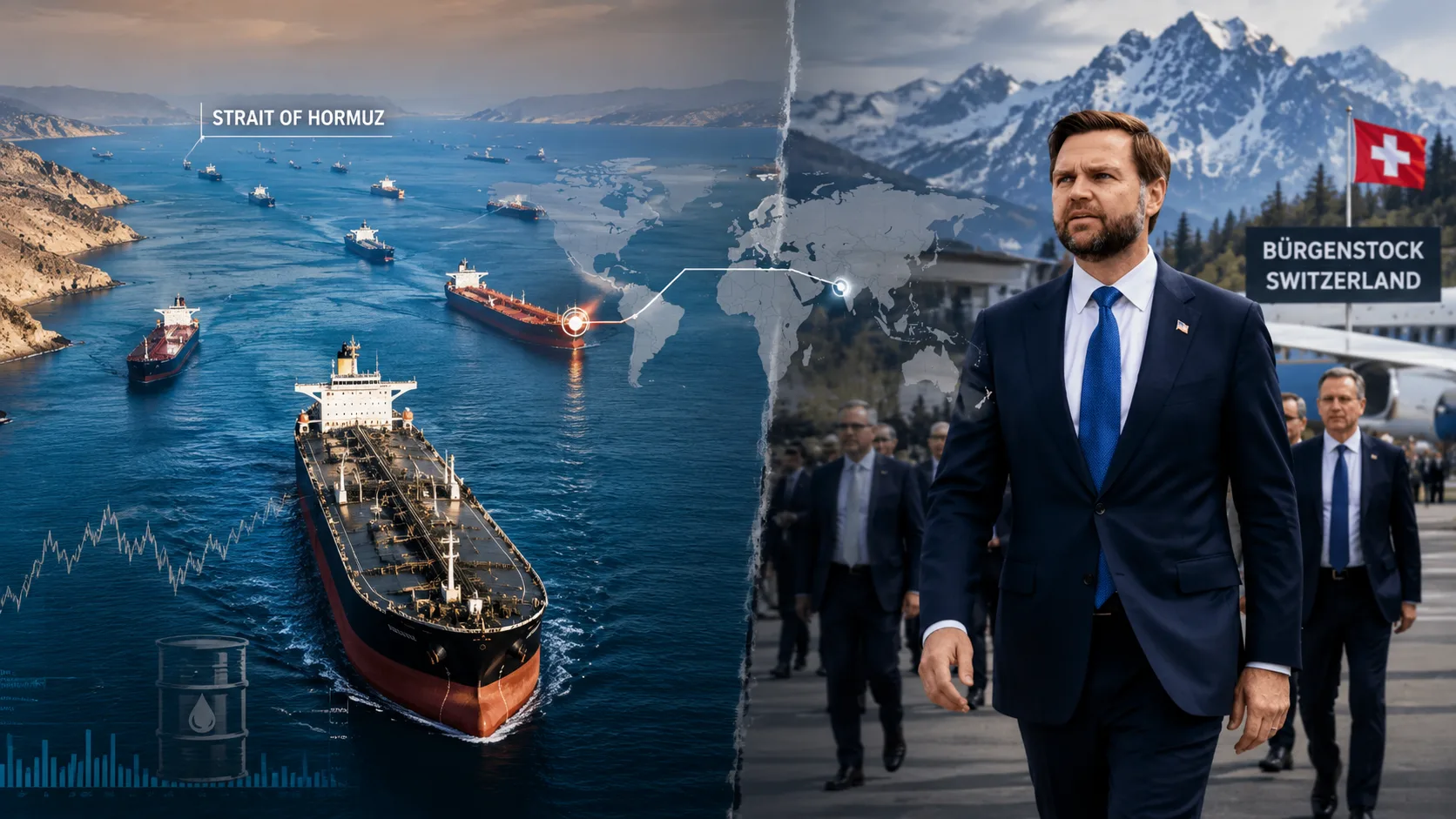
Just days after Washington and Tehran signed an interim agreement aimed at ending nearly four months of conflict, negotiators from both countries met in Switzerland on Sunday to begin work on a permanent deal. But the talks opened amid fresh disagreements over the status of the Strait of Hormuz, one of the world’s most important oil shipping routes.
Iran claimed the strait had been closed again following Israeli military strikes in Lebanon. U.S. officials immediately rejected those claims, insisting tanker traffic continues to move normally through the waterway.
The conflicting statements highlight just how fragile the current truce remains and why investors continue to watch developments in the region closely.
Why The Strait Of Hormuz Matters To Global Markets
The Strait of Hormuz handles roughly one-fifth of the world’s oil supply and serves as a critical transit point for energy exports from the Middle East.
Any disruption to shipping through the narrow waterway can quickly send oil prices higher, increase transportation costs, and create broader concerns about inflation.
Iranian officials warned ships to avoid the strait over the weekend, citing continued Israeli military operations in Lebanon and what Tehran described as failures by the United States to fully honor commitments made under the ceasefire framework.
Iranian state media reported that the strait would remain closed until Lebanon’s ceasefire is respected and additional waivers allowing Iranian oil exports are approved.
The U.S. military strongly disputed those claims.
“Iran does not control the Strait of Hormuz,” U.S. Central Command spokesman Navy Captain Tim Hawkins said.
According to U.S. officials, tanker traffic continues to move through the channel, with military forces monitoring conditions to ensure commercial shipping remains uninterrupted.
Switzerland Talks Move Into Technical Phase
Vice President JD Vance arrived in Switzerland on Sunday alongside American negotiators as discussions entered a more detailed stage.
The interim agreement signed last week established a 60-day framework designed to halt hostilities, reopen key shipping routes, and create a path toward a broader diplomatic settlement.
Now negotiators face the more difficult task of resolving the technical details.
The Iranian delegation is being led by Iranian Parliament Speaker Mohammad Bagher Ghalibaf, while Pakistan and Qatar continue serving as mediators between the two sides.
According to Swiss officials, talks began Sunday morning at the Bürgenstock resort, where negotiators are expected to spend several days addressing unresolved issues tied to regional security, sanctions relief, energy exports, and Iran’s nuclear program.
Iran’s Nuclear Program Remains A Central Issue
While recent headlines have focused heavily on shipping lanes and ceasefire violations, one of the most important topics remains Iran’s nuclear capabilities.
Before departing for Switzerland, Vance said the United States hopes to make meaningful progress on securing Iran’s enriched uranium stockpile.
The goal, according to U.S. negotiators, is to make it effectively impossible for Tehran to rapidly restart a weapons-capable nuclear program.
International Atomic Energy Agency Director General Rafael Grossi also attended meetings in Switzerland and emphasized the importance of diplomacy.
“At this critical moment, it’s important to give diplomacy every opportunity to succeed,” Grossi said.
The involvement of the IAEA underscores how central nuclear issues remain to any final agreement.
Trump Signals Potential Economic Leverage
President Donald Trump added another layer of uncertainty over the weekend by suggesting the United States could eventually begin charging vessels to transit the Strait of Hormuz if negotiators fail to finalize a permanent agreement within the next 60 days.
In a Truth Social post, Trump said there would be no transit fees during the ceasefire period but indicated that could change if negotiations collapse.
The comments appear aimed at increasing pressure on Iran while signaling that Washington intends to maintain significant economic leverage throughout the negotiation process.
Whether the proposal becomes actual policy remains unclear, but it highlights the administration’s willingness to use economic tools alongside diplomatic negotiations.
What Investors Should Watch Next
For markets, the most important development remains whether the ceasefire can hold long enough for negotiators to reach a final agreement.
Oil markets have remained relatively calm because shipping traffic through the Strait of Hormuz continues to flow despite Iran’s claims.
Vance noted that approximately 16 million barrels of oil moved through the strait in a single day following the ceasefire agreement, one of the strongest throughput levels seen since before the conflict began.
That resilience has helped prevent a major spike in crude prices and reduced fears of another inflation shock.
However, investors should expect continued volatility over the coming weeks.
Any confirmed disruption to Hormuz shipping, renewed fighting in Lebanon, or a breakdown in nuclear negotiations could quickly reignite concerns across energy, inflation, and global equity markets.
For now, the focus shifts to Switzerland, where negotiators have less than 60 days to determine whether a temporary ceasefire can evolve into a lasting agreement.
About Author