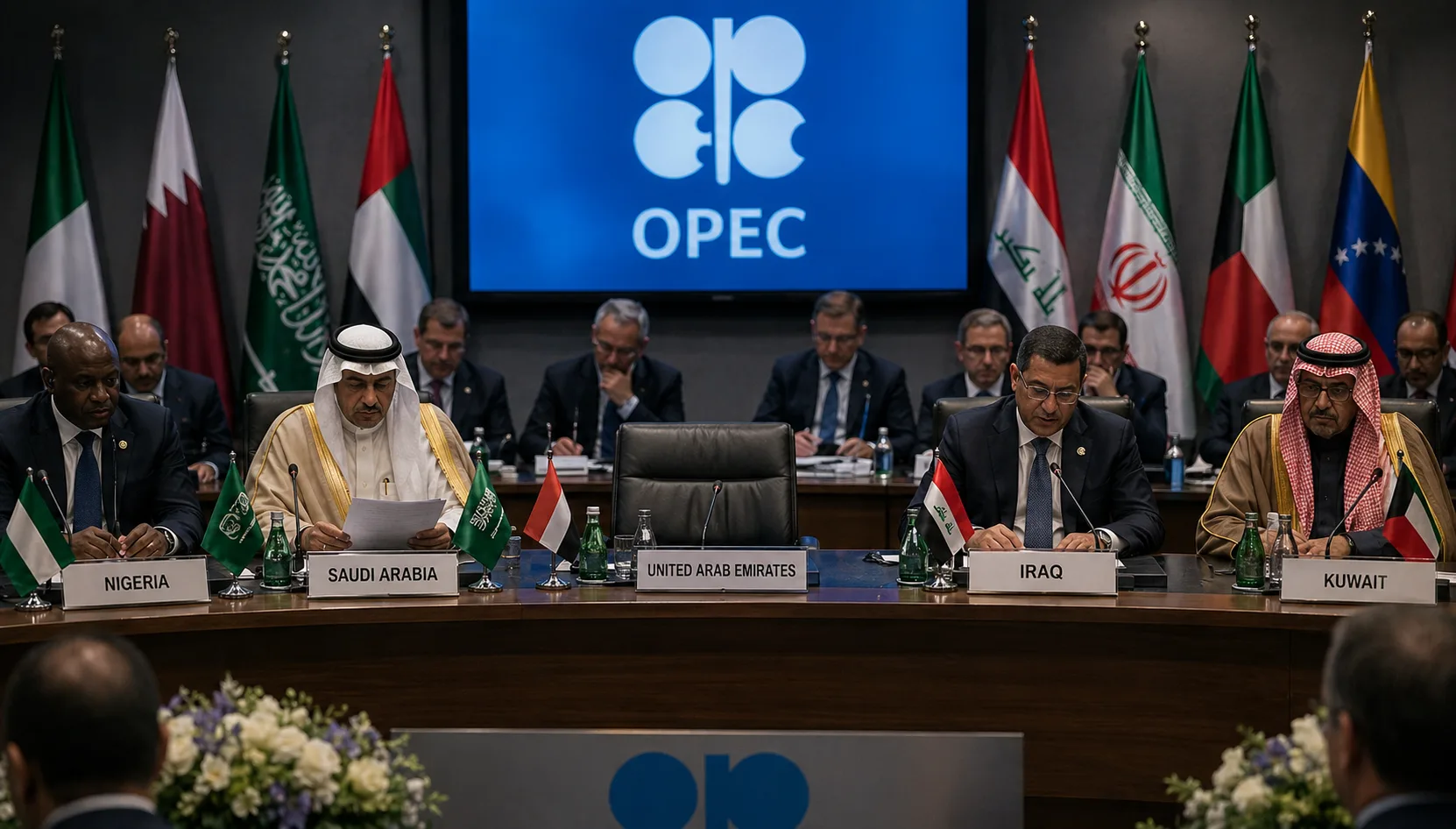
Oil traders are still fixated on missiles, shipping routes, and whether the Strait of Hormuz fully reopens. They may be missing the bigger structural story that hit markets Tuesday: the Organization of the Petroleum Exporting Countries just suffered one of its biggest fractures in years after the United Arab Emirates announced it is leaving the alliance effective May 1.
That matters because this is happening at the worst possible time for the cartel. The Iran war has already disrupted nearly 8 million barrels per day of OPEC production through Strait of Hormuz shutdowns and shipping disruptions. Now one of OPEC’s largest producers is signaling it wants freedom to pump more oil just as the cartel is struggling to maintain control of global supply.
In the short term, war still dominates pricing. Brent crude climbed roughly 3% to $111 per barrel Tuesday as peace negotiations stalled. But once the military situation cools down, investors may be staring at a very different oil market: one with weaker cartel discipline, more supply competition, and potentially lower long-term crude prices.
What Just Happened
The United Arab Emirates said its exit from OPEC+ will take effect May 1 following a review of production policy and future capacity plans.
The country’s Ministry of Energy and Infrastructure said the move is based on its “national interest and commitment to contributing effectively to meeting the market’s pressing needs.”
That sounds diplomatic. The real issue is money.
The UAE has spent years aggressively expanding its oil infrastructure and wants production capacity to hit roughly 5 million barrels per day by 2027. OPEC quotas have limited how much of that capacity it can monetize. Remaining inside the cartel increasingly looked like leaving money on the table.
This also comes as the war with Iran has drained regional economies and created financial pressure across Gulf states.
Pepperstone strategist Michael Brown raised another possibility that traders are now discussing: potential quiet pressure from the United States.
“One wonders if a ‘backroom’ conversation along the lines of quit OPEC, and receive a USD swap line in return, might’ve taken place at some stage.”
That remains speculation. But it highlights how geopolitical leverage may now be reshaping energy alliances.
Why This Matters for Investors
This story creates two completely different oil trades depending on what happens next.
Near-term bullish case for oil:
If the Iran conflict escalates further and the Strait of Hormuz remains unstable, oil could continue moving higher because supply disruptions remain immediate and severe. That benefits:
- Exxon Mobil
- Chevron
- Occidental Petroleum
- Oil service firms like Halliburton and Schlumberger
- Tanker stocks if freight rates surge
Airlines, transportation stocks, and consumer discretionary companies would likely face margin pressure if fuel costs spike further.
The Longer-Term Bear Case for Oil
This is where things get more interesting.
Once war fears ease, the UAE could become significantly more aggressive with production. It has spent billions building capacity and now has fewer political constraints.
That creates three major risks for crude bulls:
1. Saudi Arabia loses control
Saudi Arabia has historically acted as OPEC’s enforcer. That becomes much harder when major members start walking away.
2. More nations could defect
If the UAE benefits financially from leaving, smaller frustrated producers may reconsider their own membership.
3. U.S. shale gets more breathing room
United States shale producers have already weakened OPEC’s dominance over the last decade. A fractured cartel accelerates that shift.
This is why oil stocks could experience major volatility over the next several months. Investors chasing today’s geopolitical rally may be buying right before a future supply glut.
The Real Story: OPEC Was Already Losing Power
This didn’t begin Tuesday.
OPEC’s pricing dominance has been eroding for years because of:
- Rising U.S. shale production
- Internal quota disputes
- Growing fiscal pressures among member nations
- Russia’s complicated role inside OPEC+
- Energy transition uncertainty
The Iran war simply exposed how fragile the alliance had become.
When organizations are strong, crises bring members closer together.
When organizations are weak, crises accelerate breakups.
That’s what investors may be watching unfold in real time.
What Happens Next
Watch these catalysts closely:
- Any military escalation involving Iran
- Strait of Hormuz shipping updates
- Production guidance from the UAE
- Response from Saudi Arabia
- Potential retaliation from Russia within OPEC+
- U.S. diplomatic involvement under President Donald Trump
- Airline earnings warnings tied to fuel costs
If peace talks improve while UAE production ramps faster than expected, oil could reverse sharply lower.
Bottom Line
Wall Street is treating this like a war headline.
It may become an energy market regime change headline.
The Iran conflict is creating immediate upside pressure for oil. The UAE’s exit may be laying the groundwork for weaker prices later by permanently damaging OPEC’s ability to control global supply.
For investors, this is no longer just about where oil trades next week.
It’s about whether one of the most powerful commodity cartels in modern history is beginning to lose its grip for good.
About Author