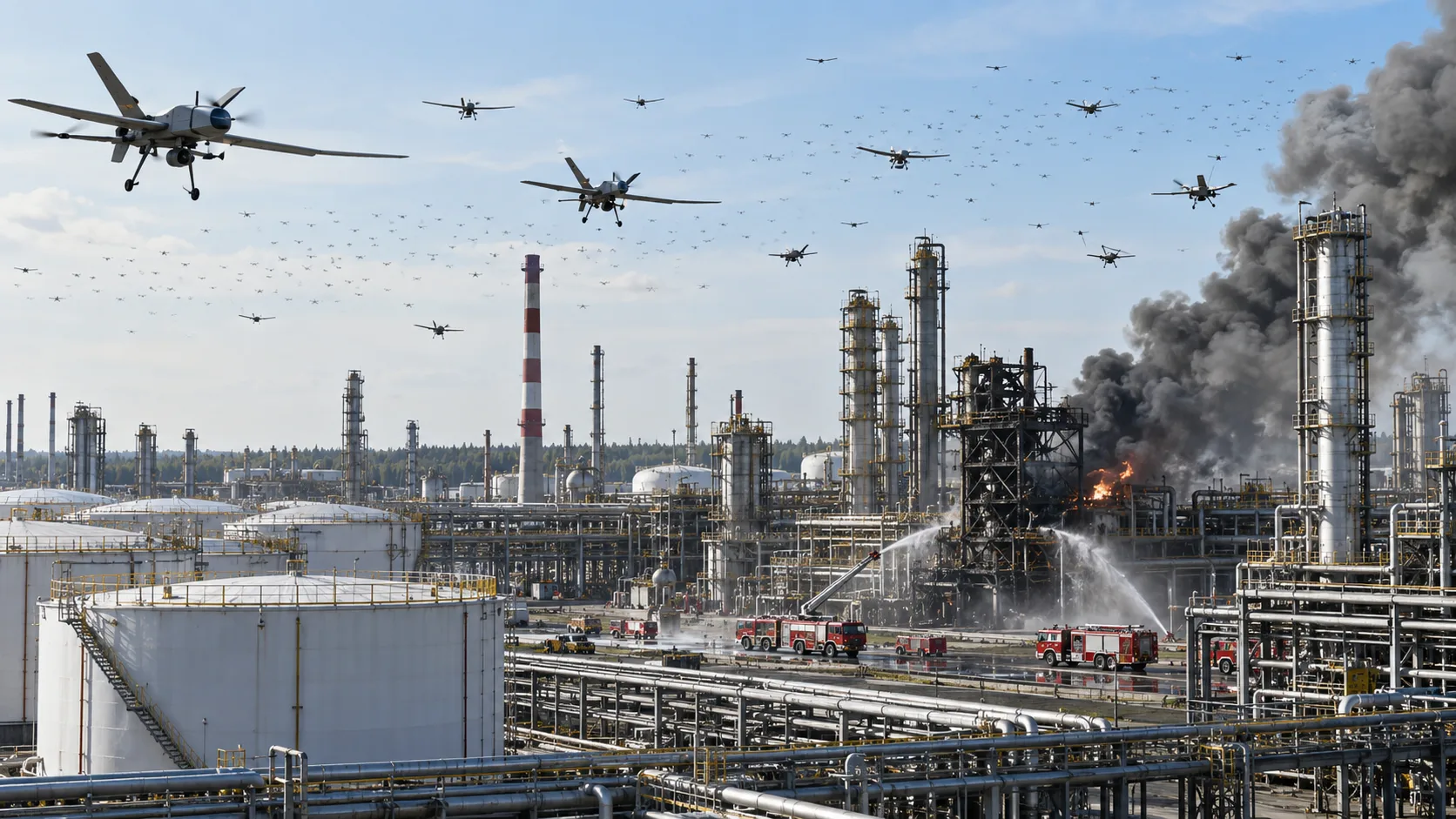
Ukraine has launched its largest drone attack on Russia since the war began, striking a major Moscow refinery and intensifying a diesel shortage that is already costing American drivers more than $6 a gallon.
More Than 1,000 Drones Target Russia
Ukrainian forces fired more than 1,000 drones at targets across Russia over the weekend, according to Russian and Ukrainian officials. Hundreds were reportedly directed toward Moscow, temporarily disrupting airports and damaging several sites in and around the capital.
One of the most financially important targets was the Gazprom Neft Moscow refinery, a major supplier of gasoline and diesel to the Russian capital and surrounding region. The full extent of the damage remains unclear, and many wartime claims cannot be independently verified.
Russia retaliated Monday with strikes across at least nine Ukrainian regions. Drones damaged residential buildings, a university and a shopping center in Zaporizhzhia. Additional attacks were reported in Kharkiv and other regions.
The military escalation comes as Ukrainian President Volodymyr Zelenskyy prepares to meet President Donald Trump during the United Nations General Assembly in New York.
Why Trump Wants the Refinery Attacks to Stop
Trump has been pressuring Ukraine to stop attacking Russian refineries, arguing that the campaign is worsening a global shortage of diesel and other refined fuels.
U.S. diesel prices recently climbed above $6 per gallon on average, a record. That matters well beyond the fuel pump. Diesel powers the trucks that deliver groceries, the equipment farmers use to harvest crops and much of the machinery supporting construction and manufacturing.
Those costs eventually work their way into consumer prices.
Trump said Monday that Russia had “lost control” of its diesel production because of Ukrainian attacks. He claimed that a large number of Russian refineries had been damaged or temporarily forced out of service.
Ukraine sees the campaign differently. Russian oil and fuel sales help finance the war, while refineries supply the Russian military with diesel, gasoline and aviation fuel. Striking those facilities allows Ukraine to damage Russia’s war economy without relying entirely on attacks against front-line forces.
Kyiv has indicated that it would consider pausing attacks on Russian energy infrastructure if Moscow agrees to stop attacking Ukraine’s power plants, pipelines and other critical facilities. Russia has provided no firm commitment to such an agreement.
The Real Story Is Refined Fuel
Crude oil prices can fall while diesel prices remain painfully high. That apparent contradiction is central to understanding this story.
Crude oil is the raw material. Refineries convert it into diesel, gasoline, jet fuel and heating oil. Damaging refinery capacity can therefore create a shortage of usable fuel even when the world still has adequate crude supplies.
Russia banned diesel exports in July after Ukrainian attacks reduced domestic production. That removed additional fuel from a global market already under pressure from the Iran conflict and disruptions surrounding the Strait of Hormuz.
The timing could hardly be worse. Russia and the Persian Gulf have historically accounted for a substantial portion of internationally traded diesel and gasoil. Problems in both regions leave buyers competing for supplies from a smaller number of refineries.
This explains why crude oil can retreat on hopes for U.S.-Iran negotiations while American diesel prices remain elevated. Oil traders are pricing the possibility of improved crude supplies. Diesel traders are dealing with an immediate shortage of refining capacity and available fuel.
What It Means for Investors
Inflation May Prove Harder to Control
Diesel is embedded throughout the economy. Higher transportation expenses raise the cost of moving food, building materials, manufactured products and consumer goods.
Companies can absorb those costs temporarily, but sustained increases usually reach customers through higher prices or appear in weaker profit margins.
That could complicate the Federal Reserve’s outlook. The Fed recently raised interest rates as inflation remained stubborn, and another energy-driven increase would make it harder for policymakers to declare victory.
Trucking and Agriculture Face the Most Direct Pressure
Trucking companies are often able to pass fuel costs to customers through surcharges, although those adjustments can arrive with a delay. Smaller operators generally have less bargaining power and may experience more immediate pressure on cash flow.
Farmers face a similar problem. Diesel is required for tractors, combines, irrigation equipment and transporting crops. Higher fuel costs can raise food prices even if the underlying commodity price remains stable.
Consumers ultimately feel the impact through groceries, home deliveries and other goods that travel long distances before reaching stores.
Refiners Could See Higher Margins
A shortage of diesel can increase the difference between the price of crude oil and the value of the fuels produced from it. That difference, commonly called a refining margin or crack spread, can benefit refiners capable of maintaining high production.
However, high margins come with significant risks. Refineries are complex facilities that require regular maintenance, and operating them near full capacity increases the chance of outages. Government intervention is another possibility if fuel prices continue climbing.
Some lawmakers have already discussed limiting U.S. diesel exports. Such a move could lower domestic prices temporarily while disrupting overseas markets and potentially reducing incentives for refiners to maximize production.
Falling Oil Does Not Guarantee Immediate Relief
Brent crude has fallen sharply on hopes that the United States and Iran could return to negotiations. That is helpful for consumers, but lower crude prices alone may not bring diesel prices down quickly.
The refining bottleneck must also improve. That could require restored Russian production, better fuel flows from the Middle East, higher output from American refiners or a meaningful slowdown in global demand.
The Pressure on Ukraine May Have Limited Effect
Trump’s request puts Ukraine in a difficult position. Refinery attacks are among Kyiv’s most effective ways to impose economic costs deep inside Russia. Giving up that strategy without receiving a reciprocal commitment from Moscow would remove a significant source of leverage.
Russia has continued attacking Ukrainian energy infrastructure and has shown little willingness to accept a broad ceasefire. Ukraine is therefore unlikely to halt its campaign based solely on concerns about global fuel prices.
That means the diesel shortage could persist even as diplomatic activity intensifies in New York.
It also creates an uncomfortable economic reality for Washington. The same attacks that weaken Russia’s ability to finance and supply its military are raising transportation and food costs for American households.
About Author