Tariffs aren’t just a political talking point anymore, they’re a trillion-dollar market force. Under President Trump, tariff revenues have surged to record highs, reshaping trade flows, corporate margins, and inflation expectations across the global economy. Now, with the Supreme Court set to hear a case that could strike down large portions of Trump’s trade policy, investors face a rare moment where courtroom drama and market risk collide. The stakes are enormous: billions in tariff revenue, trillions in potential tax exposure, and the very foundation of America’s trade strategy hang in the balance.
Tariffs Are Powering a Revenue Boom
Treasury Department data show that import duties collected under Trump’s renewed trade agenda have skyrocketed to all-time highs.
- In April, tariff collections totaled $17.4 billion.
- By May, they rose to $23.9 billion, then $28 billion in June, and $29 billion in July.
- August and September combined reached a staggering $62.6 billion, the highest two-month stretch in U.S. history.
For fiscal year 2025, the federal government is on pace to collect more than $215 billion in tariff revenue — up sharply from prior administrations.
| Month (2025) | Tariff Revenue (USD Billions) |
|---|---|
| April | 17.4 |
| May | 23.9 |
| June | 28.0 |
| July | 29.0 |
| Aug – Sep (Combined) | 62.6 |
| Total YTD | 160.9 |
(Source: Fox Business)
The numbers are more than a fiscal headline, they represent a structural shift in how the U.S. government funds itself and exerts leverage in global trade negotiations.
Why Tariffs Became the Cornerstone of Trump’s Economic Strategy
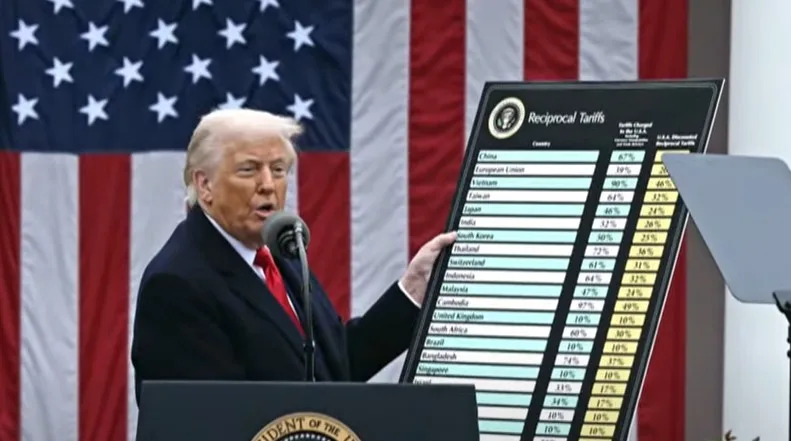
For President Trump, tariffs are more than a trade tool — they’re a symbol of economic sovereignty. He has repeatedly argued that decades of lenient trade policy hollowed out U.S. industry and cost millions of middle-class jobs.
“Tariffs have been used against the United States for years,” Trump said on Fox News’ Sunday Morning Futures. “It would always bother me so much. I’d look, and I’d say how can they allow this to happen to our country? We lost 55% of our automobile business because of the fact that we didn’t use tariffs. If we used tariffs, we wouldn’t have lost anything.”
In short, tariffs serve two purposes in Trump’s worldview: punish unfair trade partners and restore domestic manufacturing strength. The revenue windfall is an added bonus — and a key talking point for a president who has long framed himself as a businessman first and a politician second.
The Legal Challenge That Could Change Everything
While tariff revenues soar, the legal foundation beneath them is starting to crack. A landmark case headed to the Supreme Court next month challenges whether Trump’s sweeping use of the International Emergency Economic Powers Act (IEEPA) actually gives him the authority to impose such broad duties.
Business groups argue that the law originally designed for national security emergencies wasn’t meant to underpin a permanent trade-war framework. According to filings cited by Bloomberg, the plaintiffs say these tariffs amount to an “illegal $3 trillion tax” on small and medium-sized U.S. companies over the next decade.
A federal appeals court already signaled skepticism, suggesting that the administration may have stretched the statute beyond its intent. If the high court agrees, some or all of the tariffs could be struck down, potentially forcing the government to refund billions already collected.
“If even half of the current tariffs are ruled invalid, the Treasury could face an unprecedented refund scenario,” one Politico analysis noted, citing internal projections that as much as 50% of revenue could be legally contested.
The case has enormous implications. Trump has reportedly considered attending oral arguments in person, something no sitting president has ever done, to underline how central tariffs have become to his economic vision.
A Supreme Court Decision That Could Reshape Markets
For investors, this is more than a constitutional debate. It’s a macro-market event hiding in plain sight.
If the Supreme Court upholds Trump’s use of emergency powers, tariff policy remains a powerful economic weapon and likely a permanent fixture of U.S. trade. That could mean:
- Continued support for domestic manufacturers, steel producers, and raw-material suppliers.
- Higher costs for import-heavy sectors such as autos, retail, and electronics.
- Ongoing upward pressure on consumer inflation and interest rates.
If the Court strikes down key provisions, it could trigger:
- A rapid rollback of import costs, easing inflation and supply-chain strain.
- Short-term turbulence as companies unwind pricing models built on tariff assumptions.
- Potential liabilities or refunds that affect federal revenue projections.
In both scenarios, markets will likely react sharply, pricing in either renewed trade protectionism or the sudden removal of it.
Winners and Losers in a Tariff-Driven Market
Here’s how investors should think about positioning:
Likely Beneficiaries
- U.S. steel and aluminum producers: Protection keeps foreign competitors at bay.
- Agricultural equipment and materials suppliers: Domestic demand grows when imports slow.
- Select logistics firms: Higher demand for domestic supply chains.
Potential Casualties
- Retailers and import-heavy brands: From apparel to electronics, rising import costs erode margins.
- Automakers: Supply chains that rely on foreign parts could face major cost disruptions.
- Export-oriented manufacturers: Foreign retaliation could make U.S. goods less competitive abroad.
Key takeaway: tariffs move the needle not just for trade-sensitive stocks, but for inflation-sensitive assets like Treasuries, gold, and commodities. The outcome could alter both bond yields and equity valuations simultaneously.
The Inflation Connection
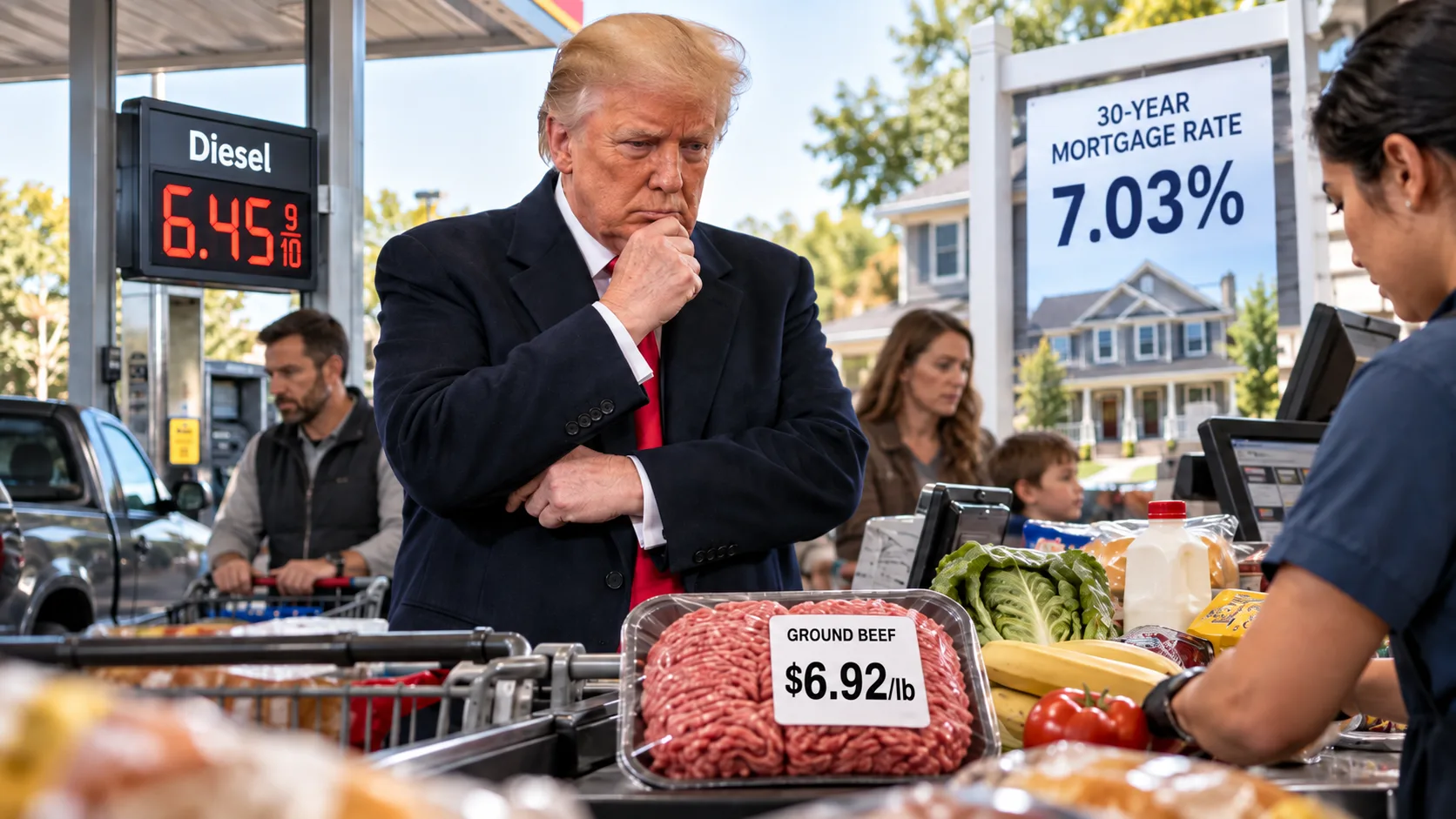
Every tariff dollar collected is effectively a tax on imports — and that money has to come from somewhere. Businesses either eat the cost or pass it on to consumers. According to a Tax Foundation analysis, tariffs can raise consumer prices by as much as 1.3% across affected categories within a year of implementation.
That’s why inflation readings have remained sticky even as other pressures ease. Tariffs on steel, aluminum, electronics, and autos ripple through to the prices of cars, appliances, and housing materials, precisely the areas where inflation has proven toughest to tame.
For the Federal Reserve, that’s a policy headache. Continued tariff-driven inflation complicates the path to future rate cuts and may keep yields elevated longer than markets expect.
Global Repercussions
If Washington keeps tariffs high or expands them, expect retaliation. China, the EU, and Canada have all hinted at targeted countermeasures if the Supreme Court upholds Trump’s trade authority.
Such moves could:
- Disrupt global supply chains again, especially in semiconductors and rare-earth materials.
- Pressure U.S. multinationals with major overseas exposure.
- Spark volatility in commodities and currencies, particularly the yuan and euro.
That international feedback loop is what makes the upcoming ruling so consequential. It’s not just a U.S. story, it’s a potential turning point for the entire post-pandemic global trade order.
Investor Takeaways
Here’s how to stay ahead of the volatility:
- Track the legal timeline. Oral arguments begin in November, with a ruling likely early next year. Markets will front-run the outcome.
- Hedge import exposure. Consider reducing allocation to import-heavy sectors until the ruling clarifies the landscape.
- Watch domestic industrials. Companies that benefit from tariff protection could outperform if the policy holds.
- Monitor inflation expectations. If tariffs remain, inflation may stay elevated — supportive of commodities and hard assets.
- Stay flexible. A legal reversal could create a short-term selloff followed by relief rallies in global equities and bonds.
For long-term investors, this is a reminder that policy risk is market risk. The Supreme Court’s decision could rewrite assumptions baked into valuations, earnings forecasts, and even the Fed’s next move.
About Author