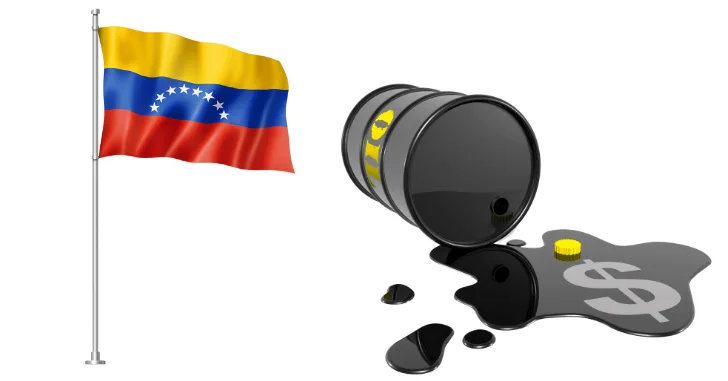
In a sharp and unexpected policy reversal, the Trump administration has granted Chevron permission to resume oil operations in Venezuela—a nation long isolated by U.S. sanctions and regarded by many in Washington as a rogue regime. The move underscores a pragmatic shift in U.S. foreign energy strategy as geopolitical realities clash with economic imperatives. For investors, this decision could have significant implications for Chevron, the global oil market, U.S.-China energy rivalry, and the broader Latin American region.
From Sanctions to Strategy: What Changed?
After years of “maximum pressure” tactics aimed at toppling President Nicolás Maduro, the Trump administration is now recalibrating its posture toward Venezuela. The catalyst? A prisoner swap that returned all 10 remaining detained Americans and opened the door to fresh oil diplomacy.
President Trump, alongside Secretary of State Marco Rubio and Special Envoy Ric Grenell, reportedly convened at the White House to hammer out a deal that prioritizes American energy interests in Venezuela. Despite Rubio’s historical opposition to engagement with Maduro’s government, Trump made clear he wanted American companies—specifically Chevron—back in Venezuela’s oil fields.
Chevron spokesman Bill Turenne emphasized the company will continue to operate within U.S. regulatory frameworks, including sanctions.
“Chevron conducts its business globally in compliance with laws and regulations applicable to its business, as well as the sanctions frameworks provided for by the U.S. government, including in Venezuela.” – Bill Turenne, Chevron Spokesman
The World’s Largest Oil Reserves Are Back in Play
Venezuela possesses the world’s largest proven oil reserves—more than 300 billion barrels. But thanks to political instability, corruption, underinvestment, and international sanctions, the country’s oil production has collapsed over the last decade.
According to the Organization of the Petroleum Exporting Countries (OPEC), Venezuela produced between 900,000 and 1 million barrels per day in June 2025. In contrast, the nation was pumping over 3 million barrels per day in the early 2000s.
Source: OPEC Monthly Oil Market Report, June 2025
No Revenue for Maduro—At Least on Paper
One of the deal’s most surprising stipulations: Venezuela’s socialist regime is not supposed to earn royalties or tax revenue from Chevron’s operations. This echoes the previous license issued under the Biden administration, which had similar restrictions.
A senior State Department official confirmed:
“The U.S. government will not allow the Maduro regime to profit from the sale of oil.”
However, experts question the sustainability of such an arrangement.
Francisco Monaldi, an expert at Rice University, was skeptical:
“He can send those barrels to China and get paid at a discount—but better than zero. Why would Maduro allow barrels to go to the U.S.?”
This highlights the precarious balance Trump is trying to maintain: reasserting U.S. energy dominance without financially bolstering a regime long viewed as hostile to American interests.
Chevron’s Strategic Comeback
Chevron never fully abandoned Venezuela—it retained joint ventures and infrastructure assets during the sanctions era. This new license allows it to resume actual oil production and exports, potentially giving it a first-mover advantage in revitalizing Venezuela’s oil sector.
The timing is significant. Just last week, Chevron completed its $53 billion acquisition of Hess Corporation, granting it access to the lucrative Stabroek Block off the coast of Guyana—Venezuela’s oil-rich neighbor and geopolitical rival.
This expansion positions Chevron as a dominant player in South America’s resurgent oil story, while also fueling tensions with Caracas, which claims two-thirds of Guyana’s territory.
A Blow to China’s Energy Influence?
One of the Trump administration’s core concerns has been Chinese expansion into energy assets in Latin America. By freezing out Chevron, critics argued, the U.S. had handed Venezuela’s oil fields to Chinese firms on a silver platter.
Trump ally Ric Grenell addressed this directly:
“We want to put America first and do what’s best for America. That means making sure that the Chinese do not take the Venezuelan oil.”
With Chevron back in the game, the U.S. now has a foothold in what could be a critical source of energy security and strategic leverage.
Political Risks and Republican Tensions
The decision wasn’t without domestic backlash.
Senator Marco Rubio had previously led efforts to terminate all Biden-era oil licenses in Venezuela, accusing them of “shamefully bankrolling the illegitimate Maduro regime.” Yet Trump overrode Rubio and other Florida Republicans, signaling that energy policy—especially amid global supply uncertainty—may trump ideological purity.
Hardline conservatives like Laura Loomer also pushed back, warning the reversal could dilute Trump’s image as a hawk on socialism and foreign adversaries.
But Trump’s pivot appears calculated: achieve energy security, outmaneuver China, and boost Chevron—all while avoiding the optics of enriching Maduro.
The Role of Immigration Diplomacy
Interestingly, the oil deal coincides with a subtle warming of U.S.–Venezuelan relations in other areas. Caracas has been accepting two deportation flights per week from the U.S., a key element in Trump’s immigration strategy led by senior adviser Stephen Miller.
This cooperation likely sweetened the deal for Trump, allowing him to score wins on two fronts: energy and immigration.
Maduro acknowledged this rare convergence in a televised address:
“Their participation was vital in rectifying this situation. Beyond all of our differences, we have to learn in this life to be thankful.”
Market Impact: Chevron Stock and Investor Outlook
Chevron stock jumped to $155.83—its highest level since April 3—on news of both the Hess acquisition and the Venezuela deal. The timing couldn’t be better for shareholders, as oil prices remain volatile due to geopolitical instability in the Middle East and Asia.
Source: Yahoo Finance, July 2025
With new access to low-cost, high-yield reserves in Venezuela, Chevron’s long-term production capacity—and profitability—just got a significant boost.
Investor Takeaways:
- Energy leverage: The deal strengthens U.S. energy independence and reduces reliance on OPEC or unstable regions.
- Chevron growth: The move enhances Chevron’s South American portfolio and long-term earnings potential.
- China risk hedge: It pushes back on China’s creeping energy dominance in Latin America.
- Geopolitical volatility: Investors should remain alert to legal, regulatory, and diplomatic shifts in the U.S.–Venezuela relationship.
A New Energy Era for the Americas?
President Trump’s Venezuela pivot marks a pragmatic shift from ideology to strategy. Chevron’s reentry is not just a business move—it’s a signal of Washington’s intent to reclaim energy influence in a region where China and Russia have made deep inroads.
For investors, the real question is whether this détente will hold. Will Maduro keep his end of the deal? Will the oil actually flow to U.S. markets? And how will political dynamics—both in Latin America and in the U.S.—reshape the future of this fragile yet high-stakes opportunity?
One thing is certain: the energy chessboard in the Americas has been flipped. And Chevron is once again a key piece.
Sources:
About Author