In one of the most unexpected moves of the year, AI-powered search startup Perplexity AI has made a $34.5 billion all-cash offer to buy Google Chrome from Alphabet — even though Chrome is not for sale. The proposal has raised eyebrows across tech and financial circles, not only for its boldness, but for what it says about the evolving battle for control over the web browser market in the AI era.
The offer comes at a time when U.S. antitrust regulators are actively scrutinizing Google’s dominance in search and browser markets, with some pushing for structural remedies — including the potential divestiture of Chrome. While the likelihood of such a forced sale remains uncertain, Perplexity has positioned itself as a ready and willing buyer should regulators compel Alphabet’s hand.
The Offer and Its Terms
Perplexity’s bid — internally codenamed “Project Solomon” — is non-binding but strikingly detailed:
- $34.5 billion in all cash, nearly double Perplexity’s own estimated valuation of $14–18 billion.
- Commitment to keep Chrome’s underlying Chromium engine open-source.
- Maintain Google as the default search provider to ensure continuity for existing users.
- Retain the majority of Chrome’s current employees.
- Invest $3 billion into browser development over the next two years.
- Preserve user customization and privacy settings.
Perplexity’s CEO has framed the offer as a way to “protect user choice” while accelerating browser innovation with AI-first features.
Why Perplexity Wants Chrome
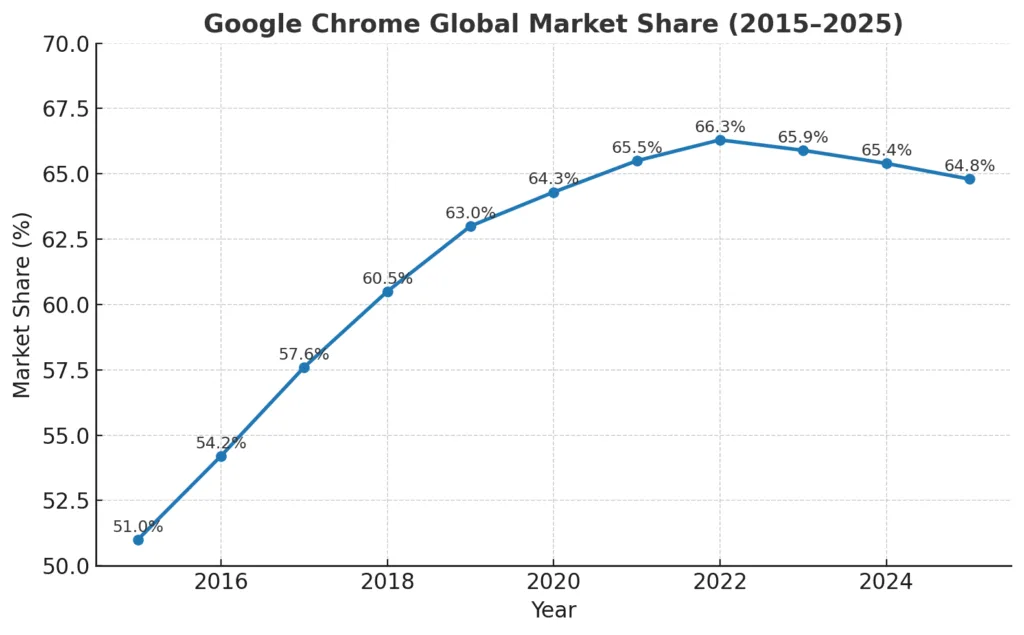
At first glance, the move seems improbable. Chrome commands over 60% of the global browser market share, making it one of the most valuable digital gateways in existence. Control over a browser of this scale offers unmatched access to user behavior data, search traffic, and potential integration points for AI-powered services — all highly strategic in the race to define the next generation of web experiences.
For Perplexity, acquiring Chrome would instantly give its AI-powered search platform a massive distribution channel, allowing it to compete directly with Google Search, Microsoft Bing, and OpenAI’s ChatGPT in an arena where user default settings can decide market winners.
Regulatory Timing and Antitrust Angle
The timing of Perplexity’s bid isn’t coincidental. The U.S. Department of Justice has been pursuing a landmark antitrust case against Google, with one remedy under consideration being the forced sale of Chrome to reduce its power in search markets. A federal judge has yet to decide on any remedies, and Google is expected to appeal aggressively if Chrome divestiture is ordered.
Perplexity’s bid essentially serves as a public letter of intent to regulators: if they want a competitive buyer ready to take Chrome off Google’s hands, they have one.
The Skepticism — Is This Just PR?
Despite the headline-grabbing number, many analysts and industry insiders see the move less as a genuine M&A play and more as a masterclass in strategic marketing.
- Financial Feasibility: Perplexity doesn’t have $34.5 billion in cash on hand. Even if financing partners exist, the scale of the transaction would require significant debt or equity dilution.
- No Willing Seller: Alphabet has given no indication it is open to selling Chrome voluntarily.
- Timing: The offer was announced while Perplexity is actively promoting its own AI-powered browser, Comet, making the PR benefits hard to ignore.
On forums like Reddit, the consensus is blunt: “It’s just a PR stunt.” Others speculate that Perplexity may have interested financial backers lined up only if regulators actually force a sale.
Google’s Likely Response
Alphabet views Chrome as strategically core to its search and AI integration efforts. Losing it would not only hurt search traffic but also disrupt its broader advertising ecosystem.
If regulators try to force a divestiture, Google would almost certainly fight in court for years, delaying any potential sale and creating legal uncertainty that could discourage buyers.
Investor Takeaways
From an investor’s perspective, the offer — whether real or theatrical — signals several key points:
- Browsers are AI battlegrounds
In the AI era, browsers are no longer just utilities — they’re distribution platforms for AI-powered services. Control over defaults, search integration, and data flows is hugely valuable. - Regulatory risk to Big Tech is real
Even if Perplexity’s bid doesn’t succeed, it underscores the possibility that regulators could force major structural changes in the coming years. Investors with heavy exposure to Alphabet should monitor antitrust proceedings closely. - Emerging challengers are thinking big
Perplexity is using high-profile tactics to position itself as a legitimate competitor to established tech giants. Even if the bid is never accepted, the publicity could accelerate adoption of its products and drive investor interest. - Valuation pressure could shift
A forced Chrome sale could depress Alphabet’s near-term stock price, while offering upside to whichever player gains control — assuming they can monetize effectively without alienating users.
The Bottom Line
Whether you see Perplexity’s $34.5 billion Chrome bid as a bold strategic gambit or a calculated PR stunt, it’s a reminder that the AI–browser race is heating up fast. Control of the browser means control of the gateway to the web — and in an AI-first world, that’s one of the most valuable assets in tech.
For now, the likelihood of Alphabet handing over Chrome voluntarily is near zero. But if regulators make a move, Perplexity has already planted its flag as a ready contender — and in doing so, it’s ensured the world is paying attention.
Sources:
- Financial Times – Perplexity offers to buy Google Chrome for $35bn
- Axios – $34B Chrome shot
- New York Post – Perplexity AI makes $34.5B all-cash offer for Google Chrome browser
About Author