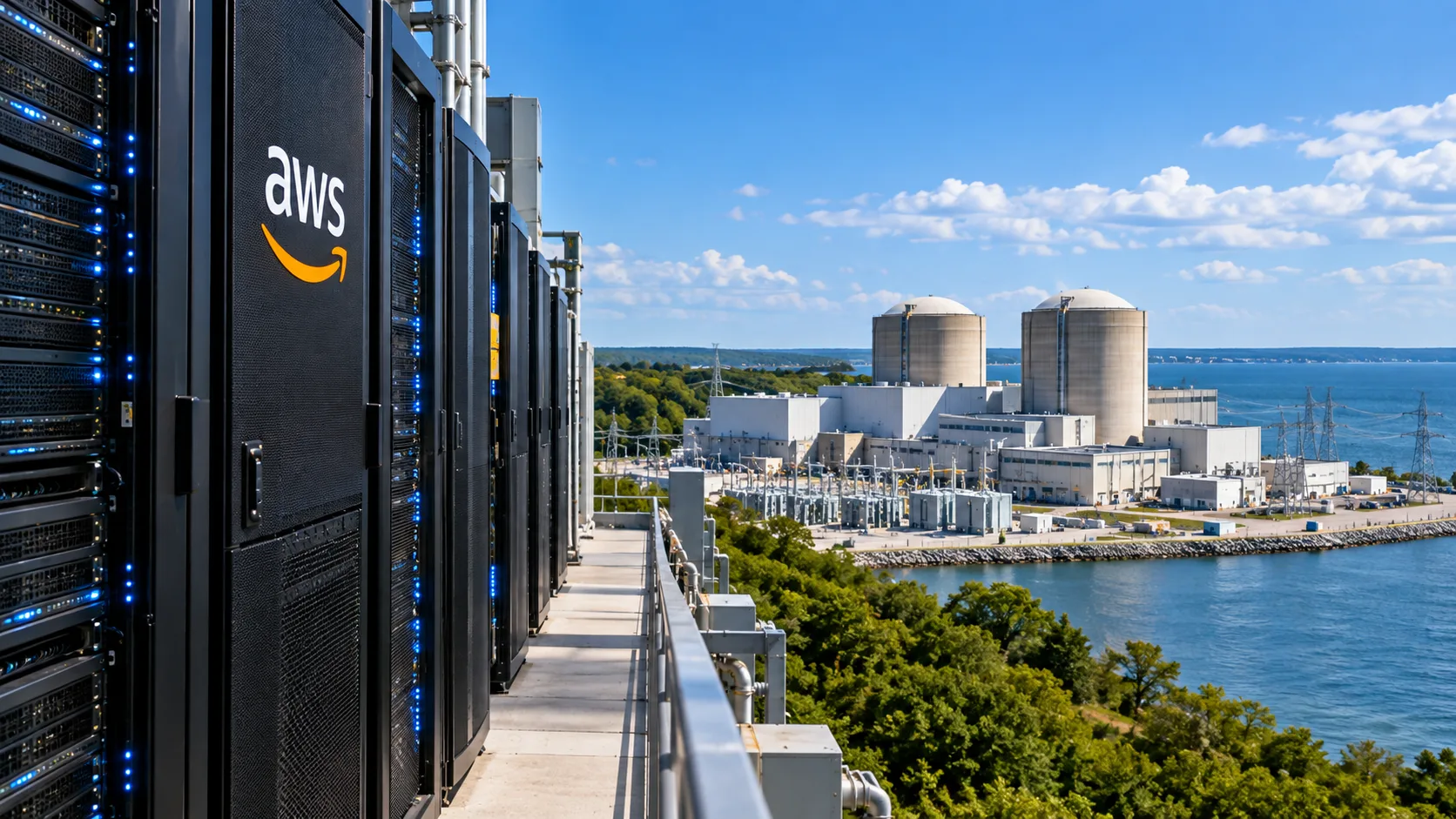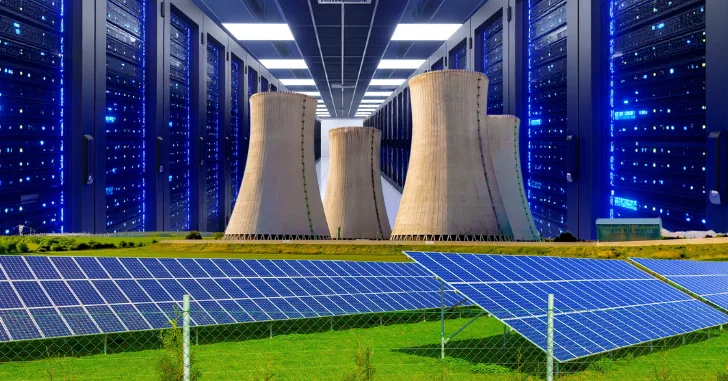
Most investors are watching utilities and AI infrastructure giants as the global energy mix reshapes around data centers and electrification. But the real leverage may be hiding in an overlooked slice of the supply chain. While headlines focus on server buildouts and policy fights over power grids, one niche sector is securing the raw material needed to keep those systems running for decades.
That is where Cameco, one of the world’s largest integrated uranium producers and fuel service providers, enters the conversation. The company operates across mining, refining, conversion, and reactor services — a position that gives it unusual control over a tightening market. As nuclear energy collides with artificial intelligence demand and geopolitical realignment, Cameco stands out as a pick-and-shovel beneficiary of a long-term shift.
Across the United States, Europe, and Asia, governments are scrambling to lock in reliable baseload electricity. At the same time, artificial intelligence workloads are driving unprecedented demand for energy capacity. The International Energy Agency estimates that data center electricity usage could double by 2026, consuming as much power as Japan by the end of the decade. This surge is forcing businesses and policymakers to reevaluate how energy is sourced, and one answer keeps reappearing: nuclear power.
Nuclear plants do not just provide carbon-free energy at scale. They operate almost continuously, unlike wind or solar facilities that depend on weather or daylight. That reliability is vital when AI clusters, hyperscale data centers, and semiconductor fabs need consistent power. But while most people focus on who builds or operates reactors, fewer are paying attention to where the fuel comes from.
That is what positions Cameco at the center of a supply chain that is both essential and capacity-constrained.
Nuclear’s Second Wind Is Not Speculative
For years, nuclear was written off as expensive, politically difficult, and stuck in the past. That narrative is reversing rapidly.
Several major economies are accelerating their nuclear commitments:
- The United States is extending the lifespan of existing reactors while funding modular next-generation systems through programs backed by the Department of Energy.
- France has approved construction of new large-scale plants and continues to rely on atomic energy for over two-thirds of its electricity.
- Japan has restarted more of its nuclear fleet after a decade-long pause, citing grid stability and energy security.
- China plans to build dozens of reactors by 2035, including export deals across Africa, Latin America, and Europe.
- The United Kingdom approved its first new nuclear plants in a generation while incentivizing small modular reactor development.
Even countries that previously pledged to phase out nuclear are quietly reconsidering. The pressure is higher now because of AI, electrification of transport, and the push to onshore energy-intensive industries. The World Nuclear Association reports that over 60 reactors are currently under construction globally, and hundreds more are in planning or permitting.
All of these projects depend on the same thing: a supply chain for uranium fuel that is both secure and scalable.
The Market Has a Fuel Problem — and It Is Getting Worse
Uranium supply is more fragile than it appears. Kazakhstan, Canada, Australia, and Russia dominate production, accounting for the majority of global output. Yet years of underinvestment during the 2010s left capacity thin. The World Nuclear Association estimates that current mining does not meet projected demand through 2040 without major expansion or new deposits coming online.
In addition, geopolitical risk is rising. Western governments are moving to cut reliance on Russian nuclear fuel and enrichment, especially after the invasion of Ukraine. The US Senate has already advanced measures to restrict Russian-origin uranium imports, pushing utilities to seek alternative partners. Europe is taking similar steps.
Cameco benefits from this strategy shift. The company operates the world’s largest commercial uranium refinery and the only uranium conversion plant in Canada. Those assets make it a non-Russian source of fuel services at a time when Western operators are racing to diversify.
Spot uranium has climbed sharply in recent years, surpassing $90 per pound in 2024 according to trackers like Numerco and UxC. Producers that signed long-term contracts when prices were closer to $30 or $40 are now negotiating new agreements at significantly higher rates.
AI Is Not Just a Tech Story, It Is an Energy Story
Artificial intelligence is changing everything from chip design to cloud computing, but few investors connect it to energy inputs. Goldman Sachs estimates AI-related power demand could add the equivalent electricity load of another entire Japan by 2030. That kind of growth cannot be met by intermittent energy sources alone.
Major technology firms are already hedging against power shortfalls. Microsoft, Amazon, and Google have signed deals tied to advanced nuclear reactors and clean power partnerships. TerraPower, backed by Bill Gates, is developing small modular reactors in the US, and NuScale has finalized regulatory approvals for its own compact designs.
Small modular reactors require the same fuel base as traditional reactors, just adapted into different formats. That creates new verticals for uranium miners and refiners positioned at the front end of the supply chain.
Banks are starting to understand this connection. Analysts at JPMorgan and Morgan Stanley have pointed to fuel producers as the real leverage point in the nuclear resurgence. Utilities can only grow if the material needed to run plants is available and affordable over the long term.
The Pick-and-Shovel Advantage
Investing in energy transitions is rarely about the headline players. In the US shale boom, pipeline owners and suppliers outperformed many drillers. In the semiconductor sector, equipment makers became some of the most valuable companies on earth. The same logic applies here.
Rather than betting on who will build or operate the most reactors, some investors are targeting the handful of firms that provide the fuel and services needed to keep those projects viable.
Cameco has spent decades building mining operations in Canada, Australia, the US, and Kazakhstan. It also owns a 49 percent stake in Westinghouse Electric, a company involved in nuclear plant operation and servicing. In addition to mining, Cameco refines and converts uranium into the forms required by utilities, giving it control of multiple midstream stages.
Public filings show that Cameco controls roughly 17 percent of global uranium output as of 2024. It has also been expanding its contract book with utilities that want long-term certainty. When spot prices soared in previous cycles, companies without stockpiled supply or conversion capabilities were forced to scramble. That dynamic appears to be resetting, and suppliers with capacity are gaining pricing power.
Breakout Momentum Backed by Financial Performance
This is not a speculative turnaround story. Financial results in the most recent quarter showed adjusted earnings surging well above expectations, with revenue growth accelerating sharply year over year. Triple-digit earnings growth demonstrates how quickly profits can rise when prices strengthen and volumes stay contracted.
The equity market has rewarded that momentum. The stock has logged multiple consecutive months of gains and recently traded near its all-time highs. Its relative strength compared to broader indexes is also near record levels, a sign that institutions are steadily accumulating shares.
Technical analysts have pointed out a rare ascending base structure in the chart. This pattern forms when a stock makes three separate pullbacks, each one with higher lows and higher highs. The setup is often seen in extended rallies ahead of a new breakout. If momentum continues and volume remains healthy, a decisive move higher could confirm the next leg.
While technical levels fluctuate, institutions tend to use these consolidations to build positions before strong sectors take off again.
Why Investors Are Monitoring the Next Move
Several catalysts are converging:
- Energy security: Governments are prioritizing stable baseload power to avoid shortages, blackouts, or supply dependence on rival nations.
- AI’s energy hunger: Data centers and AI computing intensify electricity demand at a pace renewables alone cannot match.
- Policy support: Nuclear is being repositioned as essential infrastructure rather than a legacy liability.
- Geopolitical driven reshoring: Reactor operators in North America and Europe are shifting procurement away from Russian fuel.
- Supply imbalance: Years of underproduction are meeting a spike in demand, putting upward pressure on contract pricing.
Cameco benefits from every one of these trends. It is already locking in new contracts that reflect higher pricing. It owns infrastructure that would cost billions and years to replicate. And it has exposure to both mining and conversion, making it less vulnerable to single-point disruptions.
What to Watch Going Forward
Investors monitoring this space should track a few key signals:
- Long-term contracting activity
Utilities signing multi-year agreements at higher prices confirm the strength of the cycle. Public uranium price trackers and quarterly filings from nuclear operators can reveal these deals. - Government policy developments
Any legislation targeting Russian fuel imports, subsidizing small modular reactors, or extending licenses for aging plants increases demand clarity. - Earnings guidance revisions
Fuel suppliers with contract coverage are often conservative in forecasting. Upward revisions or backlog expansion could trigger additional institutional buying. - Conversion and enrichment capacity
Bottlenecks at midstream stages can create premium pricing power. Companies that control these assets hold leverage over utilities and reactor builders. - Strategic partnerships
Joint ventures with engineering firms or technology players indicate long-term optionality beyond pure commodity exposure.
The Bigger Picture for Investors
Electricity is no longer a simple utility discussion. It is becoming the backbone of AI infrastructure, national defense, manufacturing competitiveness, and digital logistics. When governments and tech giants both need the same energy source, suppliers gain the upper hand.
The nuclear fuel supply chain was once treated like a low-margin industrial niche. Now it is emerging as a strategic asset class. The companies with proven reserves, processing capabilities, and government-aligned operations are positioned to win contracts that span decades. That creates a level of revenue durability most resource producers dream about.
Investors who missed the initial run-up in uranium prices may still have room to participate if they focus on disciplined operators with diversified assets and downstream control. The market is only beginning to price in how much AI will reshape global power consumption.
The next wave of performance may not come from the utilities racing to secure supply, but from the quiet refiners and miners signing those contracts behind the scenes.
For investors who understand where the leverage really sits, the opportunity is not about betting on whether nuclear grows. It is about owning the companies without which that growth cannot happen.
About Author