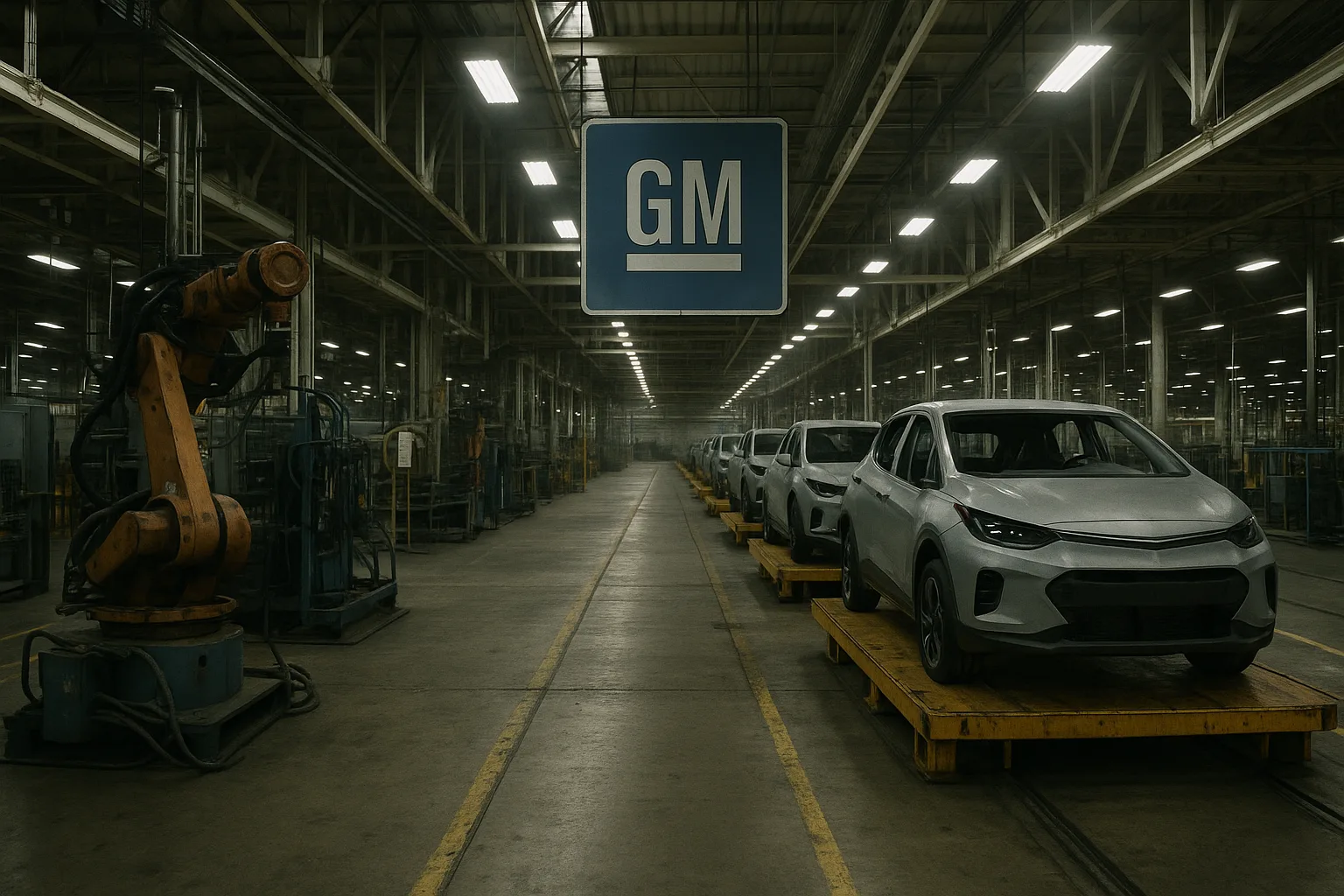
General Motors is pulling back on its electric vehicle ambitions and taking a $1.6 billion hit as a result. The company said the charge will appear in its third quarter results and is tied to reducing production capacity and unwinding supplier agreements connected to its previous EV strategy.
What the Charge Covers
GM outlined how the $1.6 billion breaks down:
- About $1.2 billion is a non-cash impairment related to EV factories and equipment that are no longer being fully utilized.
- Roughly $400 million comes from contract cancellations and settlements with suppliers the company no longer needs under the scaled-back plan.
- GM said its current EV models across Chevrolet, GMC, and Cadillac will continue production and are not directly affected by the changes.
This move reflects a strategic reset after years of aggressive investment in electric vehicles based on forecasts that are now shifting.
Policy Shifts and Slowing Adoption
Two major policy changes in the United States are forcing automakers to rethink their EV rollouts:
- The federal $7,500 EV tax credit has been eliminated, removing a key financial incentive for consumers.
- The current administration has also relaxed emissions rules, easing regulatory pressure on automakers to move quickly into electric-only production.
Without subsidies and regulatory urgency, GM expects EV adoption to grow more slowly. The company acknowledged that the economic case for some previously planned EV investments no longer holds.
Market Response and Broader Impact
Investors reacted quickly. GM shares slid about 2.5 percent in pre-market trading after the announcement. The company also warned it may take additional charges as it continues reviewing its EV manufacturing footprint.
GM is not alone. Other major automakers, including Ford, have delayed or canceled production plans for certain EV models and battery facilities. Some had even explored offering the former tax credit through dealer leasing programs but ultimately dropped the idea.
Analysts see GM’s move as evidence that the U.S. EV market is entering a slower, more cautious phase. Capital-intensive projects are being reevaluated in favor of models and pricing structures that can compete without subsidies.
What This Signals for the Industry
The decision highlights several emerging trends:
A shift from expansion to realism
Automakers are moving away from rapid rollout strategies as they reassess consumer demand and cost structures.
Policy volatility is reshaping investment decisions
Companies that built long-term EV strategies around incentives and stricter regulations are now adjusting to a looser policy environment.
Cost-focused EV strategies are gaining importance
Without government support, the success of future EV models may depend on affordability and flexible production plans.
Hybrids and gas-powered vehicles remain part of the mix
Rather than racing toward an all-electric lineup, manufacturers are keeping hybrid and traditional vehicle programs in play.
International pressure still matters
While U.S. policy is cooling on EVs, markets like China are pushing ahead, creating competitive pressure for companies with global ambitions.
Why Investors Should Pay Attention
GM’s charge does not just reflect a balance sheet adjustment. It signals a turning point in how the industry approaches electrification. Investors should watch for:
- Revised production plans
- Shifts in capital allocation
- Delays or cancellations of high-cost EV projects
- Renewed emphasis on hybrids and profitable internal combustion offerings
- Competitive positioning against global automakers operating under different policy regimes
GM described the move as a realignment based on market demand rather than a retreat from electric vehicles. Even so, the financial hit shows how costly rapid EV expansion can be when the policy environment changes.
About Author