The stock market keeps hitting new highs, but confidence is getting shakier, not stronger. The S&P 500 has logged more than 30 record closes this year and added over $11 trillion in value since April. Yet instead of feeling secure, many investors are bracing for a sharp reversal.
Sentiment surveys, fund flows, and hedging activity all point in the same direction: people want the upside, but they do not trust the foundation beneath it. Some believe the rally is too dependent on megacap tech, others think the Federal Reserve is fueling risk by cutting rates into inflation, and many worry that government debt, geopolitics, and slowing growth are lining up at the wrong time.
So far, bullish investors have been rewarded. But at this stage of the rally, protecting capital without abandoning opportunity is the smart play. Below are the five biggest risks quietly building under the surface and the strategic moves investors are using to prepare without overreacting.
Risk 1: A U.S. Debt Spiral That Shocks the Bond Market
The United States has crossed $37 trillion in federal debt and is on track to hit $50 trillion before the next decade. That has sparked growing doubt among global investors and central banks about the long-term safety of U.S. Treasuries.
When confidence weakens, borrowing costs rise. Higher yields mean falling prices on existing bonds. Some foreign buyers are already shifting toward gold, euros, and debt issued by nations with cleaner balance sheets.
How to Hedge It
Corporate bonds from cash-rich giants offer a compelling alternative. Apple, for example, holds a triple-A rating from Moody’s and S&P. It generates nearly $100 billion in free cash flow annually, spends responsibly, and still offers higher yields on its five-year bonds than comparable Treasuries.
For investors seeking fixed income exposure, high-grade corporate debt offers near risk-free returns with better yield and insulation from government dysfunction.
The Case Against Overreacting
Even critics admit that a total bond market collapse is unlikely. Defaults on Treasuries would be politically catastrophic. As economist Neil Shearing of Capital Economics puts it, “There are no magic thresholds for either public debt or budget deficits beyond which fiscal crises become inevitable.”
Debt ceiling fights will continue, but catastrophe is not the base case. Hedging with corporate bonds provides cushion without abandoning the bond market entirely.
Risk 2: AI Mania Turns Into the Next Nasdaq Meltdown
Artificial intelligence has been the fuel behind the current bull market. AI-linked names make up eight of the ten largest companies in the S&P 500, contributing over $23 trillion in market cap. That dominance raises a tough question: what if expectations outrun reality?
Portfolio manager Joe Tigay warns, “I think we are standing at the edge of a similar run today. Stocks could rally significantly, and when I say significantly, I mean the kind of rally that makes people feel like geniuses right up until the moment it does not.”
AI is also hitting natural limits. Power demand could reach the equivalent of 22 percent of U.S. household consumption by 2028, according to the Lawrence Berkeley National Laboratory. Meanwhile, most of the investment capital is circulating among the same tech giants, creating circular dependencies that look eerily familiar to dot-com era behavior.
How to Hedge It
One way to reduce exposure without betting against AI is to move into an equal-weight version of the S&P 500, which avoids overweighting the mega-cap names. Another is to add value stocks and healthcare, which have lagged but tend to hold up during valuation resets.
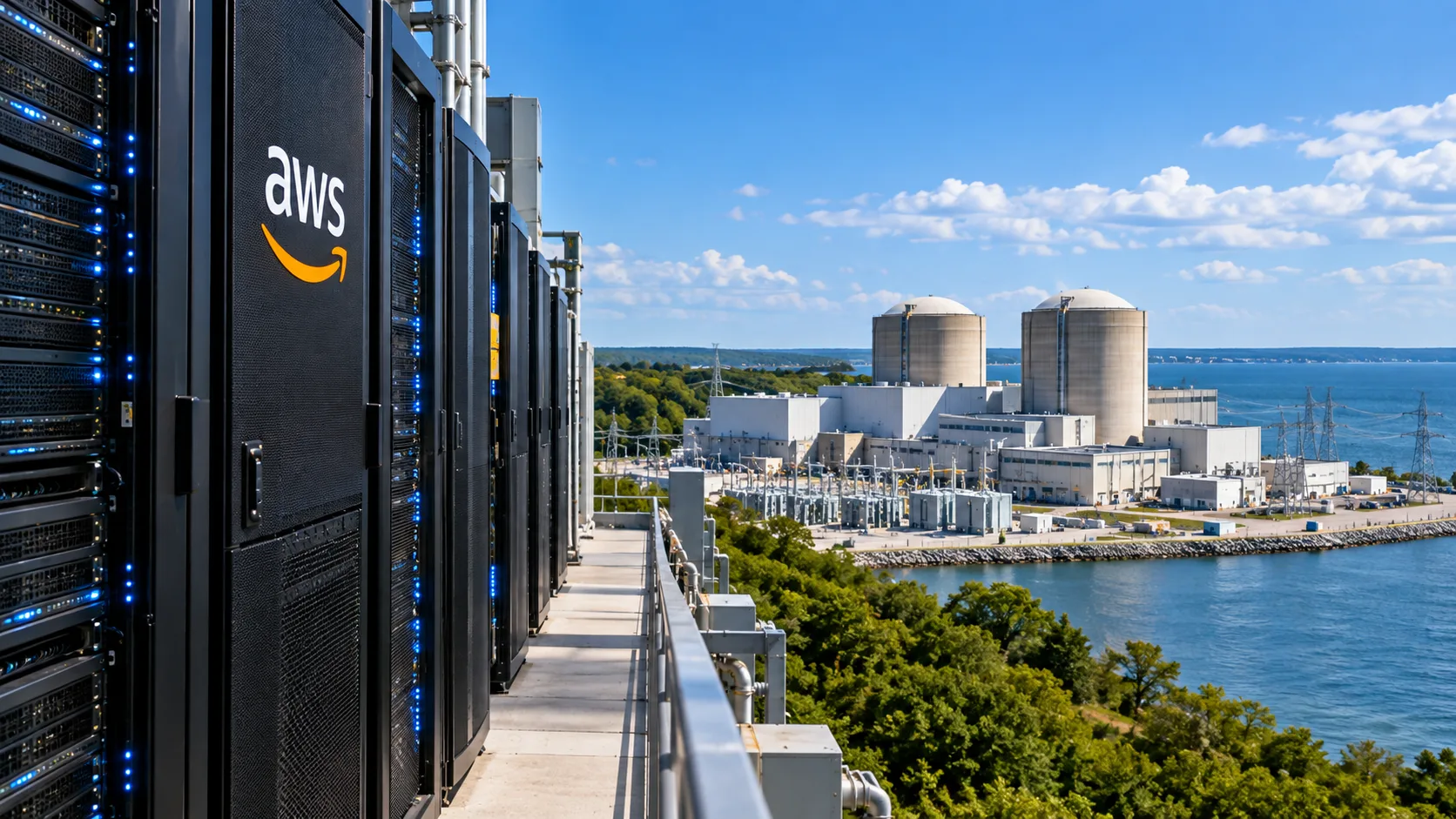
Energy is another pressure valve. AI cannot function without enormous power capacity. Utilities such as Constellation Energy and NextEra Energy, along with next-generation nuclear firms like Oklo, could become indirect beneficiaries if tech valuations correct but infrastructure demand persists.
The Case Against Overreacting
AI spending is not going away. A sharp selloff would be painful but temporary. Hardware, chips, and data centers do not disappear during pullbacks — the payoffs just take longer to materialize. Since 1928, every U.S. bear market has lasted less than a year. That historical context matters.
Risk 3: A China Flashpoint That Goes Beyond Trade War Headlines
China’s intentions are confusing by design. One day Beijing highlights innovation and economic reform. The next day it arrests business leaders and runs military drills near Taiwan. The uncertainty has investors guessing rather than planning.
The trade conflict with Washington is evolving into something broader. Members of the Trump administration have suggested China’s rapid growth in AI and semiconductor capabilities could challenge U.S. national security. Massive projects like Stargate, the $500 billion AI initiative, show both countries are hedging for confrontation.
How to Hedge It
Defense-oriented AI and autonomous systems are becoming attractive plays. Palantir Technologies has a $10 billion contract with the U.S. Army and markets its work as “powering the West to its obvious, innate superiority.” Drone makers like AeroVironment and Kratos could also rally as the U.S. directs billions toward missile defense systems such as Golden Dome.
These are speculative sectors but represent direct hedges against escalation.
The Case Against Overreacting
China and the United States need each other more than their politicians let on. China relies on U.S. demand to sustain its export machine and keep unemployment from igniting internal unrest. The U.S. relies on China to supply affordable goods and recycle trade surpluses into Treasuries.
They fight in public but function like roommates who cannot afford separate rent. Shock events are possible, but economic self-interest is still in control.
Risk 4: Stagflation Returns and Strangles Growth
The word stagflation still makes investors flinch. It evokes the 1970s, when inflation and slow growth crushed real returns. There are early warning signs again. The Fed’s preferred inflation gauge, the PCE Price Index, is climbing as tariffs push up costs. Economic growth has slowed to half last year’s pace, and new data suggests job softness is returning.
If the economy weakens while inflation persists, the Federal Reserve will face the ultimate policy trap. Cutting rates to support growth could cause prices to spike even faster. Holding rates high could trigger layoffs and earnings pressure.
How to Hedge It
Subscription-based tech and media platforms offer resilience. Companies like Apple, Netflix, Spotify, and Disney have recurring revenue streams and pricing power that can withstand weak growth environments. Their business models are not dependent on economic booms, which gives them more stability during stagflationary phases.
Real assets are another buffer. Demand for gold surged this year as investors looked to hedge against dollar weakness and policy missteps. Select commodity baskets can also provide inflation protection without paying for overvalued equities.
The Case Against Overreacting
The Federal Reserve has more tools than most investors assume. Even if Jerome Powell is replaced next year with a Trump-aligned chair pushing for lower rates, credibility in global markets will force a balanced policy approach.
As Jeffery Roach, chief economist at LPL Financial, puts it, “A data-dependent Fed that is not influenced by political pressures is critical.” If inflation stays high, blaming failed government policy will give the Fed room to act aggressively without political fallout.
Risk 5: The Dollar Weakens and Reconfigures Global Finance
The U.S. dollar index just logged its worst six-month stretch since the early 1980s, falling over 10 percent in the first half of the year. With rate cuts coming and debt soaring, the dollar is losing some of its shine as the world’s reserve currency.
Central banks around the globe are moving quietly but steadily toward dedollarization. China’s central bank added 21 metric tons of gold to its reserves this year alone, bringing its total above 2,300 tons, according to Reuters. Gold reserves now make up 27 percent of global central bank holdings, the highest in nearly three decades.
Foreign ownership of U.S. Treasuries, meanwhile, has dropped to around 23 percent, the lowest level since the 2008 financial crisis.
How to Hedge It
Gold is the most direct play. Prices are up nearly 50 percent this year and on pace for the best annual run since 1979. Cryptocurrencies are another hedge, though volatility is higher. Analysts at J.P. Morgan expect Bitcoin to reach around $165,000 by year-end, a projected gain of nearly 80 percent for 2025, compared with a likely 12 percent decline in the dollar index.
Emerging markets can also serve as indirect dollar hedges by diversifying regional exposure and reducing reliance on U.S. currency risk.
The Case Against Overreacting
The dollar is losing altitude, not vanishing. It remains the backbone of global trade. The euro is tethered to stagnant growth and political fragmentation. The yuan is controlled by Beijing. The yen has no independent central bank to anchor its value. Investors might not love the dollar, but they know its flaws better than the alternatives.
About Author