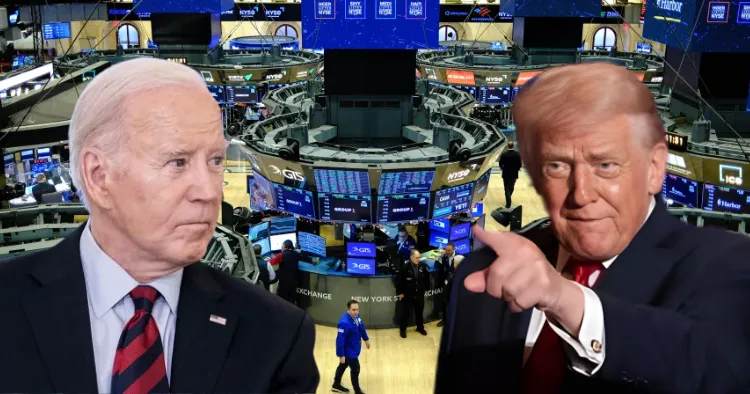
President Donald Trump has long blamed inflation on policies enacted under his predecessor, arguing that excessive government spending and loose monetary policy drove prices sharply higher. But recent proposals from Trump suggest a notable shift in tone and substance that closely resemble elements of the Biden-era economic approach.
For investors, the overlap is more than rhetorical. It raises renewed concerns about inflation risk, interest rates, and how markets may respond if stimulus and easier financial conditions return while growth remains strong.
Strong Growth, Soft Labor Market, Familiar Setup
Trump is entering this phase of his presidency under economic conditions that differ from those faced by Joe Biden in early 2021, but the macroeconomic signals are not entirely dissimilar.
Affordability pressures remain elevated, interest rates are higher, and the labor market is showing signs of strain. At the same time, overall economic growth has surprised to the upside. The Commerce Department reported that U.S. gross domestic product expanded at a 4.3% annualized rate over the summer, the fastest pace in two years.
A strong headline growth number paired with a weakening labor market mirrors the early post-pandemic recovery, when policymakers opted to stimulate demand further rather than slow it.
Trump Floats Stimulus and Lower Rates
Despite repeatedly criticizing Biden-era stimulus spending, Trump has recently raised the idea of sending $2,000 checks to Americans and has renewed calls for the Federal Reserve to lower interest rates.
Those proposals echo the same combination of fiscal and monetary support that critics argue contributed to the inflation surge that peaked in 2022.
Trump has framed the approach as a way to reward economic success and support markets, arguing that growth should take priority over inflation concerns in the near term.
The “Trump Rule” and Pressure on the Fed
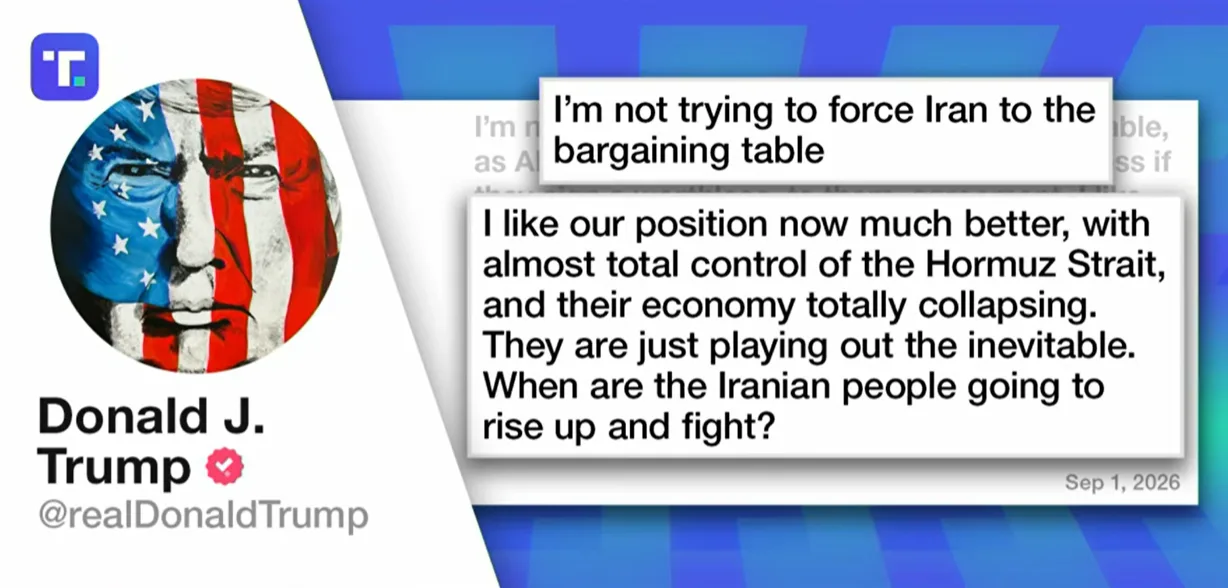
Trump last week outlined what he called “The Trump Rule,” signaling a more aggressive stance toward the Federal Reserve’s independence.
“I want my new Fed Chairman to lower Interest Rates if the Market is doing well, not destroy the Market for no reason whatsoever,” Trump wrote on social media.
He also claimed that a strong stock market could lift economic growth by as much as 20% annually. Economists note that such growth levels are historically implausible. The U.S. economy has never expanded at that pace, and even the sharp rebound in 2021 peaked at 6.1%.
While Trump’s growth projections are exaggerated, his broader point reflects a long-standing view that the Fed should prioritize markets. Central bankers, however, typically raise rates when growth accelerates in order to prevent inflation.
Why Economists See Inflation Risk
From a basic economic standpoint, Trump’s proposals carry clear inflationary risks.
Direct payments increase consumer demand without adding supply. Lower interest rates reduce borrowing costs for businesses and households, encouraging spending and investment. If supply does not rise fast enough, prices tend to increase.
This dynamic played out during the pandemic recovery and contributed to the Federal Reserve’s delayed response to inflation. Fed Chair Jerome Powell later acknowledged that the central bank waited too long to tighten policy after initially describing inflation as transitory.
Tariffs Complicate the Outlook
Unlike the early Biden years, Trump’s current policy mix includes historically high tariffs. While tariffs have not triggered runaway inflation, they have kept price pressures elevated.
Powell has said tariffs are a key reason inflation remains above the Fed’s 2% target. Consumer prices rose 2.7% in November compared with a year earlier.
Tariffs act as a cost increase for businesses and consumers, making inflation more persistent when combined with stimulus and lower rates.
The Fed May Still Be Forced to Cut Rates
Despite Trump’s public pressure, the Federal Reserve is widely expected to keep rates steady until at least mid-2026. That outlook depends heavily on the labor market.
If job growth continues to weaken or unemployment rises, policymakers may have little choice but to cut rates even if inflation remains above target.
Such a scenario would align with Trump’s preference for easier financial conditions, but it would also heighten the risk of renewed inflation later.
What Investors Should Watch
For investors, the issue is not political consistency. It is policy impact.
A mix of stimulus, lower rates, and tariffs increases the likelihood that inflation remains sticky. That environment tends to favor companies with pricing power, strong cash flows, and limited sensitivity to rising costs.
At the same time, looser monetary policy can support equity markets in the short term, particularly rate-sensitive sectors. The longer-term risk is that inflation resurfaces more forcefully, forcing sharper policy tightening down the road.
About Author