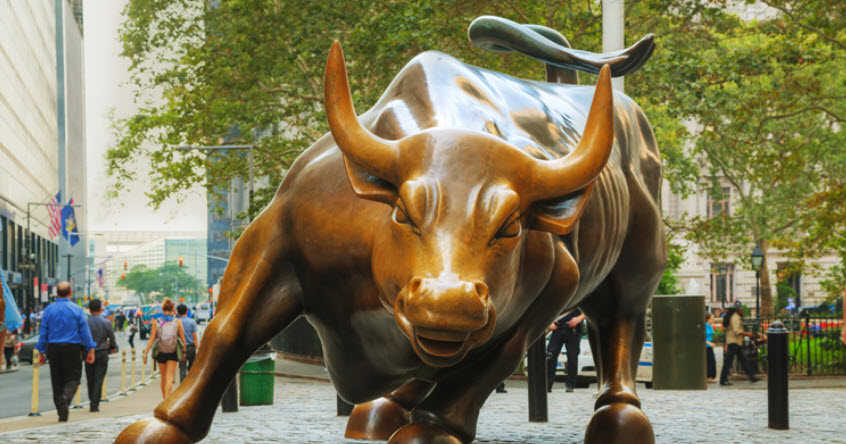
After three consecutive years of gains, Wall Street strategists are lining up behind an unusually unified call. The US stock market is expected to rise again in 2026, extending what would become the longest annual winning streak in nearly two decades.
Across major banks and boutique investment firms, forecasts now cluster around another year of solid returns for the S&P 500 Index. The average year end projection implies roughly a 9 percent gain next year, and notably, not a single strategist surveyed by Bloomberg is forecasting a market decline.
That level of consensus is rare. It is also drawing scrutiny from investors who remember that markets tend to punish overcrowded trades. Still, after years in which bearish warnings consistently missed the mark, optimism has become the dominant posture on Wall Street.
Why the Bulls Keep Winning the Argument
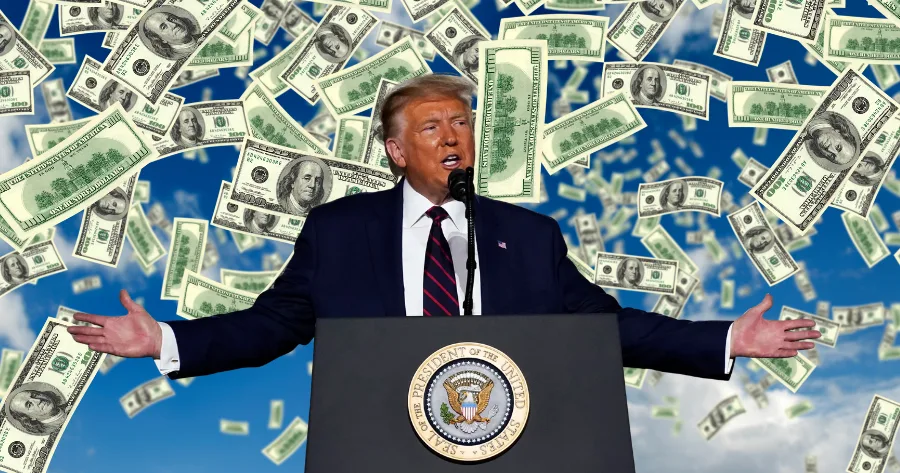
Since bottoming in October 2022, the S&P 500 has surged roughly 90 percent. That rally has persisted despite repeated scares, including aggressive Federal Reserve tightening, fears of recession, geopolitical shocks, and volatile shifts in trade policy under President Donald Trump.
The artificial intelligence investment cycle has been a major driver. Massive capital spending on data centers, advanced semiconductors, and cloud infrastructure has lifted earnings expectations for large technology companies. Those same firms have accounted for a disproportionate share of index level gains, reinforcing the momentum trade.
Yet that concentration has also fueled concerns. If AI spending were to slow or disappoint, market leadership could narrow quickly. Add in uncertainty around interest rates and global trade, and the risks to consensus optimism become easier to see.
Veteran strategist Ed Yardeni is among the bulls who acknowledge that tension.
“The pessimists have just been wrong for so long that people are kind of tired of that schtick,” said Yardeni, who expects the S&P 500 to end 2026 at 7,700, roughly 11 percent above recent levels.
Still, even he admits the uniformity of bullish views gives him pause.
“That’s where my counter instincts come out: Things have been going my way for so long that it is kind of worrying that everyone else seems to have become optimistic,” he said. “Pessimism is on the out right now.”
Volatility Tested Conviction in 2025
The confidence heading into 2026 was not formed in calm conditions. Markets endured sharp swings earlier in 2025 as fears mounted around global competition in artificial intelligence, renewed trade tensions, and questions about how restrictive monetary policy would remain.
At one point, the S&P 500 fell nearly 20 percent from mid February through early April, flirting with bear market territory. Strategists responded by slashing year end targets at the fastest pace since the Covid era selloff.
Then the market reversed violently.
Stocks staged one of the fastest recoveries in decades, forcing many forecasters to reverse course again and raise their projections. The episode reinforced a hard earned lesson for strategists and investors alike. Betting against US equities has been an expensive mistake.
Michael Kantrowitz of Piper Sandler & Co. said the experience highlighted how fragile consensus views can be during periods of elevated uncertainty.
“It’s tricky because I think there’s been a great amount of uncertainty in the last five years, and particularly this year,” he said. “When there’s a lot of uncertainty, investors are very myopic and reactive to different data points and it doesn’t take much to change the opinion and consensus.”
Kantrowitz has since abandoned publishing specific year end targets, reflecting just how difficult forecasting has become in an environment shaped by rapid technological change and shifting policy regimes.
A Historic Run If Forecasts Hold
If strategists are right about 2026, the implications are significant. The S&P 500 would be on track for its longest streak of annual gains since the period leading up to the Global Financial Crisis.
Some of the most aggressive targets would also mark the first time the index has delivered four consecutive years of double digit returns since the dot com era of the late 1990s.
That historical context matters. Extended runs do not automatically signal an imminent collapse, but they do raise the bar for future performance. Valuations become harder to justify, and disappointments carry greater downside risk.
Still, a handful of forecasters earned credibility by holding firm through 2025’s turbulence.
Christopher Harvey, who moved to CIBC Capital Markets from Wells Fargo Securities, correctly projected where the market would finish this year. His call for the S&P 500 to end 2025 near 7,007 proved remarkably accurate.
Looking ahead, Harvey sees the index reaching 7,450 in 2026, an increase of about 8 percent. Even so, he warns investors not to grow complacent.
“People are sleeping on a lot of macro risks,” he said.
Those risks include the possibility that the Federal Reserve keeps interest rates higher for longer, renewed tariff pressure on key trading partners, or corporate executives choosing to temper earnings guidance after several strong years.
“That could begin to upset the applecart,” Harvey said.
Big Banks Rejoin the Bull Case
Even the most cautious voices on Wall Street have gradually come back around.
Analysts at JPMorgan Chase & Co. were among the most bearish earlier this year, predicting a double digit decline for stocks in 2025 after trade tensions rattled markets. That view was abandoned as conditions stabilized and earnings growth proved more resilient than expected.
For 2026, JPMorgan now expects the S&P 500 to climb to 7,500, supported by easing inflation, solid corporate profits, and eventual rate relief from the Fed.
Mislav Matejka, the bank’s head of global and European equity strategy, said the optimism reflects confidence that AI driven investment represents a structural shift rather than a speculative bubble.
“If the economy is weaker than we project, the equity market may not necessarily take it negatively,” he said. “It’ll rely on the Fed to do the heavy lifting.”
That perspective underscores a key theme for investors. Monetary policy remains a critical backstop for risk assets, particularly if growth cools without collapsing.
Not Everyone Is All In
While outright bearish forecasts are absent, a few strategists are urging restraint.
At Bank of America Corp., Savita Subramanian expects the S&P 500 to reach 7,100 in 2026, a modest gain constrained by elevated valuations. She also outlines a wide range of potential outcomes.
In a recession scenario, stocks could fall as much as 20 percent. In a more optimistic case, stronger than expected earnings could push the index up 25 percent.
That dispersion highlights the real uncertainty beneath the surface of today’s bullish consensus.
What Investors Should Take Away
The dominant lesson of the past few years has been painful for skeptics. The US stock market has repeatedly absorbed shocks and kept moving higher.
Economic growth remains resilient, consumer spending has held up, and corporate earnings are projected to grow at a double digit pace again. Rate cuts already delivered and fiscal support from tax policy continue to provide tailwinds.
“Just because the year is changing, you don’t change your views,” said Manish Kabra of Societe Generale SA.
“The profit outlook is strong and broadening beyond tech,” he said. “The macro set up is simply solid.”
For investors, that does not mean ignoring risk. It means understanding where optimism is justified and where expectations may already be priced in. Selectivity, diversification, and discipline matter more than ever when nearly everyone agrees on the direction of the market.
Consensus has momentum on its side. History suggests it should still be questioned.
About Author