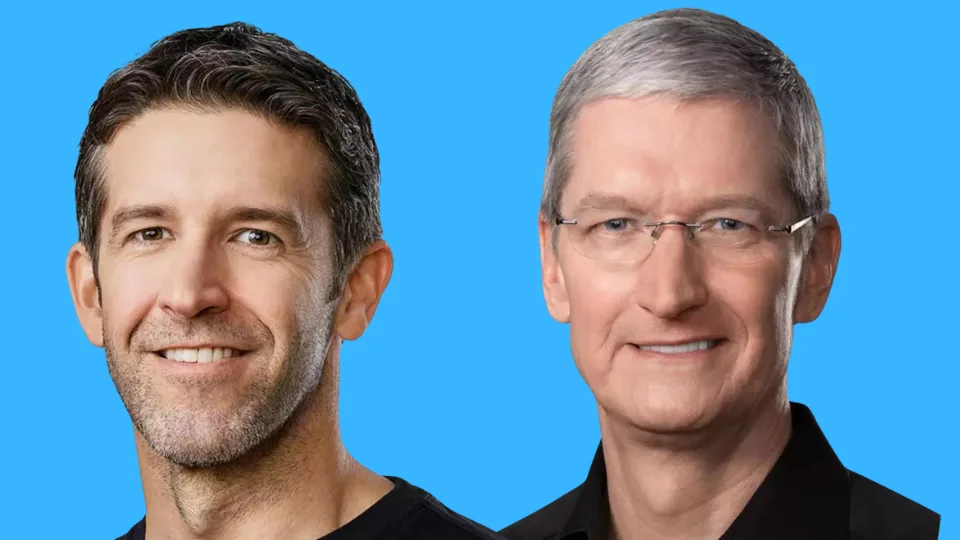
After more than a decade leading the company, Tim Cook is stepping down as chief executive officer and transitioning into the role of executive chairman. Taking his place will be John Ternus, a longtime Apple insider who is set to become CEO on September 1, 2026.
The move marks one of the most significant leadership transitions in the tech industry in years, and investors are paying close attention to what it means for Apple’s next chapter.
A Carefully Planned Transition… With Big Implications
Apple has framed the leadership change as part of a long-term succession strategy rather than a sudden shake-up. Ternus has spent roughly 25 years inside the company, rising through the ranks to become senior vice president of Hardware Engineering.
He has played a central role in developing and refining many of Apple’s core product lines, including the iPhone, Mac, iPad, and Apple Watch. His influence has also extended into Apple’s transition toward in-house silicon, a move that significantly boosted performance and margins across its Mac lineup.
Beyond product performance, Ternus has helped lead initiatives around durability, advanced materials, and sustainability. Apple’s push toward recycled aluminum and more efficient manufacturing processes has been a direct result of these efforts.
From a continuity standpoint, Apple is not bringing in an outsider. It is doubling down on internal leadership that understands its culture, supply chain, and long-term vision.
Industry Reactions: Respect for Cook, Curiosity About What’s Next
The reaction from the tech world has been swift.
Sam Altman praised Cook’s impact, stating:
“Tim Cook is a legend. I am very thankful for everything he has done and I am very thankful for Apple.”
Meanwhile, Wedbush analyst Dan Ives highlighted both the opportunity and uncertainty surrounding the timing:
“These will be big shoes to fill and the timing of Cook exiting stage left as CEO could make sense but also creates questions. Apple is making a major transition on its AI strategy and longtime CEO and legendary Cook leaving now is a surprise. We agree with Ternus as the pick.”
Market commentators like Jim Cramer also reacted strongly, underscoring how closely investors have associated Apple’s success with Cook’s leadership.
Why This Transition Matters Right Now
This leadership change is not happening in a vacuum. It comes at a pivotal moment for Apple and the broader tech sector.
1. The AI Race Is Heating Up
Apple has historically taken a more measured approach to artificial intelligence compared to competitors. Companies like Microsoft and Google have aggressively rolled out AI-powered tools, partnerships, and infrastructure.
Now, Apple faces growing pressure to define its own AI strategy more clearly.
Analysts believe this will be Ternus’s biggest challenge. According to industry experts, Apple must build a more cohesive AI ecosystem that relies less on third-party integrations and more on its own capabilities.
That likely means deeper integration of AI into iOS, macOS, and hardware products, while maintaining Apple’s strong stance on privacy.
2. A Potential Shift Toward Hardware Innovation
Some analysts see Ternus’s appointment as a signal that Apple may double down on hardware innovation.
Reuters cited expectations that Apple could accelerate development in areas such as:
- Foldable iPhones
- Smart glasses and augmented reality devices
- Virtual reality headsets
- AI-powered consumer hardware
Given Ternus’s deep engineering background, this direction would align with his strengths.
Apple has already made moves in this space with products like the Vision Pro, but the next CEO may push even harder to define entirely new product categories.
3. Cook’s Legacy Sets a High Bar
It is impossible to analyze this transition without understanding the scale of what Cook accomplished.
Since taking over from Steve Jobs in 2011, Cook transformed Apple into one of the most valuable companies in the world. Under his leadership:
- Apple’s market value surged into the multi-trillion-dollar range
- Services became a major revenue driver
- The company strengthened its global supply chain
- Shareholder returns, including dividends and buybacks, expanded significantly
Cook also guided Apple through major global disruptions, including trade tensions and the COVID-19 pandemic, while maintaining operational stability.
For investors, the key question is not just whether Ternus can lead, but whether he can sustain and build on this level of performance.
What Investors Should Be Watching Closely
This transition creates both opportunity and risk.
Here are the key factors to monitor going forward:
Apple’s AI Roadmap
Expect major announcements in the coming 12 to 24 months. Investors will be looking for clear signals that Apple can compete in the AI arms race without sacrificing its ecosystem advantage.
New Product Categories
If Apple successfully launches breakthrough hardware like smart glasses or foldable devices, it could unlock entirely new revenue streams.
Margins and Supply Chain Efficiency
Ternus’s engineering background could lead to further optimization in manufacturing and product design, potentially boosting margins.
Market Sentiment
Leadership changes often introduce short-term volatility. How the market reacts in the first few quarters under Ternus will be critical.
The Bottom Line
Apple is entering a new era, and while the transition appears well-planned, it comes at a moment when the stakes are unusually high.
The company must simultaneously defend its dominant ecosystem, accelerate innovation in artificial intelligence, and potentially redefine its hardware roadmap.
Ternus brings deep institutional knowledge and engineering expertise. But stepping into the role previously held by Tim Cook means inheriting enormous expectations.
For investors, this is not just a leadership change. It is a strategic inflection point that could shape Apple’s trajectory for the next decade.
About Author