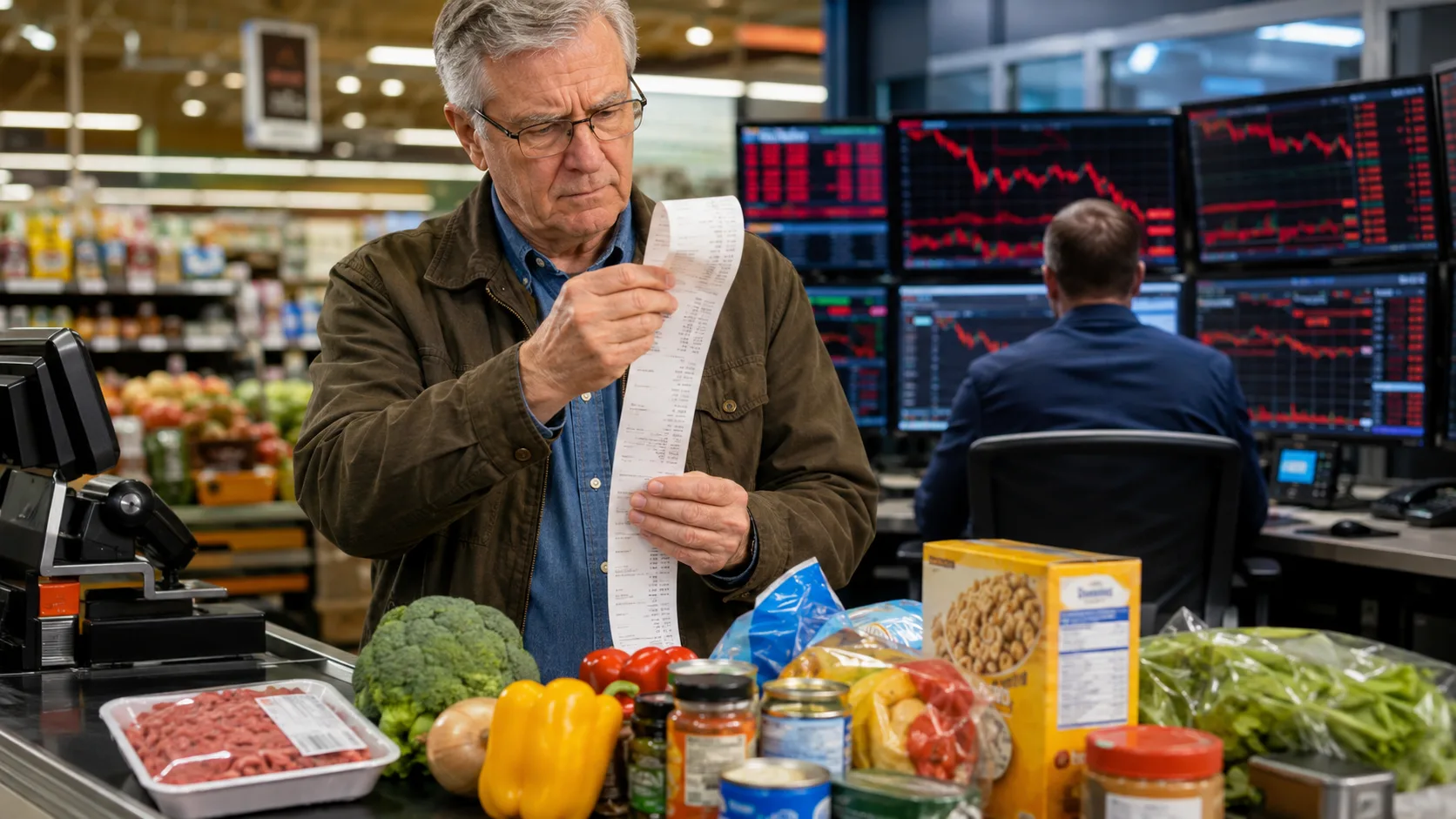
Food inflation is becoming a much bigger problem than higher supermarket bills. Rising fertilizer, fuel, shipping and agricultural commodity costs are squeezing corporate margins, changing consumer behavior and threatening spending across the broader economy.
Pressure Is Building Across the Food Supply Chain
Agricultural markets are flashing an early warning.
The Invesco DB Agriculture Fund, which tracks a basket of agricultural commodity futures, has climbed roughly 50% over the past five years and 7.4% during the past three months.
Several forces are contributing to the increase.
Food producers were still adjusting to pandemic-era supply disruptions when the war with Iran pushed energy, fertilizer and transportation costs higher. The potential development of an El Niño weather pattern adds another source of uncertainty for global crop production.
The pressure is already visible in America’s agricultural heartland.
In Iowa, the average price of urea fertilizer reached $725 per ton in July, according to the U.S. Department of Agriculture. That was up from $537 in February, an increase of approximately 35% in five months.
Fertilizer is only one part of a farmer’s cost structure. Farms also depend on diesel fuel, equipment, credit and transportation. When several of those expenses rise together, producers eventually require higher crop prices to protect their margins.
The beef market faces its own supply problem.
The United States had 94.2 million head of cattle as of July, compared with approximately 101 million in July 2021. That smaller herd has contributed to higher meat prices, with the average retail price of ground beef reaching $6.885 per pound in July.
Rebuilding cattle supplies takes years. Ranchers must retain breeding animals that otherwise could have entered the food supply, which can temporarily tighten beef availability even further.
That means consumers may continue paying elevated prices long after some of the original disruptions begin to ease.
The Economic Damage Extends Beyond the Grocery Aisle
Food is an unavoidable household expense. Consumers can delay purchasing a car, cancel a vacation or skip a home renovation. They cannot eliminate food from the monthly budget.
When grocery bills rise, households typically respond in several ways. They switch to cheaper brands, buy fewer premium products, eat at restaurants less frequently or reduce spending in unrelated categories.
This creates a chain reaction throughout the economy.
Farmers and manufacturers first absorb higher production costs. Restaurants and retailers then decide how much of those increases they can pass along. Finally, consumers adjust their behavior as food takes up a larger share of their income.
Each stage produces a different risk for investors.
Companies that absorb the increases can suffer weaker profit margins. Companies that raise prices risk losing customers. Businesses that emphasize cheaper products may protect sales volume while earning less from each transaction.
Revenue can therefore continue growing even as the underlying business weakens. Higher prices may conceal declining unit sales, deteriorating customer traffic or heavier promotional spending.
These Companies Are Caught in the Squeeze
McDonald’s Must Restore Its Value Advantage
McDonald’s reported that U.S. comparable sales increased just 0.8% during the second quarter of 2026. Its global business performed better, but the domestic results exposed a growing affordability problem.
The company has spent much of the year adjusting its value offerings to reconnect with cost-conscious customers. Some of those efforts have failed to produce the expected response.
That should concern investors because fast-food chains have historically benefited when consumers trade down from more expensive restaurants. Today, some households appear to be trading out of restaurants altogether.
McDonald’s and its franchisees must balance three competing priorities: affordable menu prices, healthy restaurant traffic and acceptable store-level margins. Higher beef, labor and transportation costs make it harder to achieve all three simultaneously.
The company’s size, purchasing power and enormous loyalty program provide meaningful advantages. Even so, persistent food inflation could force additional promotions and menu changes that limit profit growth.
McCormick Faces Rising Costs From Several Directions
McCormick is exposed to one of the most complicated global supply chains in the food industry.
The company sources thousands of ingredients from around the world, including spices that cannot be commercially produced at scale in the United States. That leaves it vulnerable to tariffs, transportation disruptions, currency movements and geopolitical instability.
McCormick received $28 million in tariff refunds during its second quarter and expected another $3 million during the remainder of its fiscal year. The company planned to use some of that benefit to offset higher expenses connected to the Iran conflict.
Management expected cost inflation to run around 6% for the fiscal year, including higher logistics and material costs.
The tariff refund provides temporary relief. If freight, energy and ingredient costs remain elevated, the pressure could continue after that benefit has been exhausted.
Investors should watch McCormick’s gross margin, pricing actions and sales volume. Those figures will show whether the company can pass higher costs to shoppers without pushing them toward cheaper alternatives.
General Mills, Conagra and Mondelēz Face Consumer Resistance
Packaged-food companies were already warning about cautious consumers before the latest geopolitical disruptions intensified cost pressures.
General Mills, Conagra and Mondelēz now face the same difficult choice. They can raise prices to protect margins, or they can absorb more of the inflation to defend sales volume.
Neither option is painless.
Repeated price increases encourage consumers to switch to private-label products, purchase smaller quantities or wait for promotions. Holding prices steady leaves manufacturers responsible for higher commodity, packaging and transportation expenses.
Conagra may be particularly sensitive because several of its brands rely heavily on meat and other proteins. Rising beef, chicken and pork costs can quickly affect the economics of frozen meals and packaged foods.
The strongest companies in this group will be those that can reduce costs, adjust package sizes and preserve brand loyalty without becoming excessively dependent on discounts.
Molson Coors Is Betting on Cheaper Beer
The search for value has even reached the beer aisle.
Molson Coors has renewed its focus on lower-priced brands, including Miller High Life and Keystone, as financially pressured consumers look for cheaper options.
That strategy could help the company protect sales volume. It may also create an unfavorable product mix if customers move away from higher-margin premium beverages.
For years, beverage companies encouraged consumers to purchase more expensive products. Food inflation threatens to reverse that trend by pushing shoppers toward basic, lower-priced alternatives.
Investors should look beyond the number of cases sold. Revenue per case, promotional spending and profit margins will reveal whether the value strategy is producing profitable growth or simply preventing a larger sales decline.
Some “Defensive” Stocks May Be More Vulnerable Than They Appear
Consumer-staples stocks are frequently treated as defensive investments because people continue buying food during economic downturns. Stable demand does not guarantee stable profits.
A packaged-food company can sell essential products and still experience falling earnings if its costs rise faster than its prices. A restaurant can maintain revenue while promotions reduce margins. A beverage company can protect volume while customers migrate toward cheaper products.
The important distinction is between companies that possess genuine pricing power and companies that simply sell necessary goods.
Businesses with efficient supply chains, diversified sourcing and durable customer loyalty should be better positioned. Companies heavily dependent on expensive commodities or financially strained customers face greater risk.
Agricultural commodities and fertilizer producers could benefit from elevated prices, although they carry their own risks. Their performance depends on crop conditions, energy expenses, futures-market dynamics and the duration of the current disruptions.
About Author