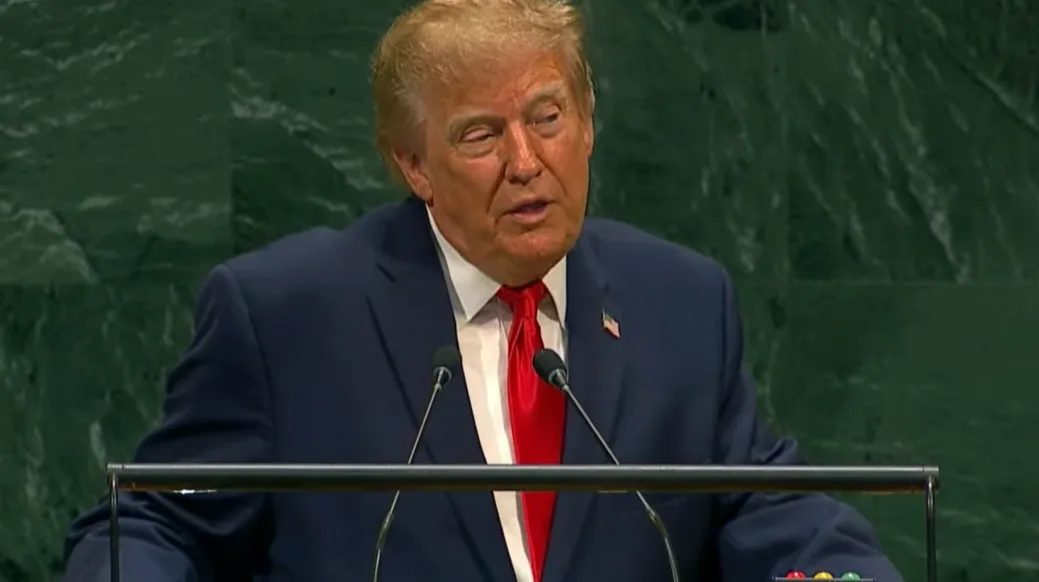
President Donald Trump used his address to the United Nations General Assembly on Tuesday to deliver a blunt message to Iran, Cuba and other U.S. rivals: Washington is prepared to use its military and economic power when American interests are threatened.
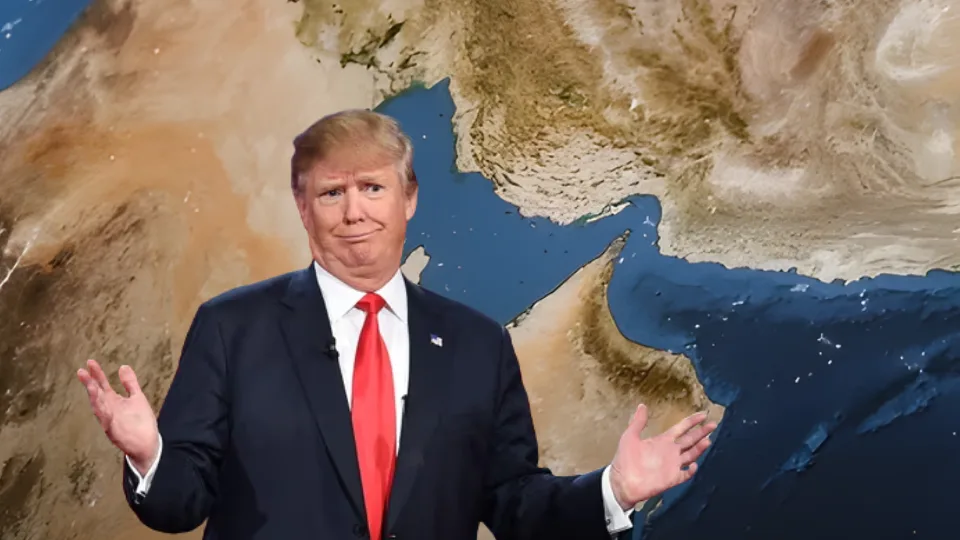
The strongest warning was aimed at Iran. Trump defended the U.S. war against the Islamic Republic and again raised the possibility of dramatically escalating the conflict, even as he said he still believes Tehran will eventually agree to a deal.
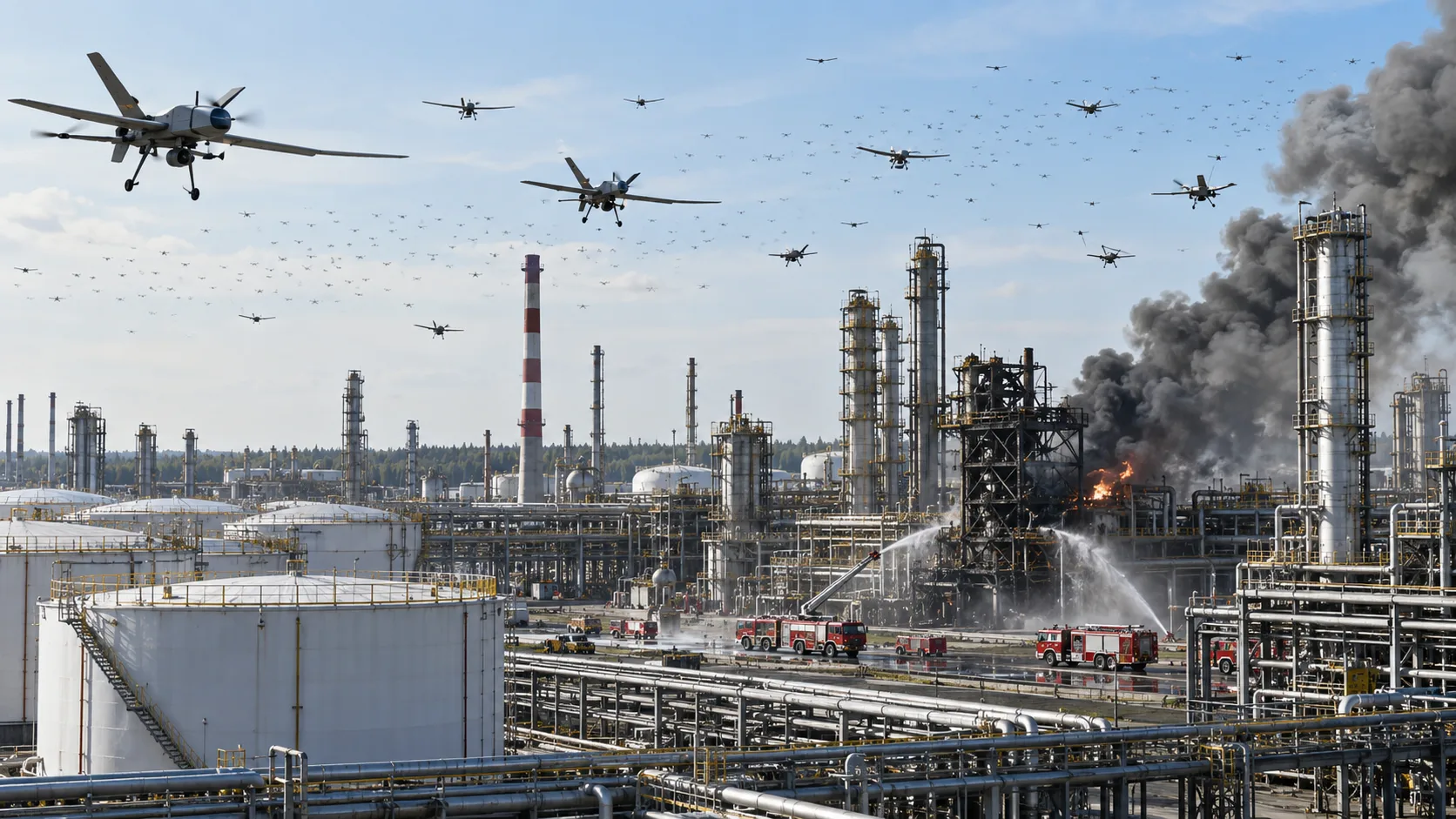
For investors, that leaves two very different outcomes on the table. One could reduce geopolitical pressure on oil and global markets. The other could intensify a war that has already disrupted energy supplies and shipping through one of the world’s most important oil corridors.
Trump Raises the Stakes With Iran
Trump defended his decision to go to war with Iran, arguing that Tehran had been strengthening its missile defenses while preparing for what he described as a “mad dash to a nuclear bomb.”
He then used some of his strongest language yet about where the conflict could go, publicly asking whether the United States should “annihilate the Islamic Republic” and act quickly enough to prevent Iran from rebuilding its military capabilities.
At the same time, Trump left the door open to diplomacy. He again predicted that Iran would agree to a deal after the November 3 midterm elections, claiming Iranian leaders are waiting to see how Republicans perform before making their decision.
“They’re waiting to see how I do in the midterm election,” Trump said. “What they don’t realize is that I’m not running.”
Trump said the election would have no bearing on his own decision-making and reiterated that his central objective is preventing Iran from obtaining a nuclear weapon.
That combination of threats and diplomacy leaves the direction of the conflict unusually uncertain. The administration is publicly signaling that negotiations remain possible while also making clear that a much larger military escalation remains an option.
Trump Also Put Cuba on Notice
Iran received the strongest warning, but Trump also used the speech to sharply escalate his rhetoric toward Cuba.
He called Cuba an “absolutely failed state” and accused its government of coordinating with Communist networks and political radicals in the United States.
“Communism will never be coming to America, but freedom will be coming to Cuba,” Trump told the assembled world leaders.
Members of the Cuban delegation stood and left the hall during his remarks.
Trump also said Secretary of State Marco Rubio is involved in negotiations with Havana, suggesting the administration is combining economic and political pressure with an effort to reach some form of agreement.
The comments follow a broader campaign by the administration to increase pressure on Cuba. Earlier this year, Trump declared the Cuban government a threat to U.S. national security and established a mechanism that could impose additional tariffs on countries supplying oil to the island.
For now, the important question is whether those negotiations produce an agreement or whether Washington moves toward another round of economic pressure.
Greenland Shows Another Side of Trump’s Strategy
Trump also highlighted an expected agreement with Denmark and Greenland that would expand America’s long-term military presence on the strategically important Arctic island.
The agreement is expected to provide the United States with greater military access while strengthening Washington’s ability to prevent Russia and China from expanding their influence in the region. Trump said the arrangement would give the U.S. “the complete ability to do what is necessary” to defend North America, Europe and other areas.
Greenland has become increasingly important as competition in the Arctic grows. Its location between North America and Europe gives it enormous strategic value for missile defense, surveillance and military operations, while the island’s mineral resources have attracted growing international attention.
The agreement falls short of Trump’s previous push to bring Greenland under U.S. control. From a military standpoint, however, expanded and permanent access could give Washington many of the strategic benefits it has been seeking without changing Greenland’s sovereignty.
Venezuela Fits the Same Pattern
Trump also pointed to Venezuela as evidence of his administration’s willingness to intervene aggressively in the Western Hemisphere.
Following the U.S. operation that removed Nicolás Maduro earlier this year, Washington has moved deeper into Venezuela’s enormous oil industry. Trump has argued that the arrangement could increase production, give American companies greater access to Venezuelan resources and ultimately help lower energy prices.
“We’re working closely with the leaders of Venezuela,” Trump said Tuesday, describing the arrangement as potentially the “biggest deal ever made.”
For energy markets, Venezuela creates an interesting counterweight to Iran. A prolonged conflict in the Middle East threatens global oil supplies, while a meaningful recovery in Venezuelan production could eventually add barrels back into the market.
Those forces will not necessarily offset each other, but investors should watch both sides of the equation. Washington is simultaneously confronting one major oil producer while attempting to unlock production from another.
A Broader Message About American Power
Taken together, Trump’s comments on Iran, Cuba, Venezuela and Greenland point toward a broader foreign-policy approach centered on the aggressive use of American military, diplomatic and economic leverage.
Iran faces military pressure alongside the possibility of negotiations. Cuba faces economic pressure while talks continue. Venezuela has experienced direct U.S. intervention followed by a major push into its oil industry. Greenland is moving toward a larger and potentially permanent American military presence.
Trump summarized that philosophy himself during the speech: “While others have talked, I have acted.”
There are still major unanswered questions about the results. The Iran war continues with no clear resolution, Russia’s war against Ukraine remains unsettled, and the longer-term consequences of U.S. intervention in Venezuela are still developing.
For markets, however, Iran remains the most immediate concern because another escalation could quickly move oil prices, inflation expectations and interest-rate forecasts.
What Investors Should Watch Now
The first signal will be whether U.S. and Iranian officials actually return to serious negotiations. Any confirmed high-level meeting, particularly one addressing the Strait of Hormuz, Iran’s nuclear program or a broader ceasefire, could materially change the outlook.
Oil prices and shipping activity through Hormuz provide another important signal. They can reveal whether traders and energy companies believe the risk of supply disruption is increasing even before there is a major diplomatic announcement.
Finally, watch U.S. military movements. Additional deployments or another round of strikes would suggest the conflict is moving toward the escalation side of the equation. A slowdown in military activity accompanied by direct negotiations would point in the other direction.
The Bottom Line
Trump’s U.N. speech ranged from Cuba and Venezuela to Greenland, Ukraine and China, but Iran carried the clearest immediate consequences for global markets.
The president is leaving two radically different possibilities open. Washington and Tehran could reach an agreement that begins reducing geopolitical pressure on the Middle East, or the conflict could escalate further after Trump publicly raised the possibility of “annihilating” the Islamic Republic.
Until there is more clarity, investors should keep watching the place where geopolitical risk is most likely to show up first: oil.
About Author