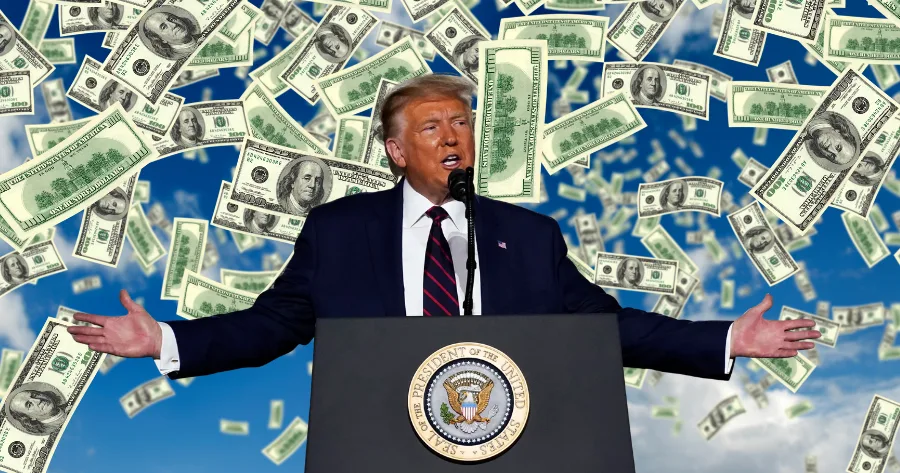
President Donald Trump signed a diesel relief order at a campaign rally with the midterm elections four weeks away. The announcement offers help for farmers and truckers, but the promise of “tax-free” fuel comes with an important condition: some taxes could still have to be paid later.
The October 5 executive order seeks to expand highway use of red-dyed diesel, a fuel normally reserved for tax-exempt uses such as farming and construction. The administration says broader access could reduce transportation costs and eventually help consumers.
That would be welcome relief. However, the order provides a process for deferring certain federal taxes, while directing Treasury to explore ways to forgive them. Those are different outcomes, and the distinction matters to anyone planning to use the fuel.
A Fuel Announcement on a Campaign Stage
Trump signed the order during his rally in Grand Island, Nebraska, where he was supporting Republican candidates ahead of the November 3 elections. Addressing Senator Pete Ricketts and Governor Jim Pillen, he connected the diesel announcement directly to their campaigns.
“Pete and Jim, this should absolutely ensure your election, I guarantee you that,” Trump said, according to the Associated Press.
The setting gives this story a clear political dimension. Farmers and truckers have a practical interest in reducing fuel expenses, and Republicans have an electoral interest in showing voters that Washington is addressing those expenses.
The policy offers a potential economic benefit and a campaign message at the same time. Whether it can help Republicans preserve control of Congress will depend partly on whether voters experience meaningful savings before they cast their ballots.
What “Tax-Free” Leaves Out
Red-dyed diesel gets its color from a marker used to identify fuel intended for certain nontaxable uses. Using that fuel in highway vehicles ordinarily creates tax obligations and possible penalties.
Trump’s order directs Treasury to determine whether it can legally grant relief and which taxpayers qualify. It also directs the IRS to announce relief from specified dyed-fuel penalties for the period covering October 5 through December 31, 2026.
The crucial distinction is the treatment of the tax bill. Deferral postpones payment. Forgiveness eliminates the obligation. The order directs Treasury to explore avenues, including legislation, to eliminate deferred taxes. It does not automatically erase those liabilities.
Treasury’s implementing guidance must specify who is covered, the conditions that apply and when postponed taxes must be paid. Businesses therefore need to assess the final rules alongside the announcement before treating the relief as a permanent reduction in expenses.
Another Affordability Pitch Before Election Day
Diesel relief joins a series of financial announcements Trump has promoted as the elections approach. The administration announced one-time $90 payments for more than 20 million eligible Medicare Part B enrollees, alongside $500 refunds for certain Affordable Care Act customers.
Trump has also promised much larger $5,000 payments if Republicans retain control of Congress. That proposal would require congressional action and funding, according to Kiplinger’s reporting.
These announcements have different legal and financial foundations. A proposed payment, an announced rebate and a signed executive order carry different levels of certainty. Readers should judge each by its eligibility rules, implementation and actual financial effect.
Taken together, they show an affordability-focused campaign strategy: give voters a concrete dollar amount or cost-saving measure they can connect to the administration. Trump’s remarks at the Nebraska rally make the electoral objective particularly clear in the diesel announcement.
Today’s Update Shows Why Location Matters
On October 6, Iowa Governor Kim Reynolds announced a proclamation suspending state penalties for using dyed diesel to transport specified agricultural products on public roads. Iowa’s measure runs through February 2, 2027.
Its coverage includes vehicles hauling products such as corn, soybeans, hay, fertilizer and manure. Those restrictions illustrate why the federal announcement should not be interpreted as identical permission for every driver in every state.
State rules, federal eligibility and fuel availability will influence how much relief a particular business receives. A national announcement can produce different practical outcomes across state lines.
How Much Could the Relief Help?
The federal diesel tax and associated fee total 24.4 cents per gallon, according to the Energy Information Administration. On a 250-gallon purchase, that amounts to approximately $61. The White House says combined savings could exceed $100 per fill where states provide corresponding relief.
For businesses purchasing large quantities of fuel, those amounts can accumulate. Even temporary payment relief could help cash flow during a demanding harvest or shipping period.
For Households
The potential benefit would travel through the supply chain. If businesses obtain cheaper fuel, they could face less pressure to raise delivery charges and product prices. How much reaches households depends on competition, contracts and whether other expenses continue rising.
There is no guaranteed matching reduction in grocery prices. Businesses may use savings to cover other costs or repair margins.
For Investors
The announcement is most relevant to fuel-intensive businesses and companies affected by transportation expenses. The useful question is how much eligible fuel they can actually obtain and whether any savings persist.
A tax deferral could improve near-term cash flow while leaving a later payment obligation. Investors assessing earnings should distinguish temporary cash-flow help from a lasting improvement in profitability.
The Order Cannot Manufacture More Fuel
The economic limitation is straightforward: changing tax treatment does not itself produce additional diesel. Expanded access to existing supplies could help some users, while broader fuel costs will still depend on availability and underlying market prices.
That leaves several developments worth following:
- Treasury and IRS guidance: Who qualifies, and when would deferred taxes become payable?
- State implementation: Which vehicles and activities receive relief?
- Permanent forgiveness: Does Congress or Treasury establish a lawful path to eliminate the deferred obligations?
- Actual prices: Do businesses and households see savings that survive beyond the announcement?
Trump has signed a real policy action and placed it squarely inside his midterm campaign. Its value will be measured by accessible fuel, clearly defined tax relief and savings that reach customers. The signing ceremony established the political message; implementation will determine the financial result.
About Author