

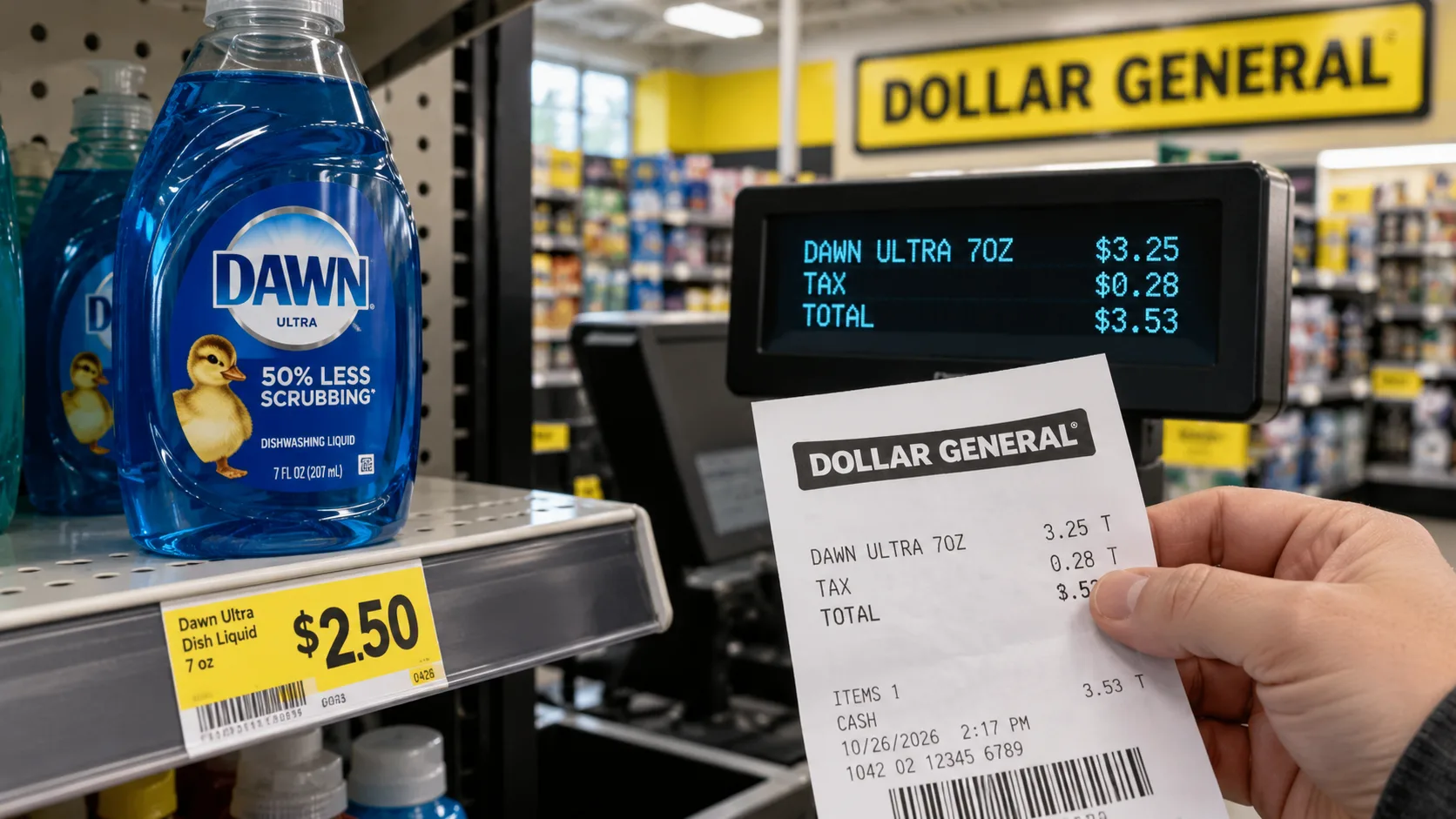
Dollar General is facing a major federal lawsuit accusing the discount retailer of charging customers more at checkout than the prices advertised on store shelves. Regulators say the practice continued for years, costing American shoppers millions of dollars despite repeated complaints.
The Federal Trade Commission (FTC) and 20 states filed the lawsuit Monday, October 26, alleging widespread pricing violations across thousands of Dollar General locations.
Shares of Dollar General (NYSE: DG) fell approximately 4% following the announcement, reflecting investor concerns about potential penalties, compliance costs and damage to the retailer’s reputation.
Thousands of Stores Accused of Overcharging Customers
According to the FTC, Dollar General repeatedly charged shoppers higher prices at checkout than those displayed on shelves, product labels and advertisements.
The agency alleges the company received tens of thousands of customer complaints but failed to take sufficient action to correct the discrepancies.
Regulators claim the practice affected thousands of stores and resulted in millions of dollars in improper charges.
The complaint was filed in federal court in Tennessee and includes allegations of violations of federal consumer protection laws and various state laws.
Dollar General operates more than 21,000 stores nationwide, serving millions of Americans who depend on the chain for affordable groceries, household essentials and everyday necessities.
The scope of the allegations is particularly significant because many Dollar General locations serve rural communities and lower-income households with limited shopping alternatives.
For customers living on fixed incomes, even relatively small price discrepancies can add up over repeated shopping trips.
Dollar General Pushes Back Against the Allegations
Dollar General strongly disputes the government’s characterization of its practices.
In an October 26 statement, the company said occasional pricing discrepancies can occur in retail operations but maintained that employees are expected to correct mistakes when identified.
The company also said it has strengthened its pricing accuracy procedures in recent years.
Dollar General disclosed that it became aware of the FTC investigation in February 2026 and subsequently provided more than 200,000 documents and over 350 gigabytes of information to investigators.
The retailer also challenged the government’s calculation of potential consumer compensation, arguing that the proposed monetary demands substantially exceeded what the company believes could be justified.
Dollar General said it intends to vigorously defend itself while remaining open to settlement discussions.
The allegations have not been proven in court, and the eventual financial consequences remain uncertain.
Why This Lawsuit Could Become Expensive for Dollar General
The immediate concern for investors extends beyond the amount customers were allegedly overcharged.
The FTC and participating states are seeking remedies that include monetary relief, civil penalties and court-ordered changes to the company’s business practices.
Depending on the outcome, Dollar General could face several financial pressures.
1. Legal expenses and potential settlement costs
A lawsuit involving federal regulators and 20 states could generate substantial legal expenses. Any eventual settlement or court judgment could add to those costs, although the final amount remains unknown.
2. Higher operating expenses
Improving pricing accuracy across more than 21,000 stores may require additional employee training, technology investments, inventory management improvements and more frequent price audits.
These measures could place additional pressure on operating margins.
3. Damage to customer trust
Dollar General’s business depends heavily on customers believing they are receiving competitive prices. Repeated reports of checkout discrepancies could weaken that confidence and encourage shoppers to consider competitors.
That risk matters especially when households are closely monitoring grocery and household spending.
The Bigger Problem: Dollar General’s Business Model
The lawsuit highlights a potential weakness in the economics of discount retailing.
Dollar General competes by offering convenient locations, low prices and a relatively lean operating model. Maintaining accurate shelf prices across thousands of stores and thousands of products requires consistent execution by store employees.
When prices change frequently, the workload associated with updating shelf labels and checkout systems can become significant.
If the company needs to increase labor hours or invest in better technology to maintain pricing accuracy, those additional expenses could affect profitability.
There is another important consideration for investors.
The alleged overcharges amount to millions of dollars, but the financial impact of correcting the underlying problems across the entire store network could be considerably larger.
That possibility makes the company’s response and any court-ordered operational requirements especially important.
What Dollar General Investors Should Watch
For shareholders considering whether the stock’s decline presents an opportunity or signals additional downside, three developments deserve attention.
Legal exposure: Investors should monitor whether Dollar General reaches a settlement and how much compensation, penalties or other financial relief regulators ultimately seek.
Operating margins: Future earnings reports may reveal whether pricing compliance improvements are increasing store operating expenses.
Comparable-store sales: Any sustained decline in customer traffic or spending could suggest that negative publicity is affecting shopping behavior. However, investors should distinguish the lawsuit’s possible effects from broader consumer spending trends.
A 4% stock decline does not necessarily indicate that the market has accurately priced the financial risk. The eventual impact depends on the legal outcome, implementation costs and whether the controversy affects customer loyalty.
What Shoppers Can Do Right Now
The lawsuit also provides a practical reminder for consumers shopping at Dollar General or any other retailer.
- Compare shelf prices with checkout prices. Pay particular attention to promotional products and advertised discounts.
- Review receipts before leaving. Pricing errors may be easier to resolve while still at the store.
- Request a correction when necessary. Ask the cashier or store manager to review any discrepancy.
- Keep documentation. Saving receipts and photographs of advertised prices can help support a complaint.
- Report recurring problems. Consumers can contact their state attorney general’s consumer protection office or the FTC.
Shoppers should also be aware that pricing accuracy requirements and available remedies vary by state.
The Cost of Losing Customer Trust
Dollar General’s legal problems arrive at a challenging time for consumers who are increasingly sensitive to the cost of everyday essentials.
The FTC and 20 states are alleging years of widespread overcharging, while Dollar General maintains that it has policies to correct pricing errors and disputes the government’s financial claims.
For investors, the central question is how expensive the resolution becomes and whether the company must make significant changes to its operations.
For shoppers, the message is simpler: The price displayed on the shelf should match the amount charged at checkout.
Whether regulators can prove that Dollar General systematically failed to meet that standard will now be decided through the legal process.
About Author