

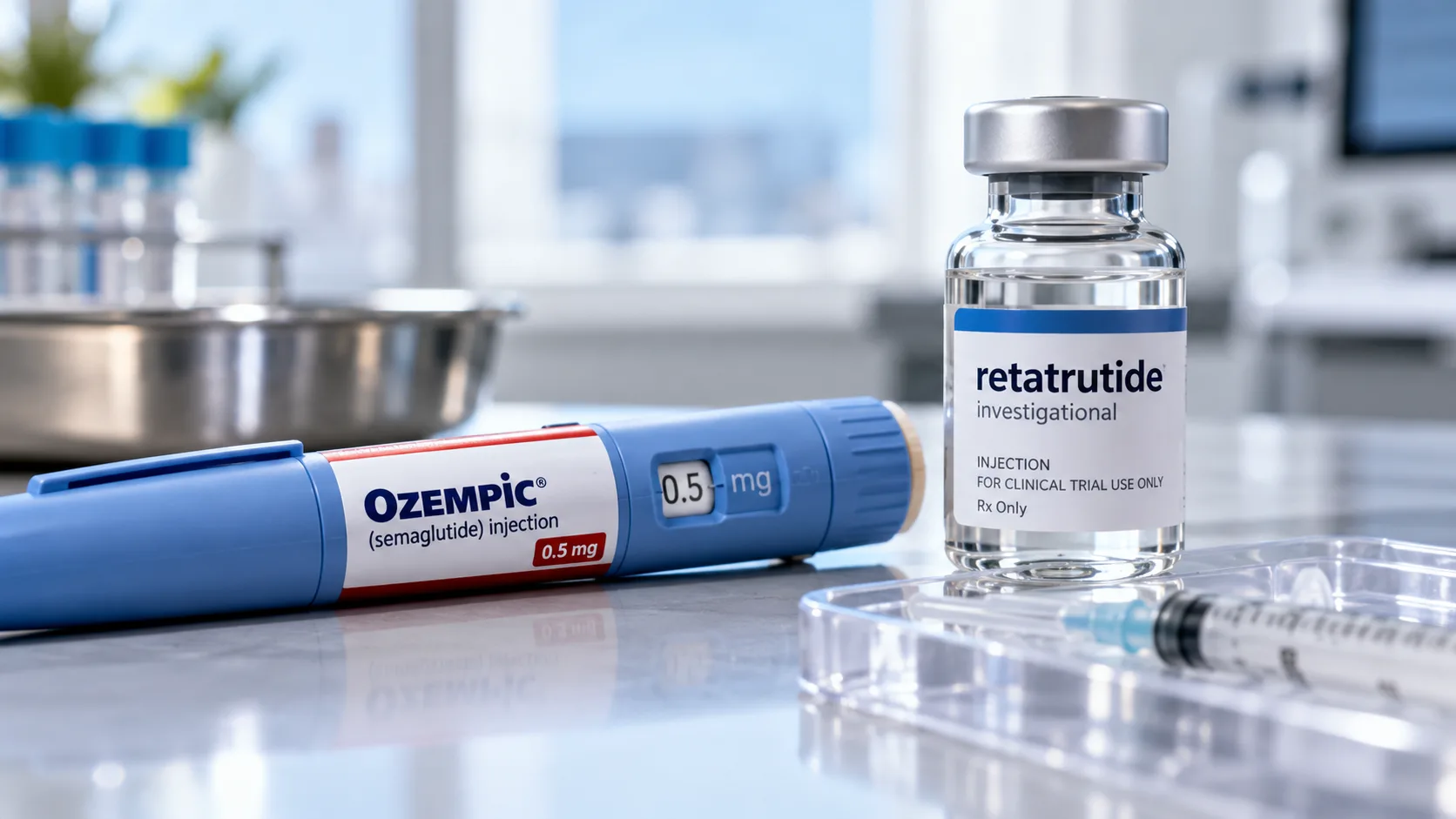
A new experimental weight-loss drug from Eli Lilly has delivered more than twice the weight loss of Novo Nordisk’s Ozempic in a major clinical trial, potentially setting the stage for the next big shift in obesity and diabetes treatment.
Patients taking the highest dose of Lilly’s retatrutide lost an average of 47.4 pounds over 80 weeks, compared with 20.9 pounds for those taking Ozempic. The results could strengthen Lilly’s position in the rapidly expanding weight-loss drug market, although important questions remain about side effects, regulatory approval and how the medication would be priced.
Patients Lost an Average of 47 Pounds in the Trial
Eli Lilly announced Wednesday that retatrutide outperformed Ozempic in a Phase 3 clinical trial involving approximately 1,300 adults with type 2 diabetes. The study, known as TRANSCEND-T2D-2, compared two doses of retatrutide with the highest approved 2-milligram dose of Ozempic over 80 weeks.
The weight-loss differences were substantial:
- Retatrutide, 12 mg: Average weight loss of 47.4 pounds, or 20.9% of body weight.
- Retatrutide, 9 mg: Average weight loss of 44.3 pounds, or 19.5% of body weight.
- Ozempic, 2 mg: Average weight loss of 20.9 pounds, or 9.4% of body weight.
Participants entered the study weighing approximately 226 pounds on average. Those receiving the highest dose of retatrutide lost nearly one-fifth of their starting body weight, a particularly notable result because people with type 2 diabetes have historically experienced more difficulty losing weight with medication.
The new treatment also demonstrated stronger blood sugar control. Retatrutide lowered A1C, a measurement of average blood sugar over approximately three months, by 2.2 percentage points compared with 1.8 percentage points for Ozempic.
Lilly reported additional improvements in certain cardiovascular risk factors, including triglycerides, non-HDL cholesterol and systolic blood pressure. Those findings add to the drug’s potential, although improvements in risk factors do not establish that the medication prevents heart attacks or other cardiovascular events.
What Makes Retatrutide Different From Ozempic?
Retatrutide belongs to a newer generation of medications designed to target multiple hormones involved in appetite, blood sugar regulation and metabolism. Ozempic, which contains semaglutide, primarily works by activating the GLP-1 receptor, helping regulate blood sugar, slow digestion and reduce appetite.
Eli Lilly’s existing medication, tirzepatide, sold under the brands Mounjaro and Zepbound, targets two hormone receptors: GLP-1 and GIP. Retatrutide goes a step further by targeting three: GLP-1, GIP and glucagon, earning it the nickname “Triple G.”
Researchers believe activating all three pathways could produce greater reductions in body weight by influencing appetite, blood sugar control and energy expenditure simultaneously. The latest trial provides encouraging evidence that this approach works, although the results were reported by Lilly and have not yet undergone the full scrutiny of a published, peer-reviewed report.
There is also an important limitation to the comparison. The study tested retatrutide against Ozempic, a medication approved for type 2 diabetes, rather than Novo Nordisk’s higher-dose obesity treatment Wegovy. The results therefore should not be interpreted as proof that retatrutide produces twice the weight loss of every existing obesity medication.
The Bigger Weight-Loss Results Came With More Side Effects
While retatrutide produced substantially greater weight loss, the study also revealed a trade-off that patients and physicians will need to consider. Gastrointestinal problems were the most commonly reported side effects, including nausea, diarrhea, constipation and vomiting, which are already familiar concerns with GLP-1 medications.
At the highest retatrutide dose, 32.7% of participants experienced diarrhea, compared with 26.4% of those receiving Ozempic. Vomiting was reported by 15% of patients taking retatrutide’s 12-milligram dose, compared with 13.2% of Ozempic users.
More significantly, 7.9% of participants taking the highest retatrutide dose discontinued treatment because of adverse events, compared with 2.7% of those taking Ozempic. The trial also recorded unusual skin sensations, described as dysesthesia, in some retatrutide recipients, including tingling, burning or other changes in sensation.
Most reported adverse events were mild to moderate, according to Lilly, but the higher discontinuation rate demonstrates why stronger weight-loss results do not automatically make a medication the best option for every patient. Retatrutide remains investigational and has not been approved by the U.S. Food and Drug Administration, making continued evaluation of its safety and long-term effectiveness essential.
Patients should also avoid purchasing unapproved products marketed as retatrutide or “reta” through unauthorized online sellers, since their quality, purity and safety cannot be assured.
Eli Lilly Could Gain Another Advantage Over Novo Nordisk
The results have major implications for two of the world’s most important pharmaceutical companies. Eli Lilly (NYSE: LLY) and Novo Nordisk (NYSE: NVO) have become fierce competitors in the booming market for diabetes and weight-loss medications.
Novo Nordisk helped establish the modern GLP-1 market through Ozempic and Wegovy, while Lilly has gained substantial traction with Mounjaro and Zepbound. The next phase of competition increasingly depends on which company can offer stronger weight loss, better treatment outcomes, fewer side effects and easier access for patients.
Retatrutide could give Lilly another powerful product if regulators ultimately approve it. The drug’s results also strengthen the company’s broader strategy of developing multiple treatments targeting different metabolic pathways, potentially allowing physicians to select medications that better match individual patient needs.
For Novo Nordisk, the trial adds competitive pressure at a time when pharmaceutical companies are racing to improve the effectiveness and convenience of obesity treatments. However, Novo still has established products, significant manufacturing capabilities and ongoing research programs of its own, meaning the long-term competitive outcome will depend on considerably more than a single clinical trial.
The Next Battle May Be Over Affordability and Insurance Coverage
Even if retatrutide eventually receives FDA approval, its commercial success will depend heavily on whether patients can afford it. The newest weight-loss medications can carry substantial costs, and insurance coverage remains inconsistent, with restrictions often depending on whether a drug is prescribed for diabetes, obesity or another medical condition.
For Medicare beneficiaries, access is particularly complicated because coverage depends on the medication’s approved indication and applicable program rules. A more effective treatment could eventually offer substantial health benefits, but those benefits will be limited if patients cannot obtain or remain on the medication.
This creates an important distinction for pharmaceutical investors. Clinical performance can help establish a drug’s competitive position, while pricing, reimbursement and manufacturing capacity determine how much revenue it ultimately generates.
Lilly’s ability to produce enough medication to meet potential demand will also be critical. Manufacturing shortages have previously complicated the rollout of popular weight-loss drugs, demonstrating that strong consumer interest does not immediately translate into unrestricted sales.
Stronger Results Could Expand the Market Beyond Weight Loss
The investment opportunity surrounding these medications extends into several areas of healthcare. Obesity and type 2 diabetes are associated with numerous chronic conditions, including cardiovascular disease, kidney complications and other metabolic disorders.
Treatments that produce substantial improvements in weight and blood sugar could change how physicians manage these conditions, potentially increasing demand for medications that address multiple health risks. For pharmaceutical companies, that creates opportunities to pursue additional approved uses supported by clinical trials.
For insurers and healthcare systems, the financial calculation is more complicated. Expensive medications increase near-term spending, but effective long-term treatment might reduce certain complications and associated medical costs, depending on treatment duration, adherence, pricing and demonstrated health outcomes.
Patients may also need ongoing treatment to maintain some of the benefits, since weight regain after stopping obesity medications remains an important consideration. That makes durability and tolerability especially important, as a drug that produces dramatic weight loss during a clinical trial still needs to demonstrate that patients can use it safely and consistently over time.
Regulatory Approval Is the Next Major Test
The latest results represent another encouraging development for retatrutide, but several milestones remain before the medication could become widely available. Lilly is continuing its Phase 3 development program and expects to pursue regulatory approval after assembling the necessary clinical data.
Investors should pay particular attention to the publication of detailed trial results, further safety information and the company’s regulatory submission timetable. The FDA will need to assess the drug’s overall balance of benefits and risks before deciding whether to approve it for specific conditions.
Another important development will be how retatrutide compares with other emerging obesity treatments, especially newer formulations and medications designed to improve convenience. The market is also watching advances in oral weight-loss medications, which could appeal to patients who prefer tablets over weekly injections.
For Lilly, the challenge will be converting compelling clinical results into an approved, affordable and widely available treatment. How successfully the company navigates those hurdles could have important consequences for its future market share and revenue growth.
A Promising Result With Important Questions Still Ahead
Retatrutide’s latest trial results suggest that the next generation of weight-loss medications could deliver substantially greater benefits than some of today’s most widely prescribed treatments. The difference between losing approximately 47 pounds and 21 pounds over 80 weeks is significant, particularly for patients struggling to manage type 2 diabetes and obesity.
However, the higher rate of treatment discontinuation, the absence of FDA approval and uncertainty surrounding future pricing remain important considerations. These factors will help determine whether the drug’s impressive clinical performance ultimately translates into widespread adoption.
For investors, the findings strengthen Eli Lilly’s position in the race to develop increasingly effective metabolic treatments while adding pressure on Novo Nordisk and other competitors. For patients, the results offer a glimpse of what may be possible in the coming years, provided the medication proves sufficiently safe, receives regulatory approval and becomes accessible to those who need it.
About Author