

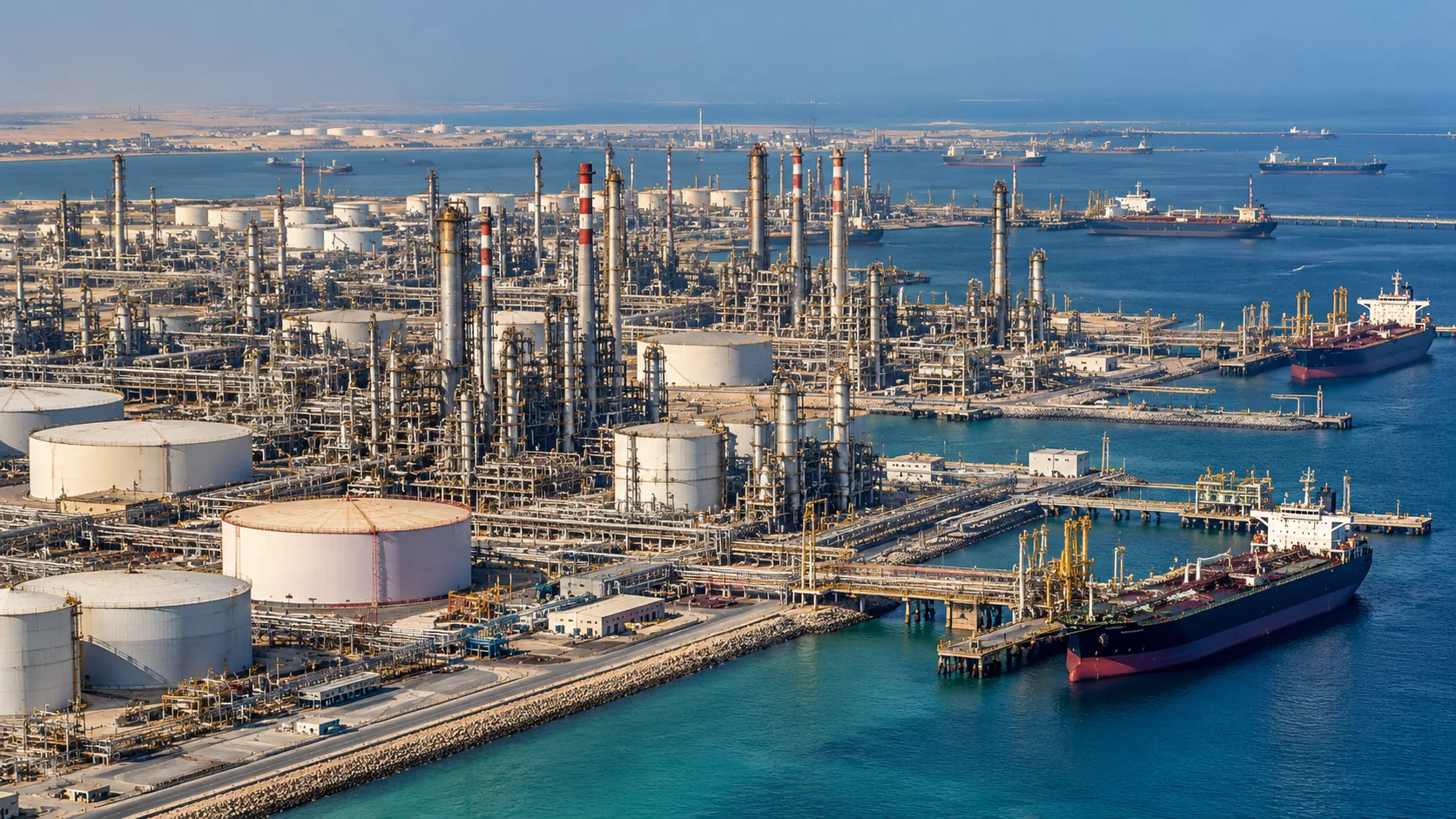
Oil prices jumped Wednesday after Iran-backed Houthi forces claimed they struck Saudi Arabia’s largest oil refinery with a ballistic missile, raising fears of another major escalation in the Middle East. Brent crude climbed above $115 a barrel as investors weighed the possibility of further attacks on the region’s critical energy infrastructure.
The alleged strike targeted the Ras Tanura refinery, a major Saudi Aramco facility on the Persian Gulf capable of processing approximately 550,000 barrels of oil per day. Saudi authorities have not confirmed the reported attack, leaving questions about the extent of any damage or disruption to operations.
Houthis Say Ballistic Missile Hit Saudi Oil Facility
Yemen’s Houthi forces announced Tuesday that they had targeted the Ras Tanura refinery with a ballistic missile. Houthi military spokesperson Yahya Saree claimed the strike caused a fire at the complex, which includes refining facilities and one of Saudi Arabia’s most important crude oil export terminals.
According to Reuters, Bloomberg separately reported that Saudi Arabia had contained a fire near the Ras Tanura terminal, citing a person familiar with the matter. However, Saudi officials had not confirmed the Houthi account, and there was no independently verified assessment of damage to the refinery.
The reported attack comes amid intensifying hostilities between Saudi Arabia and the Houthis, who control much of northern Yemen, including the capital, Sanaa. The group has expanded its attacks against Saudi targets in recent months, adding another dangerous front to the broader Middle East conflict involving Iran, Israel and the United States.
The Houthis also claimed attacks against Saudi military aircraft and said they had pushed back Saudi-backed forces near the Bab el-Mandeb Strait, a strategically important shipping route connecting the Red Sea to the Gulf of Aden.
Why Ras Tanura Is One of the World’s Most Sensitive Oil Targets
Ras Tanura is much more than a large refinery. The sprawling Saudi Aramco complex also serves as a major export hub for crude oil shipped to customers around the world, giving it an importance that extends well beyond its refining capacity.
Saudi Arabia is the world’s largest crude oil exporter, with much of its production moving through two major ports: Ras Tanura on the Persian Gulf and Yanbu on the Red Sea. Both have been targeted by Houthi forces in the past, and disruptions at either location can create serious concerns about the reliability of global oil supplies.
The Ras Tanura refinery itself can process approximately 550,000 barrels of crude per day. However, an extended disruption to the nearby export terminal could have broader consequences because of the volume of Saudi crude shipped through the facility.
The complex was temporarily shut as a precaution during the early months of the Iran war, demonstrating how security threats can interrupt operations even without extensive physical damage.
For energy markets, the biggest concern is whether the latest attack remains an isolated incident or signals a wider campaign against Saudi Arabia’s oil production and export infrastructure.
Oil Climbs Above $115 as Traders Price In Another Escalation
Oil markets reacted quickly to news of the alleged strike, reversing losses from the previous session as concerns about potential supply disruptions returned.
Brent crude futures climbed $2.02, or 1.8%, to $115.90 per barrel during Wednesday’s trading. U.S. West Texas Intermediate crude rose $2.01, or 2%, to $101.91 per barrel, according to Reuters. The prices were recorded at 7:35 a.m. GMT and may have changed since then.
The rebound followed a nearly $2 decline on Tuesday, when diplomatic discussions in the Middle East had briefly eased concerns about further disruptions to energy supplies. The reversal highlights how quickly expectations can change as military and diplomatic developments unfold.
Commodity strategists at ING said Wednesday that traders were assigning a greater probability to renewed escalation. Uncertainty surrounding President Donald Trump’s next move toward Iran is also keeping investors cautious, particularly as the conflict continues to threaten major oil-producing countries.
With crude prices already elevated, another sustained increase could create additional pressure on inflation, transportation costs and the global economy.
The Threat Extends Beyond the Refinery
The bigger danger facing oil markets involves Saudi Arabia’s ability to move crude safely from its production facilities to international buyers.
Even if the Ras Tanura refinery continues operating normally, attacks near export terminals can disrupt shipping schedules, increase insurance expenses and raise concerns among customers. Repeated strikes could also force Saudi Arabia to redirect shipments, placing additional pressure on alternative infrastructure.
The broader conflict has already threatened two of the world’s most important energy transportation routes. The Strait of Hormuz, located near the Persian Gulf, is a critical passage for Middle Eastern crude exports, while the Bab el-Mandeb Strait connects Red Sea shipping with international trade routes.
Threats to either passage can increase transportation costs and complicate global supply chains. A simultaneous escalation affecting oil facilities and shipping routes would be particularly concerning because countries and companies would have fewer options for avoiding disruptions.
There is also an important distinction between an attack that causes temporary damage and one that removes substantial oil supplies from the market. A fire that is quickly contained may have little lasting impact, while a prolonged interruption to refining or export operations could support higher prices for weeks or months.
Until Saudi authorities provide a clearer assessment, investors have limited information about the actual impact on oil production and exports.
Higher Oil Prices Could Reshape the Market’s Winners and Losers
The latest escalation comes at a sensitive time for financial markets, with investors already navigating elevated inflation, uncertainty over interest rates and concerns about global economic growth.
Energy producers could benefit from sustained price increases. Companies such as Exxon Mobil and Chevron generally generate more revenue from their upstream production businesses when crude prices rise, provided their output and operating costs remain relatively stable. The Energy Select Sector SPDR Fund (XLE), which holds major U.S. energy companies, could attract additional attention if elevated oil prices persist.
However, higher crude prices do not benefit every energy business equally. Refiners can face margin pressure when crude feedstock costs rise faster than the prices of gasoline, diesel and other products they sell, while companies operating in threatened regions may face higher security and transportation expenses.
Transportation companies face a different challenge. Airlines, trucking firms and shipping operators are particularly exposed to rising fuel costs, which can reduce profit margins unless those expenses are passed along to customers.
The broader economy could also feel the impact. Higher oil prices eventually influence gasoline and diesel costs, which affect everything from household budgets to the price of transporting consumer goods.
That creates another challenge for the Federal Reserve, which is scheduled to announce its interest-rate decision Wednesday. If energy costs keep inflation elevated, policymakers may have less flexibility to lower borrowing costs, potentially affecting stocks, bonds, mortgages and other interest-rate-sensitive investments.
For investors considering oil exposure, it is also important to distinguish between energy stocks and funds designed to track crude futures. The United States Oil Fund (USO), for example, uses futures contracts and can experience performance differences related to contract expiration and market conditions.
Oil Markets Are Reacting to What Could Happen Next
One of the less obvious consequences of the latest escalation is that oil prices can remain elevated even if physical damage turns out to be limited.
Crude prices reflect expectations about future supply as well as current production. When a major export facility becomes the target of an attack, traders may demand a higher price because the probability of future disruptions has increased.
Insurance providers and shipping companies can respond in similar ways, raising costs or altering routes even when oil shipments continue moving. Those additional expenses can work their way through global energy markets and eventually reach consumers.
However, the reverse is also possible. If Saudi Arabia confirms that refinery operations and exports are unaffected, and diplomatic negotiations begin reducing the threat of further attacks, some of the recent increase in oil prices could disappear quickly.
This makes official confirmation of operations at Ras Tanura particularly important. Markets will need evidence of an actual supply disruption before determining whether the latest price increase is sustainable.
Saudi Confirmation and Trump’s Next Move Could Determine Oil’s Direction
Several developments could influence energy markets over the coming days.
The first is an official assessment from Saudi Arabia or Saudi Aramco detailing whether the refinery or nearby export terminal suffered damage. Confirmation of normal operations could reassure traders, while evidence of a prolonged shutdown would raise concerns about supply availability.
Investors will also be watching for additional Houthi attacks against oil facilities, ports or vessels in the Red Sea. Continued escalation could increase the likelihood of shipping disruptions and add further pressure to oil prices.
President Trump’s approach toward Iran remains another major source of uncertainty. A renewed military campaign could increase the risk of additional attacks across the region, while diplomatic progress could reduce the geopolitical premium currently reflected in energy prices.
OPEC+ producers are also expected to discuss December production targets on Sunday, November 1. Reuters reported that the group was likely to maintain existing output targets, although actual production among several major members remains below their agreed levels.
Any unexpected change in production policy, particularly if accompanied by new disruptions in the Middle East, could influence the direction of crude prices.
A Critical Moment for Global Energy Markets
The Houthis’ claim of a missile strike against Saudi Arabia’s largest refinery has renewed fears that the Middle East conflict could threaten the infrastructure responsible for supplying much of the world’s oil.
Brent crude has already climbed above $115 per barrel, and further attacks against major energy facilities or shipping routes could create additional inflation pressure and volatility across financial markets.
The extent of any damage at Ras Tanura remains unconfirmed. For now, the most important developments are whether Saudi Arabia can maintain normal oil operations and whether the conflict spreads to other critical energy facilities.
Those answers could determine whether the latest surge in oil prices fades or becomes the beginning of another sustained increase.
About Author