

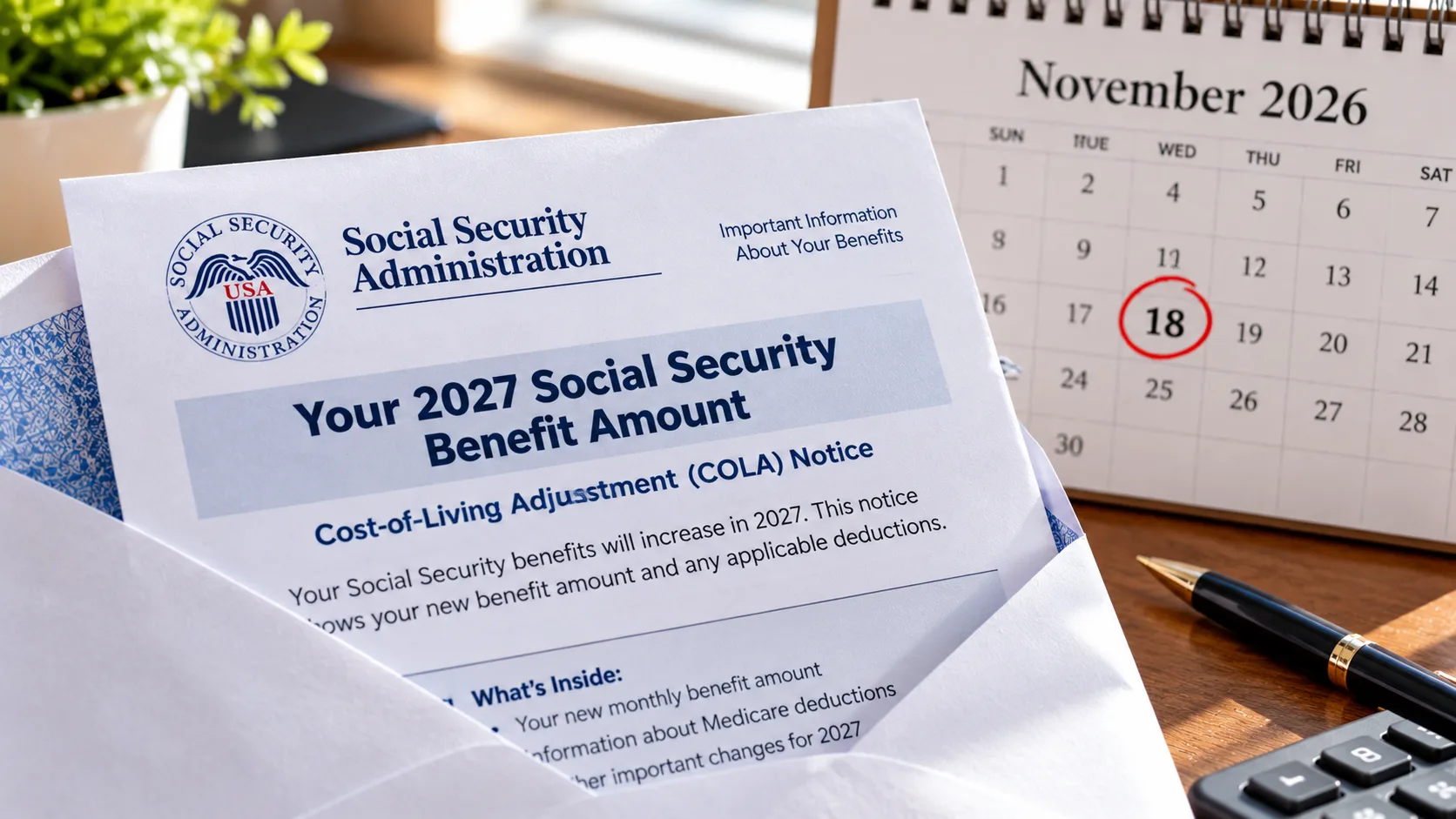
Millions of Americans receiving Social Security will see larger monthly payments in 2027, but an approaching November 18 deadline could determine how soon they learn their exact benefit amounts. The Social Security Administration has announced several changes affecting retirement income, Medicare deductions and how much retirees can earn while collecting benefits.
The changes will affect approximately 76 million Americans who receive Social Security or Supplemental Security Income (SSI). Some could see meaningful increases in their monthly payments, while others may find that rising healthcare costs reduce the additional money they actually receive.
Here’s what beneficiaries should know before the new year.
Social Security Benefits Will Increase 3.6% in 2027
The Social Security Administration announced a 3.6% cost-of-living adjustment (COLA) for 2027, up from the 2.8% increase for 2026.
For the average retired worker, that translates into approximately $75 more per month, bringing the average benefit from $2,095 to $2,170.
For a retired couple in which both spouses receive benefits, the estimated combined monthly payment will increase from $3,238 to $3,355.
The adjustment will take effect with Social Security benefits paid in January 2027. SSI recipients will receive their increased payments beginning December 31, 2026, because January 1 is a federal holiday.
The increase is automatic. Beneficiaries do not need to submit an application or contact Social Security to receive it.
November 18 Is an Important Deadline for Retirees
Social Security is encouraging beneficiaries to establish or update their online accounts before November 18, 2026.
That deadline matters for anyone who wants early online access to their personalized 2027 cost-of-living adjustment notice.
Beneficiaries who create a personal my Social Security account and enroll in paperless notices by November 18 can access their updated benefit information online beginning in late November, potentially weeks before receiving a paper notice.
These personalized notices explain exactly how much an individual can expect to receive in 2027, including applicable deductions.
People who prefer traditional mail will still receive their notices in December. Missing the November 18 deadline will not eliminate the cost-of-living increase or reduce anyone’s benefits.
However, getting the information earlier could help retirees prepare their household budgets, review Medicare deductions and make financial decisions before January.
To set up an account, beneficiaries can visit the official Social Security website, ssa.gov/myaccount, and follow the instructions for creating a personal account.
Those who already have an account should review their Message Center preferences and confirm they are enrolled in paperless notices if they want the early notification.
Medicare Costs Could Reduce the Actual Increase
One of the most important questions for retirees is how much of their 2027 Social Security increase they will actually keep.
Many retirees have Medicare Part B premiums deducted directly from their monthly Social Security payments. If those premiums rise, they could offset part of the COLA.
Consider a retiree currently receiving $2,000 per month in Social Security benefits before Medicare deductions.
A 3.6% COLA would increase that benefit by $72 per month, bringing the gross payment to $2,072.
However, if the individual’s Medicare premium increases by $20 per month, the additional amount reaching their bank account would be approximately $52, assuming no other changes.
That difference can add up over an entire year.
Social Security says personalized benefit notices will include information about deductions. Beneficiaries enrolled in Medicare should review their gross benefit, Medicare premium and final net payment rather than focusing exclusively on the announced percentage increase.
Medicare premiums and plan costs can also vary based on income, coverage choices and other factors. Retirees should review their actual 2027 Medicare costs before finalizing their budgets.
Retirees Who Continue Working Will Have More Flexibility
The Social Security changes for 2027 extend beyond monthly benefit payments.
Americans who claim retirement benefits before reaching full retirement age can have some benefits temporarily withheld if they earn more than certain limits.
For 2027, the earnings limit for beneficiaries who remain below full retirement age throughout the year will rise from $24,480 to $25,560.
Social Security generally withholds $1 in benefits for every $2 earned above that annual threshold.
For someone reaching full retirement age during 2027, the higher earnings limit increases to $67,920, compared with $65,160 in 2026. A different withholding formula applies before the month the individual reaches full retirement age.
Once someone reaches full retirement age, the Social Security earnings limit no longer applies.
This matters for retirees who work part-time, consult or return to employment while collecting benefits. Even a modest increase in the earnings threshold can allow some beneficiaries to retain more of their monthly payments.
Benefits withheld because of the earnings test are also accounted for when Social Security recalculates benefits at full retirement age. They should not automatically be treated as permanently lost income.
Higher-Income Workers Will Pay Social Security Tax on More Earnings
Workers who have not yet retired will also see changes.
The maximum amount of annual earnings subject to Social Security payroll taxes will increase from $184,500 in 2026 to $192,300 in 2027.
That means an additional $7,800 in earnings could be subject to the 6.2% Social Security tax.
For an employee earning above the maximum, that represents up to $483.60 in additional annual Social Security tax compared with applying the 2026 taxable maximum. Employers pay a matching amount, while self-employed workers generally pay both portions, subject to applicable tax rules.
The change will have little direct impact on employees earning below the current wage ceiling. Higher-income workers and self-employed professionals may want to account for it when reviewing their 2027 tax and cash-flow projections.
Why the 3.6% Increase May Feel Smaller Than Expected
Cost-of-living adjustments are intended to help Social Security payments keep pace with inflation.
However, retirees may experience inflation differently from the population measured by the government’s COLA formula.
Social Security calculates its annual adjustment using the Consumer Price Index for Urban Wage Earners and Clerical Workers, or CPI-W.
That index measures changes in a broad basket of consumer prices. Individual retirees may spend substantially more of their income on healthcare, insurance, housing and utilities.
Consequently, a retiree whose expenses increase faster than 3.6% could still lose purchasing power despite receiving a larger Social Security payment.
This is especially important for households that depend primarily on Social Security and have limited savings available to absorb unexpected costs.
For retirees with investment accounts, the COLA announcement is also an opportunity to review how much income they need to withdraw from savings in 2027.
A larger Social Security payment may reduce the amount required from an IRA or brokerage account. However, taxes, Medicare premiums and household expenses can change that calculation.
Retirees should evaluate the net increase before making changes to withdrawals or spending.
Three Things Retirees Should Check Before January
1. Confirm Your Personalized Benefit Amount
Anyone interested in early access should establish or update their my Social Security account and enroll in paperless notices by November 18.
The personalized notice will provide a more useful figure than the national average increase because Social Security benefits vary considerably from person to person.
2. Review Medicare Deductions and Other Withholding
Once the notice becomes available, compare the new gross benefit with any Medicare premiums and tax withholding.
The amount deposited into a bank account may increase by less than 3.6% if deductions rise.
3. Recalculate Your 2027 Retirement Budget
Retirees should compare their expected income with anticipated increases in housing, healthcare, insurance, food and other essential expenses.
Those who continue working should also review the updated earnings limits, particularly if they have not reached full retirement age.
For households drawing from investment accounts, updating the budget now can help prevent unnecessary withdrawals or unexpected cash shortages early next year.
What Happens Next?
The next important date is November 18, when the enrollment window closes for beneficiaries seeking early access to their personalized COLA notices online.
In late November, eligible account holders can begin reviewing their updated benefit information.
Paper notices will follow in December, and increased Social Security payments will begin in January 2027. SSI recipients will receive their increased January payment on December 31.
Meanwhile, retirees should monitor Medicare premium announcements and review their coverage during the Medicare open enrollment period, which runs through December 7.
What Retirees Should Remember
The 3.6% Social Security increase will provide welcome additional income for millions of Americans, with the average retired worker receiving approximately $900 more annually before any changes in deductions.
But the amount retirees actually keep will depend on Medicare costs, taxes and other factors affecting their individual benefits.
November 18 is the key date for beneficiaries who want early online access to their 2027 payment information. Missing it will not cost them their COLA, but meeting the deadline can give them more time to plan for the new year.
The smartest next move is simple: review your Social Security account, check your Medicare costs and calculate how much additional income will actually reach your bank account.
About Author