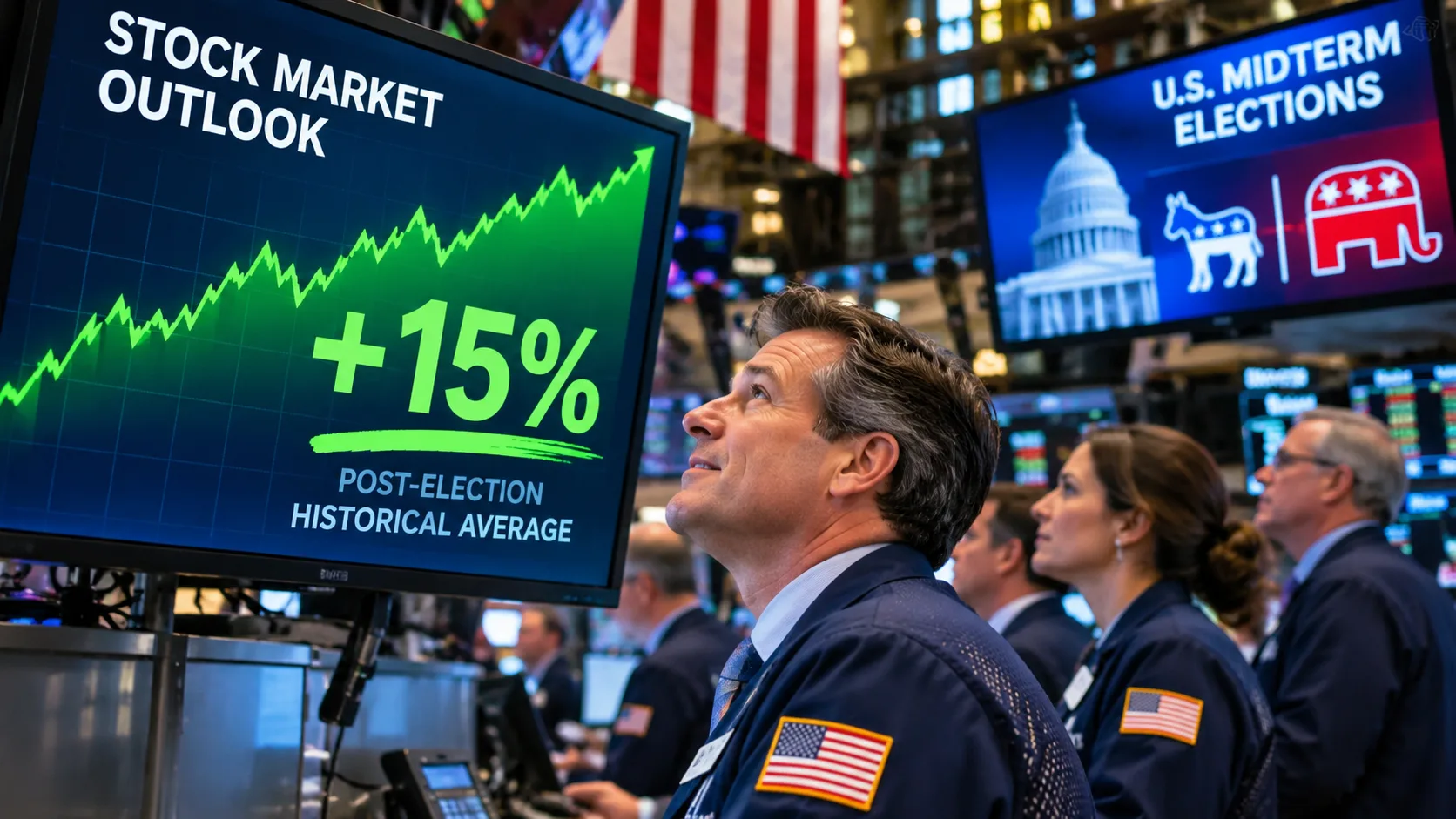

Americans are heading to the polls today, and the final election forecasts are pointing toward a potentially dramatic political shakeup. Democrats are now favored to take control of both chambers of Congress, raising questions about what comes next for the stock market, retirement savings, taxes, and some of America’s biggest companies.
The implications could extend well beyond Washington. With Wall Street already facing concerns about artificial intelligence, rising borrowing costs, and an increasingly uncertain economy, tonight’s election results could change the investment landscape for the next two years.
Final Election Forecasts Point to a Democratic Sweep
The final forecasts released ahead of Tuesday’s midterm elections show Democrats in a strong position to reclaim the House of Representatives, with several major models also favoring a Democratic Senate takeover.
Nate Silver’s Silver Bulletin forecast, updated November 3, indicates that Democrats are heavily favored to capture the House and are also positioned to win the Senate. The model shows Democratic candidates leading polling averages in several important Senate battlegrounds, including Texas, Ohio, Michigan, Maine, and Iowa.
A separate forecast from PollingForecast.com places the probability of a Democratic House majority at 90% and Senate control at 83%. Its central projections show Democrats winning 242 House seats and 53 Senate seats.
Other forecasting models are more cautious, particularly about the Senate. That difference matters because a Democratic House alone would create a very different political environment than Democrats controlling both chambers.
These are statistical forecasts based on polling and other assumptions, rather than election results. Even a relatively modest polling error could significantly change the final outcome.
Still, the direction of the race has become increasingly clear: Republicans face a serious challenge to their control of Congress.
And Wall Street is already preparing for what could follow.
Wall Street’s Biggest Concern May Be What Happens After the Election
Since President Donald Trump returned to the White House in January 2025, investors have benefited from a powerful rally in major technology companies, expanding corporate investment in artificial intelligence, and expectations for business-friendly federal policies.
According to Reuters, the S&P 500 has gained approximately 27% since the beginning of Trump’s second term. But higher Treasury yields, geopolitical instability, and growing questions about the enormous sums being invested in AI have created new vulnerabilities.
A Democratic takeover of Congress could introduce another complication.
Democratic lawmakers would gain greater authority to investigate corporate practices, challenge administration policies, and influence federal spending negotiations. Depending on which chamber they control, they could also slow legislation favored by the White House.
For investors, the immediate concern is how quickly companies and financial markets might have to adjust their expectations.
Businesses that have benefited from relatively predictable regulatory policies could face new uncertainty. Companies dependent on government contracts, federal incentives, or major infrastructure approvals could also find their plans receiving additional scrutiny.
The biggest effects may become apparent in the weeks and months after the election, as companies begin adjusting their financial forecasts and investment plans.
Five Areas of Your Finances That Could Be Affected
1. Your 401(k) and Stock Portfolio
A Democratic victory could affect some of the market’s most influential companies, particularly those driving the artificial intelligence boom.
Technology stocks have attracted enormous investment as companies race to build data centers, develop advanced AI systems, and secure the computing power required to support them.
But those projects depend on favorable economics, access to electricity, infrastructure investment, and regulatory approvals.
Greater congressional scrutiny of AI companies, electricity costs, and data-center development could create uncertainty about future expansion. Some companies might encounter more regulatory pressure, while others could face delays or higher operating expenses.
There is an important distinction for retirement investors. A broad stock-market index may have substantial exposure to technology companies even when investors believe their savings are diversified.
That means political developments affecting a relatively small group of influential businesses could have consequences for millions of retirement accounts.
2. Your Federal Income Taxes
Taxes are likely to become another major political battleground if Democrats gain control of Congress.
President Trump signed a sweeping tax law in July 2025 that permanently extended several provisions of the 2017 Tax Cuts and Jobs Act, including the existing individual income tax rates.
For 2026, the federal income tax brackets range from 10% to 37%, while the standard deduction is $16,100 for single taxpayers and $32,200 for married couples filing jointly.
Those provisions are already law. A Democratic victory would not automatically change them.
However, a new congressional majority could propose revisions to corporate taxation, deductions, tax preferences, and the treatment of high-income households.
Any substantial changes would require legislation, and President Trump would retain his veto authority.
For investors, particularly retirees managing withdrawals from traditional retirement accounts, the longer-term direction of tax policy could influence future financial planning.
3. Medicare and Social Security
Medicare and Social Security could become even more prominent in Washington following a Democratic victory, especially as older Americans continue confronting healthcare costs and concerns about the long-term finances of both programs.
Democratic lawmakers could place additional emphasis on healthcare affordability, prescription drug pricing, and oversight of changes affecting federal benefit programs.
Republicans, meanwhile, could continue advocating their own approaches to containing federal spending and addressing the costs of major government programs.
Neither party would have an unrestricted ability to reshape these programs under divided government.
For retirees, the important issues would be any specific legislative proposals affecting benefits, Medicare costs, healthcare funding, or the taxation of retirement income.
Election results alone would not change an individual’s Social Security check or Medicare premiums.
4. Defense, Energy, and Healthcare Stocks
Some industries could experience very different outcomes depending on the election results.
Reuters reports that analysts see potential opportunities for clean energy, housing, and healthcare companies under a stronger Democratic Congress.
Defense contractors, meanwhile, could face more scrutiny of federal spending priorities, although military expenditures would continue to depend heavily on national security developments and negotiations with the White House.
Traditional energy producers could encounter additional congressional oversight, while renewable energy businesses might benefit from efforts to protect or expand certain federal incentives.
Healthcare companies face a more complicated outlook. Policies intended to lower costs for consumers could benefit some businesses while creating pressure on pharmaceutical manufacturers, insurers, and other healthcare providers.
The important consideration is that a political victory does not automatically translate into rising or falling share prices for an entire industry.
Company valuations, earnings, existing regulation, and the ability to pass new legislation would ultimately determine much of the financial impact.
5. Interest Rates and the Cost of Borrowing
One of the most consequential issues may receive less attention than the election-night headlines: the federal government’s borrowing requirements.
Washington faces difficult decisions involving government spending, federal deficits, and future debt-ceiling negotiations.
A Republican Congress could provide President Trump with greater legislative flexibility to pursue additional spending and tax measures. A Democratic Congress could create more obstacles to those initiatives, potentially leading to extended budget negotiations.
Either outcome carries risks.
Investors in Treasury bonds are particularly sensitive to expectations for government borrowing, inflation, and interest rates. Higher yields can put pressure on bond prices while also increasing financing costs across the economy.
For Americans approaching retirement, a significant movement in bond yields could affect the value of fixed-income holdings as well as the income available from newly purchased bonds.
Mortgage rates, business borrowing costs, and the broader stock market could also respond.
Could a Democratic Sweep Actually Be Good for Stocks?
Despite concerns about regulatory changes, a Democratic victory would not necessarily be bad news for Wall Street.
Markets have historically performed well during many periods of divided government, when neither political party has enough power to enact major changes without negotiating.
That environment can reduce the probability of sweeping policy shifts and give businesses more visibility into the rules under which they operate.
There is another possibility worth considering.
If investors have already anticipated a Democratic takeover, much of the political uncertainty may already be reflected in stock prices. A clear result tonight could remove one source of anxiety, allowing markets to refocus on corporate earnings, economic growth, and Federal Reserve policy.
The opposite outcome could also produce a significant reaction.
A stronger-than-expected Republican performance might encourage investors to reconsider assumptions about future taxes, regulation, spending, and the expansion of artificial intelligence infrastructure.
This is why election-night market reactions can be difficult to predict. The biggest moves often come when actual results differ from what investors were expecting.
The Three Election Signals Investors Should Watch
Rather than focusing exclusively on which party wins the most seats, investors should pay attention to three developments that could influence markets long after the votes are counted.
First, control of the Senate. A Democratic House victory is widely anticipated by forecasters, but the Senate will help determine how much leverage Democrats have over legislation, confirmations, and negotiations with the administration.
Second, the size of the majority. A narrow congressional majority could struggle to maintain party discipline, making major policy changes more difficult. A larger majority would provide leadership with additional room to pursue its priorities.
Third, the market’s reaction to Treasury yields and technology stocks. These may offer some of the clearest early indications of whether investors are focused on fiscal policy, regulatory risk, or relief that the uncertainty has ended.
A sharp market movement immediately after the election may reflect short-term positioning rather than a lasting change in economic fundamentals.
What Happens Next?
Polls close across the country at different times Tuesday evening, and some congressional races may remain unresolved overnight or longer.
Investors will initially focus on the balance of power in the House and Senate, but attention should quickly shift toward the incoming Congress’s legislative priorities and the White House’s response.
The first major tests may involve federal spending negotiations, proposed investigations, and signals about the future regulation of technology, finance, and healthcare companies.
Corporate executives will also have opportunities to explain how the changing political environment might affect their plans.
Those developments could ultimately matter more for stock prices than Tuesday’s election results alone.
What It Means for Your Money
Tuesday’s midterm elections could fundamentally change the balance of power in Washington, with Democrats entering Election Day favored to reclaim Congress.
For investors, the consequences could reach from technology stocks and corporate taxes to government borrowing, healthcare policy, and retirement portfolios.
But the election will settle only the first question: who controls Congress.
The more consequential questions involve what the new majority can accomplish, how President Trump responds, and whether financial markets have already anticipated the outcome.
For millions of Americans with money invested in stocks, bonds, and retirement accounts, those answers could help shape the financial environment heading into 2027.
About Author