
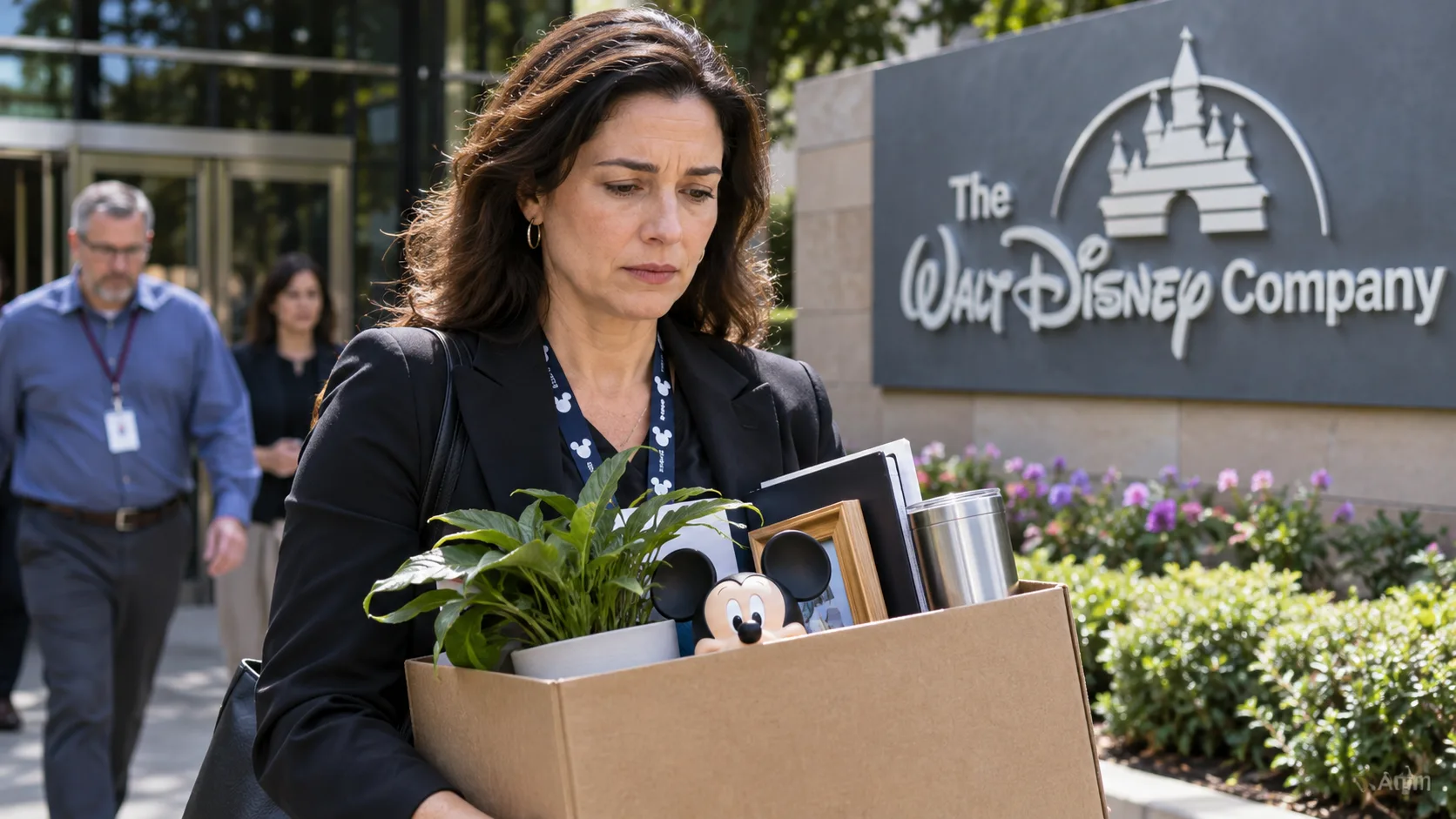
Disney is reportedly preparing to eliminate thousands of additional jobs as its new CEO pushes for sweeping cost reductions. Some managers have been told to find annual savings of up to 20%, raising serious questions about how much further the entertainment giant intends to shrink its workforce.
The potential cuts would mark another major round of layoffs at one of America’s most recognizable companies, following years of restructuring that have already eliminated thousands of positions across Disney’s television networks, movie studios, corporate offices and theme parks.
According to Bloomberg, which first reported the developments Monday evening, CEO Josh D’Amaro is moving toward a broad cost-cutting initiative that could hit multiple divisions. Some departments are expected to face significantly deeper reductions than others.
For a company that has already spent years cutting billions in expenses, the latest plans raise an uncomfortable question: How many more jobs does Disney need to eliminate before its business is operating at the size management believes it should be?
Thousands More Jobs Could Disappear
Disney has reportedly instructed some managers to identify annual cost savings of as much as 20%, according to people familiar with internal discussions.
Those savings could come from eliminating positions, reducing operating expenses or restructuring departments. The 20% figure represents a cost-savings target for certain operations, rather than a confirmed companywide workforce reduction.
The exact number of potential layoffs remains unknown, and Disney has not publicly announced a final restructuring plan. The company declined to comment on Bloomberg’s report.
Nevertheless, the possibility of thousands of additional job losses represents a substantial development for a business that employed approximately 231,000 people worldwide at the end of fiscal 2025.
The planned reductions could affect Disney’s traditional television operations, film studios and theme park businesses. Reports indicate that individual departments could face different targets depending on their costs, staffing levels and management priorities.
The timing is particularly striking because Disney has already conducted multiple rounds of layoffs in 2026.
Approximately 1,000 positions were eliminated in April, followed by additional reductions during the summer and September. More recently, Disney’s Imagineering division, which designs and develops attractions and other experiences, reportedly eliminated between 100 and 200 jobs.
For employees who survived the earlier cuts, another companywide restructuring would extend a period of considerable uncertainty.
Disney Has Already Cut Thousands of Jobs. Why Isn’t It Finished?
The latest plans follow a restructuring campaign that began under former CEO Bob Iger.
In 2023, Disney announced plans to eliminate approximately 7,000 positions as part of a broader initiative targeting $5.5 billion in cost savings. Those cuts affected operations throughout the company, including ESPN, ABC, Pixar and corporate departments.
Three years later, Disney is still searching for ways to operate with fewer employees and lower expenses.
That persistence exposes one of the biggest challenges facing traditional entertainment companies: The economics of the industry have changed faster than many established businesses have been able to adapt.
For decades, Disney benefited from profitable cable television networks, theatrical movie releases and a powerful collection of entertainment brands. Cable subscriptions generated substantial recurring revenue, while advertising and licensing provided additional sources of income.
That system has weakened as viewers increasingly abandon traditional television packages and move toward streaming platforms, YouTube and other digital entertainment options.
Disney has invested heavily in Disney+ and its broader streaming business, but those services compete in a crowded marketplace where consumers can cancel subscriptions, compare prices and switch platforms relatively easily.
Meanwhile, producing major television series and blockbuster films remains expensive, and strong box office returns are never guaranteed.
The result is a business confronting pressure from several directions simultaneously.
Disney must continue spending to produce the entertainment that attracts customers while reducing costs in operations that may no longer generate the profits they once did.
The New CEO Faces a Difficult Financial Balancing Act
Josh D’Amaro, who succeeded Iger in March, inherited one of the most complicated businesses in American entertainment.
Disney operates theme parks, cruise ships, movie studios, television networks, streaming platforms and consumer products businesses. Each division faces different competitive pressures, operating costs and growth opportunities.
According to Bloomberg, D’Amaro plans to redirect some of the money saved through restructuring into film and television programming, technology, theme parks and cruise operations.
That strategy could help Disney strengthen its most promising businesses, but it also reveals a fundamental tension.
The company wants to spend more on future growth while spending less on the workforce and infrastructure supporting its existing operations.
For investors, the financial benefits of restructuring can be substantial. Lower payroll expenses, fewer management layers and reduced overhead can improve operating margins and earnings per share.
But the savings have limits.
A company that eliminates too many experienced employees can lose institutional knowledge, slow down projects and weaken the creative capabilities that made its products successful in the first place.
That risk may be especially important at Disney, where decades of intellectual property, storytelling experience and technical expertise underpin much of the company’s value.
The challenge for D’Amaro will be determining which expenses can be eliminated without undermining the products and experiences customers are willing to pay for.
Artificial Intelligence Adds Another Layer of Pressure
Disney’s restructuring also comes as artificial intelligence is changing the economics of media production and corporate operations.
Entertainment companies are increasingly evaluating how AI can assist with editing, localization, administrative tasks, marketing, customer service and other activities traditionally performed by employees.
These technologies could eventually allow companies to produce certain types of content or manage routine operations with fewer workers.
However, Disney has not established that AI will directly replace a specific number of employees in the reported layoffs.
The broader implications remain significant.
As AI tools become more capable, entertainment companies face pressure to determine which functions can be automated, which require human expertise and where technology investments can generate meaningful financial returns.
For workers, that creates another source of uncertainty. Positions that once appeared relatively insulated from automation may face greater scrutiny as management evaluates future staffing needs.
For shareholders, the potential savings are attractive, but the financial returns will depend on whether new technologies produce measurable improvements in productivity and operating costs.
The bigger question is whether Disney can become more profitable through technology without weakening the creative and technical talent responsible for its biggest successes.
Wall Street Has a Reason to Pay Attention
The latest developments could have meaningful implications for Disney shareholders.
Management has already projected double-digit growth in adjusted earnings per share for the current fiscal year. A substantial restructuring could support that objective by reducing expenses across multiple businesses.
But layoffs alone do not guarantee stronger shareholder returns.
1. Lower Costs Could Boost Profit Margins
Reducing payroll, consolidating departments and eliminating overlapping functions can improve operating profitability.
If Disney generates similar revenue with a smaller expense base, more of that revenue can flow through to operating earnings.
However, severance payments, restructuring charges and reinvestment spending can offset some of the near-term benefits. Investors will need to distinguish between recurring savings and temporary accounting effects.
2. Streaming Remains a Major Test
Disney’s streaming businesses must continue demonstrating that they can produce sustainable profits while retaining subscribers and competing against other major platforms.
Shrinking traditional television operations may reduce costs, but it does not automatically replace the revenue and cash flow lost as cable subscriptions decline.
That distinction matters because Disney’s long-term valuation depends heavily on its ability to grow profitable businesses as older revenue streams weaken.
3. Theme Parks and Cruises Must Deliver
Disney’s parks and experiences businesses have been important sources of revenue, profit and cash flow.
The company continues investing in attractions, resorts and cruise ships, making disciplined spending especially important.
However, weaker attendance in some international markets and the substantial cost of developing new attractions present challenges.
If Disney reduces staffing or operating expenses too aggressively, it could risk compromising customer service or the experience that supports premium ticket prices.
4. Restructuring Could Signal Deeper Problems
Wall Street frequently rewards companies for improving efficiency, particularly when savings strengthen margins and free cash flow.
But repeated layoffs can also indicate that a business is struggling to find a durable operating model.
Disney has already gone through years of cost reductions. If another major round of cuts is necessary, investors should examine whether the company is eliminating unnecessary expenses or responding to continued weakness in parts of its business.
The answer could influence how investors value Disney over the coming quarters.
The Bigger Risk Is What Disney Looks Like After the Cuts
There is a potentially important distinction between a company cutting jobs because it is financially distressed and one cutting jobs to redirect resources toward higher-return opportunities.
Disney’s reported plans contain elements of both cost discipline and strategic reinvestment.
The company still owns some of the world’s most valuable entertainment franchises and operates major global destinations. Those assets provide opportunities that many competitors cannot easily replicate.
At the same time, the economics of television and entertainment distribution have changed dramatically.
Disney could emerge from this restructuring with a more efficient organization, stronger streaming economics and additional resources for its parks and franchises.
It could also discover that repeated workforce reductions produce diminishing financial benefits while making its operations more difficult to manage.
The distinction will become clearer through future earnings reports, operating-margin trends and the company’s ability to turn investments into sustainable revenue growth.
For shareholders, the number of eliminated positions may ultimately matter less than the profitability, cash flow and competitive strength of the business left behind.
For employees, however, those positions represent livelihoods, careers and years of accumulated experience.
That human cost deserves attention alongside the financial targets.
November 17 Could Bring More Answers
Disney is scheduled to release its fiscal fourth-quarter earnings results on November 17, giving investors a potentially important opportunity to assess management’s strategy.
Several questions deserve particular attention.
How many jobs will actually be eliminated? Management has not disclosed a final figure or confirmed when the reported reductions might occur.
How much money will Disney save? A 20% target for certain departments does not reveal the total dollar value of the potential savings across the company.
Where will the savings go? Investors should look for specifics on technology investments, streaming content, theme park development and cruise expansion.
Will restructuring improve free cash flow? Sustainable improvement in cash generation would provide stronger evidence of financial progress than headline cost-cutting targets alone.
Are more reductions coming? After years of layoffs, investors and employees will want to know whether Disney is approaching the end of its restructuring or entering another prolonged period of organizational change.
Disney’s Latest Layoff Plans Raise a Larger Question
Disney has spent years trying to become a leaner, more profitable company. Now, under a new CEO, it is reportedly preparing another round of potentially thousands of job cuts while asking some managers to find savings of up to 20%.
The financial argument is straightforward. Lower expenses can improve profits and free up money for investments that could strengthen Disney’s future.
But after repeated restructurings, investors should expect more than another announcement about reducing costs.
They need evidence that Disney can consistently grow revenue, protect its most valuable businesses and generate stronger earnings without relying on successive waves of layoffs.
Thousands more jobs may now be on the line. The bigger question for Wall Street is whether Disney’s latest cuts will finally produce the lasting financial improvement management has been pursuing for years.
About Author