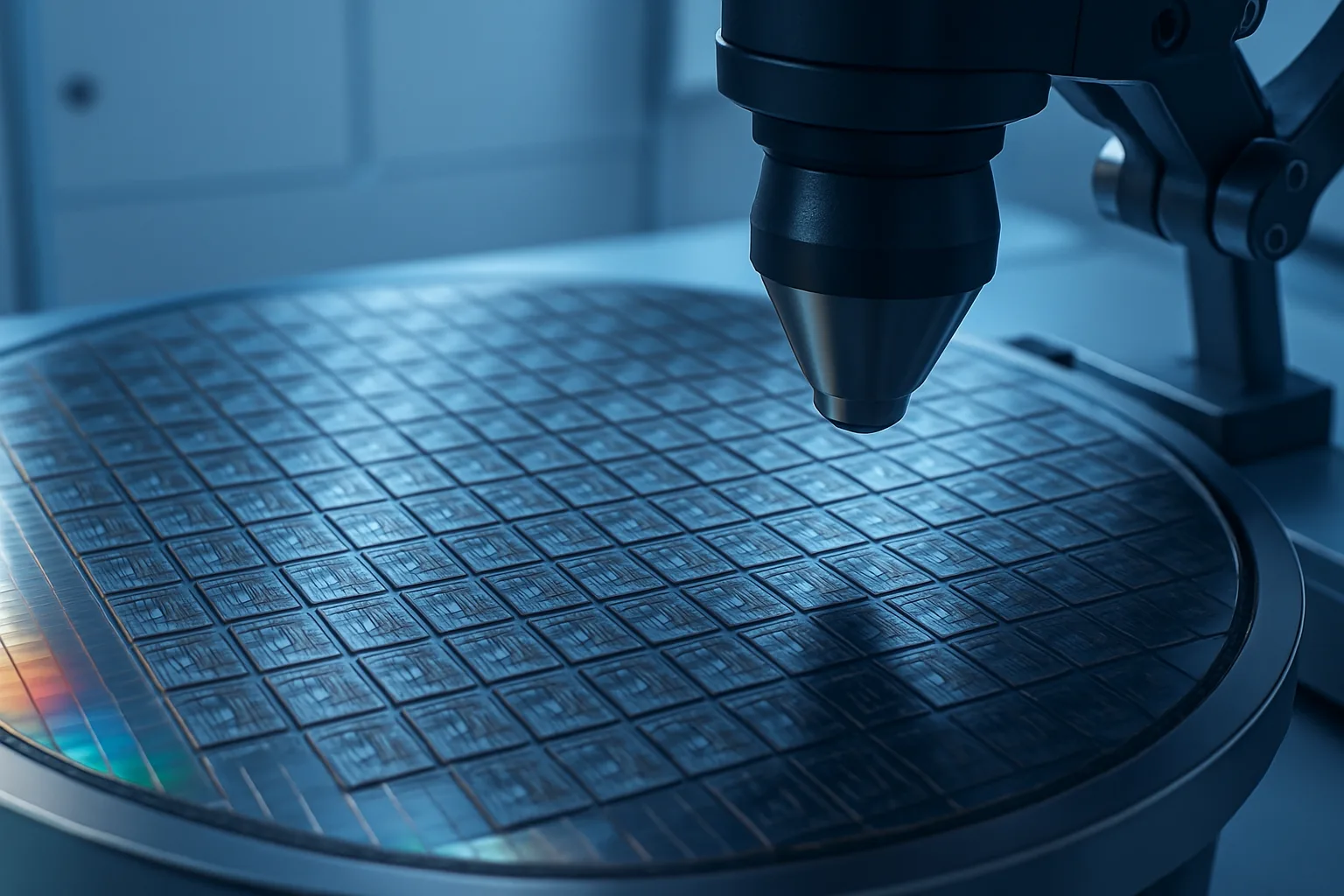
The semiconductor equipment sector is entering a new phase of competition as artificial intelligence reshapes demand across the chip supply chain. Investors are looking closely at which companies are positioned to capitalize on long-term spending tied to next-generation data centers, advanced wafer fabrication, and process control. The latest outlook from a major Wall Street research firm signals that one company is beginning to pull away from its peers.
Rather than being lumped in with the broader chip equipment group, this wafer inspection and process control leader is now seen as having a clearer growth runway, less exposure to geopolitical risk, and stronger alignment with the investments driving AI infrastructure. While the semiconductor industry has weathered headwinds tied to trade restrictions, export controls, and shifting capital expenditures, this particular equipment supplier has shown resilience that others in its category have struggled to match.
A Shift in Sentiment From Analysts
A top global investment bank recently upgraded the company from an equal-weight rating to overweight and raised its price target significantly. The bank now sees upside ahead and considers this firm one of the most compelling long-term stories in the wafer fabrication equipment space. The upgrade is not based on a short-term bounce in demand, but rather on a structural change in how semiconductor manufacturers are investing in process technology.
In addition to the rating change, the price target was increased from 750 dollars to 1,200 dollars. That new target reflects confidence that the company can continue gaining market share and maintain a favorable growth profile relative to other names in the space. The bank estimates that shares could still climb another eight percent from current levels, even after substantial gains earlier in the year.
KLA Steps Forward
The company receiving the upgrade is KLA. Its stock has surged seventy six percent in 2025, outpacing many other semiconductor equipment providers. Barclays analyst Tom O Malley called KLA his top pick and pointed to the rise in artificial intelligence compute investment as a major catalyst.
That comment gets to the core of why investors are paying attention. Many semiconductor equipment manufacturers generate a large portion of revenue from China, leaving them vulnerable to export controls, licensing requirements, and retaliatory trade measures. KLA has less exposure than most of its direct competitors and a broader geographic mix of customers.
How AI Is Driving the Equipment Cycle
Artificial intelligence is not simply creating demand for chips. It is increasing the need for chips manufactured at tighter geometries with significantly higher performance requirements. As transistor density rises and architecture complexity increases, controlling defects and optimizing yield become central to maintaining profitability in fabs.
KLA occupies a critical role in that process. Its tools are used throughout wafer inspection, metrology, and process control, making it a foundational supplier for foundries and integrated device manufacturers. Unlike other capital equipment categories that rise and fall with memory cycles, the process control segment benefits from every step toward higher performance computing.
Investments in AI servers, high bandwidth memory, and advanced packaging are forcing fabs to upgrade inspection capabilities. The company’s dominance in these areas gives it an advantage in capturing share as spending shifts from legacy equipment toward higher-precision systems.
Lower Exposure to China Provides Stability
Geopolitical risk has been one of the defining themes in chip manufacturing over the last several years. The United States continues to tighten controls on shipments of advanced semiconductor technology to China. Beijing has responded by ramping up efforts to develop domestic alternatives. For equipment makers heavily dependent on China, that creates uncertainty.
KLA stands out for having one of the lowest percentages of revenue tied to the Chinese market among major wafer fab equipment providers. That gives it more predictability and protects it from disruptions tied to policy changes or licensing requirements. Analysts have increasingly used that as a differentiating factor when evaluating the sector.
Growth Beyond China in 2026
O Malley also pointed to future gains outside the Chinese market. He estimates that KLA could see growth of around ten percent in 2026 from non-China business alone. That aligns with his broader expectations for wafer fab equipment demand and supports the company’s positioning as a leader in the space.
“With this, we think KLAC looks very reasonable next year on a core revenue growth basis and aligns with our WFE model assumptions,” he wrote.
That projection is meaningful given the cyclical nature of the semiconductor capital equipment industry. Many names in the category are still tied to memory recovery or foundry inventory normalization. KLA, on the other hand, is more closely aligned with ongoing demand from logic, AI, and advanced packaging.
Secular Tailwinds Are Compounding
Several long-term trends are working in KLA’s favor. The move toward chiplet architectures, gate-all-around transistors, and three-dimensional stacking all require higher levels of precision in process control. Advanced fabs cannot afford elevated defect rates, and the cost of scrap increases with each node transition. That gives process control suppliers an advantage relative to equipment used earlier in the production cycle.
Additionally, reshoring efforts in the United States, Europe, and parts of Asia are creating new opportunities. As new fabs are built with government incentives and strategic backing, suppliers that already have established relationships are more likely to secure contracts. KLA’s tools are often embedded early in the production planning process, which leads to durable customer relationships.
Valuation and Market Performance
Despite its substantial run this year, the company’s valuation still appears reasonable to analysts when compared to peers. When adjusted for forecasted earnings growth, free cash flow generation, and margin stability, KLA trades at a level that many investors consider justified. Some competitors with higher exposure to China trade at similar or higher multiples without the same clarity around long-term growth.
The recurring revenue component tied to services, subscriptions, and software adds another layer of stability. That allows the company to weather slower cycles in capital expenditures and maintain a baseline of dependable income.
What Investors Should Watch Going Forward
The next phase of the semiconductor equipment cycle will depend heavily on AI infrastructure, data center spending, and the pace of advanced node adoption. KLA is positioned near the center of all three trends. The company’s leadership in inspection and metrology gives it a runway that is not as tied to memory pricing or short-term fab utilization rates.
Risks remain. A slowdown in global capital expenditures, renewed trade tensions, or a delay in AI infrastructure buildout could affect sentiment. However, compared to other wafer equipment providers, KLA has more insulation and a stronger secular demand base.
A Leader Separating From the Pack
The semiconductor industry will always face cycles, but not every company in the cycle is impacted equally. KLA has emerged as a leader in the space due to its exposure to high-growth segments, reduced reliance on China, and expanding relevance in AI-driven chip production. With a major Wall Street upgrade, a raised price target, and expectations for continued growth into 2026, the company has gained the kind of momentum that investors watch closely.
As AI transforms chip manufacturing requirements and reshapes how foundries spend on equipment, the companies enabling precision and yield will be the ones that stand out. KLA is increasingly being viewed as one of them.
About Author