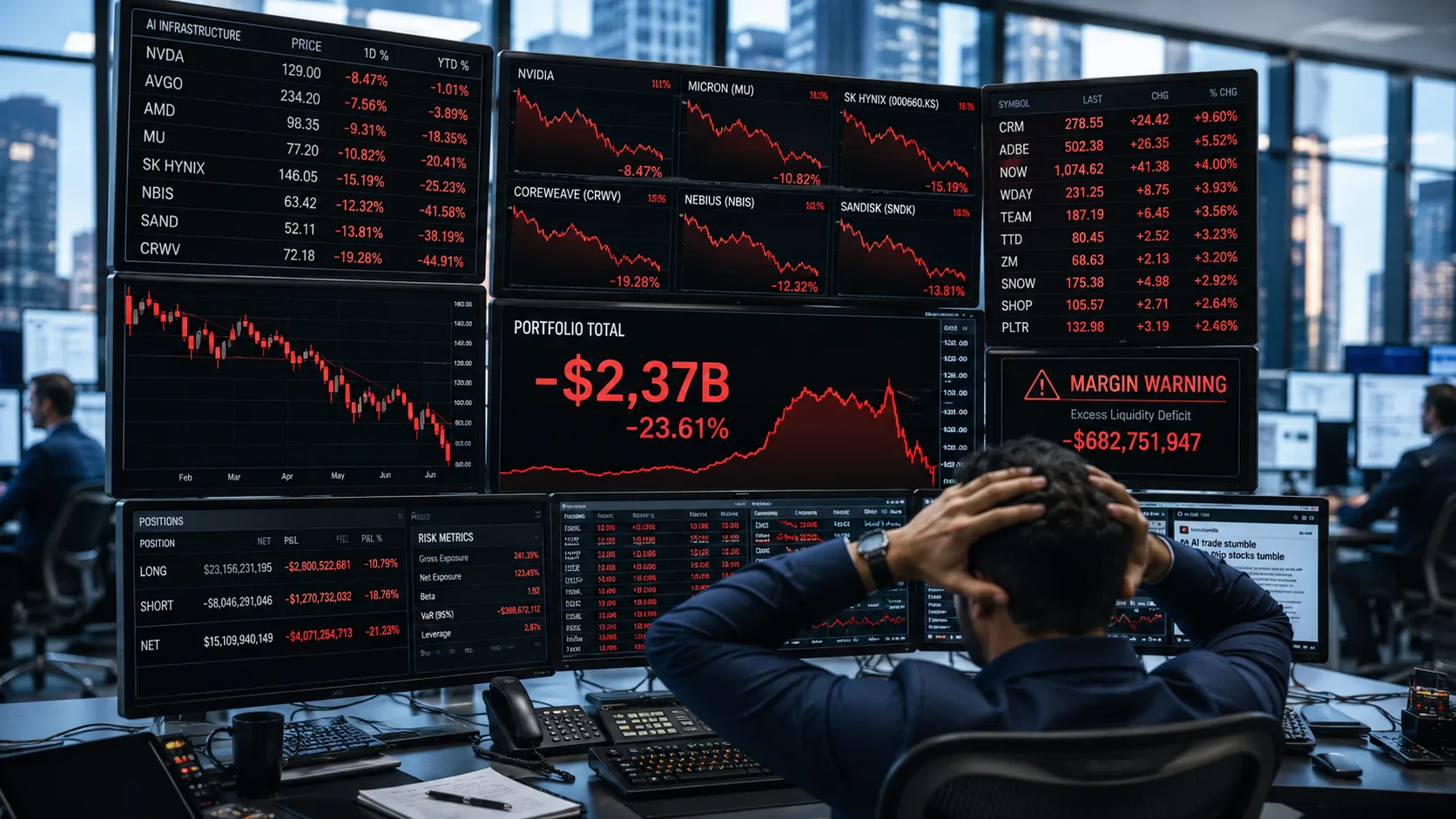
The former OpenAI researcher who built a $45 billion AI-focused hedge fund is reportedly unwinding positions after a brutal selloff in the very trade that made him famous.
Just weeks ago, Leopold Aschenbrenner was one of the most talked-about investors in artificial intelligence.
Now, the 25-year-old former OpenAI researcher is reportedly scrambling to unwind much of his hedge fund after a series of painful bets went sharply against him.
According to people familiar with the matter, Aschenbrenner’s hedge fund, Situational Awareness, has sold its public stock portfolio after suffering steep losses tied to AI infrastructure investments and bearish bets against software companies.
The collapse is one of the first major cracks to emerge in what has been one of Wall Street’s hottest investment themes.
A $45 Billion AI Bet Unravels
Situational Awareness reportedly grew to roughly $45 billion at the beginning of July as investors piled into Aschenbrenner’s vision of the AI boom.
His thesis was simple:
Artificial intelligence would require an unprecedented buildout of semiconductors, memory chips, data centers, networking equipment, and electricity generation.
For much of the past two years, that trade looked unstoppable.
Then the market turned.
Several of the fund’s largest positions have fallen more than 35% this month, creating massive pressure on the portfolio.
Among its biggest reported holdings were:
- Nebius Group (NASDAQ: NBIS)
- SanDisk (NASDAQ: SNDK)
- Micron Technology (NASDAQ: MU)
- CoreWeave (NASDAQ: CRWV)
The fund was also heavily exposed to SK Hynix, one of the world’s largest memory-chip manufacturers, which also declined during the recent AI infrastructure selloff.
At the same time, the fund’s short positions in software companies reportedly moved sharply higher, magnifying losses from both sides of the portfolio.
Margin Calls Trigger Emergency Asset Sales
Sources say several of Wall Street’s largest prime brokers—including Bank of America, Goldman Sachs, and JPMorgan Chase—have been working with the fund as it attempts to satisfy margin requirements and reduce risk.
According to people familiar with the matter, brokers began marketing portions of the fund’s long and short portfolios before Thursday’s trading session.
Meanwhile, Citadel, led by billionaire Ken Griffin, reportedly reached an agreement to purchase much of the fund’s publicly traded assets.
The exact size of the losses has not been disclosed.
Reports also suggested the firm had explored selling part of its stake in AI startup Anthropic, although a spokesperson denied those reports.
From OpenAI Researcher to Wall Street Star
Aschenbrenner became one of AI’s highest-profile voices after publishing his widely read Situational Awareness essays in 2024.
His central argument was that artificial intelligence would soon advance rapidly enough to trigger a massive global race to build computing infrastructure.
That thesis helped attract enormous investor attention after he launched his hedge fund following his departure from OpenAI.
Before entering finance, Aschenbrenner worked on OpenAI’s Superalignment team after graduating from Columbia University as valedictorian at just 19 years old.
His departure from OpenAI generated headlines after the company said he improperly disclosed internal information. Aschenbrenner has disputed that characterization, arguing he shared largely non-confidential planning material with outside researchers and that disagreements over OpenAI’s security practices contributed to his exit.
What This Means for Investors
The reported unwind doesn’t necessarily signal the end of the AI investment boom.
Instead, it highlights how quickly highly leveraged investment strategies can unravel when market leadership shifts.
The AI infrastructure trade remains one of the market’s largest long-term themes, but recent weeks have shown that even the strongest narratives can experience violent corrections.
For investors, it’s a reminder that concentration, leverage, and crowded trades can amplify losses just as dramatically as they amplify gains.
Whether this proves to be a temporary setback or the beginning of a broader reset for AI-related stocks will likely depend on corporate earnings, AI spending trends, and whether demand for chips, data centers, and computing infrastructure continues to justify lofty valuations.
The First Big Crack in the AI Trade
Leopold Aschenbrenner became famous by making one of Wall Street’s boldest bets on artificial intelligence.
Now, according to people familiar with the matter, that same strategy has forced one of the AI era’s fastest-rising investors into a dramatic retreat.
For the broader market, it’s a reminder that even the biggest believers in AI aren’t immune when momentum suddenly reverses.
About Author