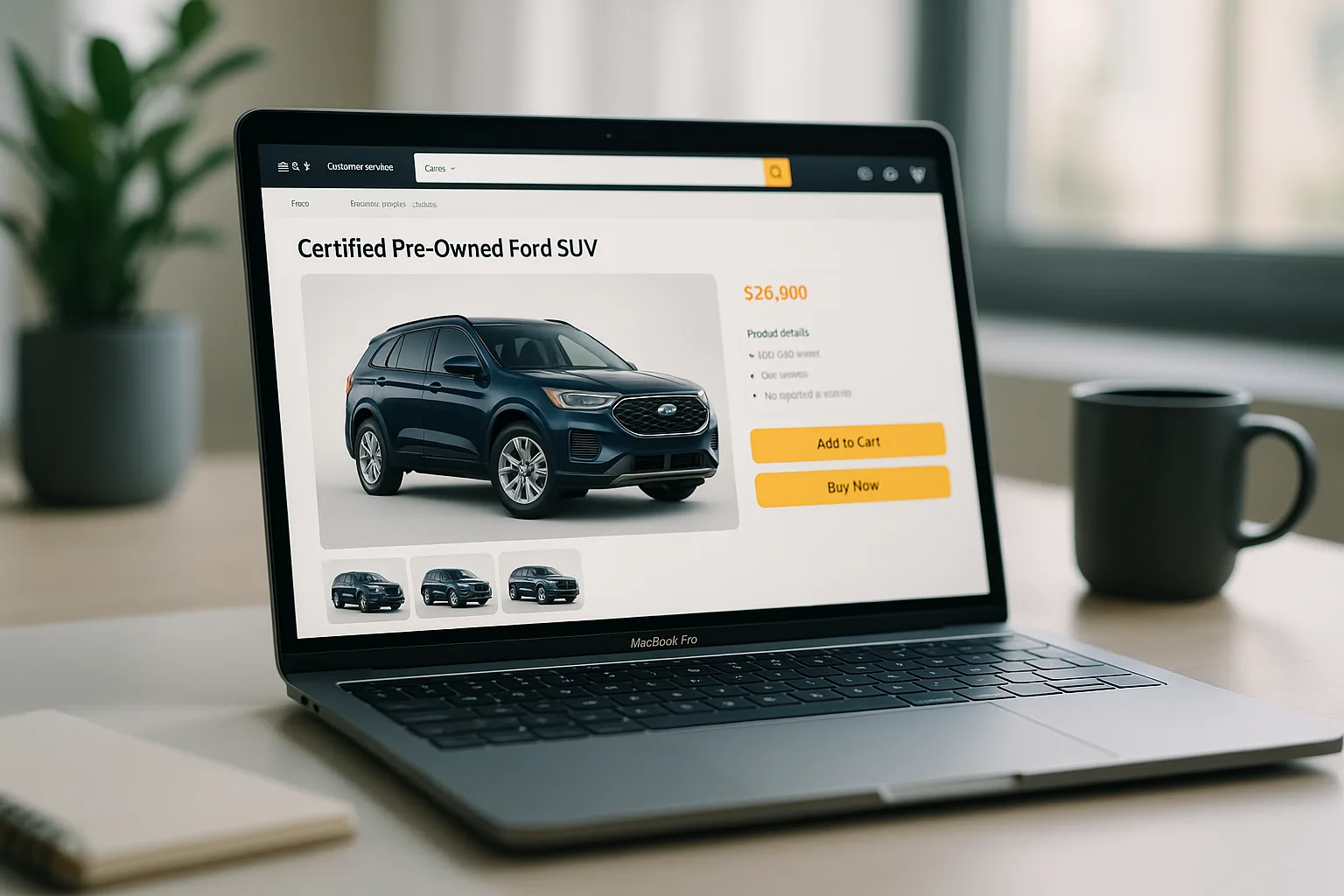
Ford Motor is taking another step into digital retail by allowing consumers to browse and purchase its certified pre-owned vehicles directly on Amazon. The rollout begins Monday and marks the automaker’s first major partnership with the e-commerce giant for used vehicles, expanding a trend that is reshaping how cars are sold in the United States.
The launch puts Ford alongside Hyundai, which became the first automaker to offer new vehicles on Amazon in late 2023. The shift reflects a broader industry push to meet buyers where they already shop and to reduce the friction of traditional dealership experiences.
Where Ford Is Launching the Program
The initiative starts with participating dealers in three major metro areas: Los Angeles, Seattle, and Dallas. Only certified pre-owned vehicles will be listed during the initial phase. These units go through manufacturer-backed inspections and qualify for enhanced warranties, making them more attractive for buyers who want the reliability of new models without the price tag.
Ford and Amazon confirmed that customers will be able to browse each participating dealer’s inventory directly through Amazon’s vehicle marketplace, choose a model, and finalize their purchase online. Delivery is not yet part of the offering; customers must pick up their vehicle from the dealership they select.
Automakers Race Toward a Digital Future
The move highlights a major shift in consumer behavior. More Americans want to avoid the dealership experience, preferring online tools that allow for self-service browsing, transparent pricing, and faster transaction times. Tesla built its entire business on this approach. Ford CEO Jim Farley has openly acknowledged that Tesla’s direct-to-consumer model gives it a significant cost advantage.
However, Ford and General Motors cannot easily adopt the same model because of long-standing franchise laws in most U.S. states that require them to sell through dealership networks. Instead, they are attempting to hybridize the buying experience by offering more digital options while keeping dealers in the loop.
Farley has been pushing hard to simplify Ford’s retail process. Many of the company’s electric vehicle launches already allow buyers to handle nearly every step online. Integrating with Amazon takes that strategy further by meeting shoppers on a platform they already trust.
A Growing Trend Among Global Automakers
Hyundai was the first to sell new vehicles on Amazon, a significant milestone in the industry. The company announced in late 2023 that its upcoming models would be available directly on the platform.
Ford is now the second automaker to tap into Amazon’s enormous retail ecosystem. According to an Amazon Autos spokesperson, more brands are expected to follow as the company expands its automotive marketplace strategy.
So far, 160 to 180 Ford dealers have expressed interest in joining the program, with about 20 preparing to go live. That level of dealer buy-in suggests that franchise networks increasingly see digital retail as a necessity, not a threat.
Why Investors Should Pay Attention
This is not just a consumer story. It is a business model story.
Three major trends are unfolding:
1. Digital retail is compressing costs
Online transactions reduce the need for physical sales staff, streamline inventory management, and cut friction from the purchase process. Tesla already benefits heavily from this structure. Legacy automakers are racing to catch up.
2. Amazon is becoming a meaningful automotive distribution channel
If Amazon can establish itself as the preferred digital showroom for millions of Americans, it gains a foothold in one of the country’s largest consumer markets. That could eventually influence everything from dealer marketing budgets to how automakers structure future sales incentives.
3. Dealers are adapting rather than resisting
Ten years ago dealers pushed back aggressively against digital retail experiments. Now, they are volunteering to participate in Amazon’s marketplace. The shift signals that franchise networks recognize the need to modernize or risk losing younger buyers altogether.
For investors, these dynamics may influence dealership valuations, automotive retail technology stocks, and the competitive landscape between Tesla and traditional automakers.
The Bottom Line
Ford’s move onto Amazon is another sign that online car shopping is transitioning from experiment to expectation. Buyers want convenience. Automakers want lower costs. Dealers want relevance. Amazon wants market share.
This partnership sits at the center of all four forces.
If the pilot cities perform well, expect Ford to expand its online footprint across the United States and expect more automakers to follow. For consumers and investors alike, the digital transformation of vehicle retail is no longer theoretical. It is happening right now.
About Author