
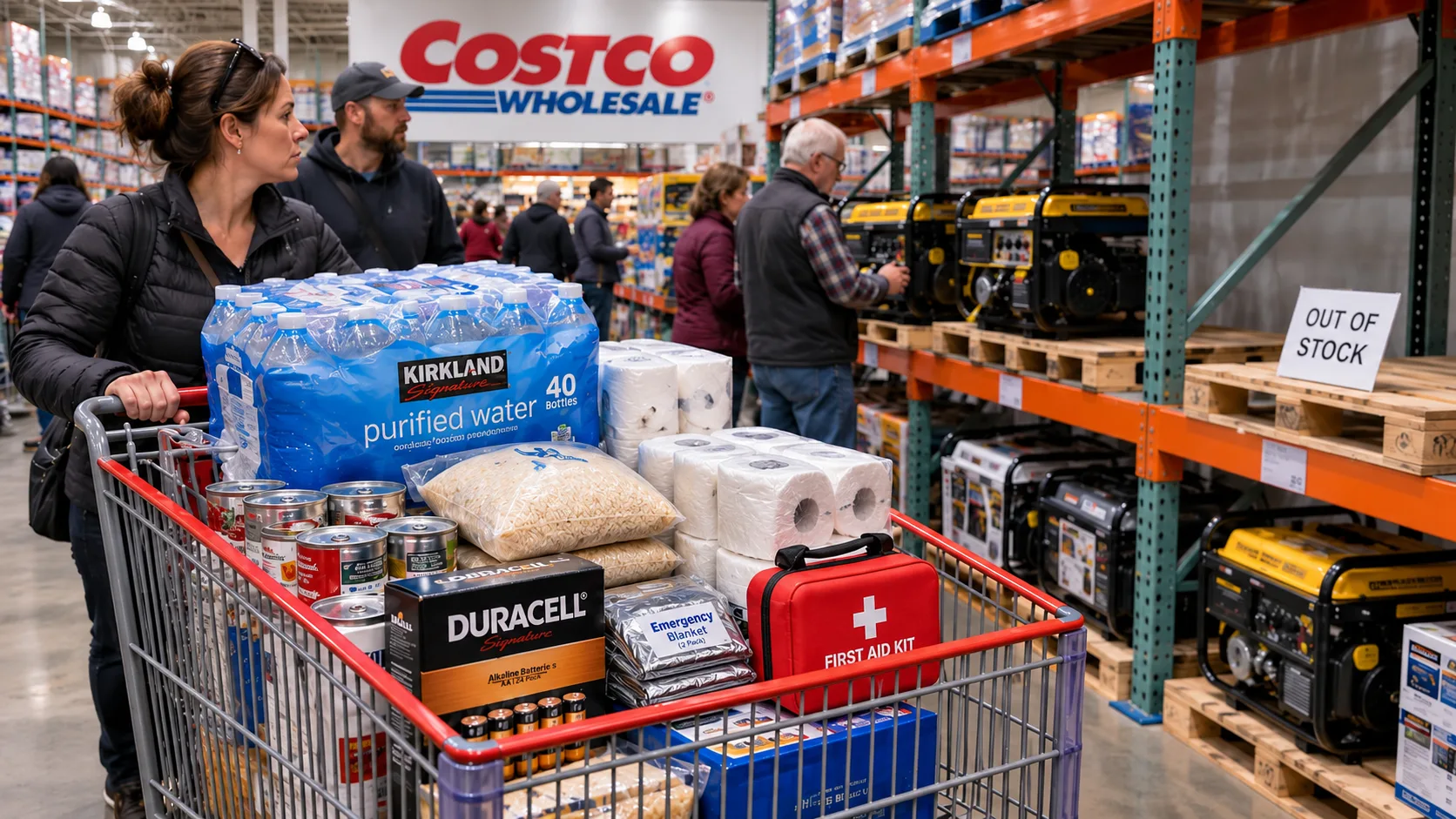
A wave of technology failures across the United States is triggering an unexpected shopping spree, with Americans rushing to stockpile food, water, generators and emergency supplies. Wall Street is taking notice, and one of America’s largest retailers could be a major beneficiary.
Investment firm Mizuho says growing anxiety over disruptions to banking, air travel and communications is already translating into stronger sales at Costco. The firm now expects the retailer’s November performance could exceed Wall Street’s expectations.
The buying activity is also raising a larger question: Are Americans losing confidence in the reliability of the systems they depend on every day?
Costco Sales Surge as Americans Stock Up
According to Mizuho, Costco’s U.S. comparable sales, excluding gasoline, accelerated sharply during the final week of October, reaching an estimated 11% to 12% growth compared with approximately 6% to 7% during the first three weeks.
Costco officially reported an 8.1% increase in October U.S. comparable sales excluding gasoline and foreign-exchange effects, alongside $24.5 billion in total net sales, up 12.6% from a year earlier.
Mizuho believes the stronger buying trend has continued into November, fueled partly by concerns about the stability of essential technology and infrastructure.
One particularly revealing statistic involves emergency generators.
As of Sunday, November 15, 21 of the 26 high-priced generators tracked on Costco’s website were sold out. Some of the unavailable equipment included generators costing thousands of dollars.
The buying extends beyond generators. Costco Chief Financial Officer Gary Millerchip acknowledged increased demand for rice, canned foods, bottled water, paper products, batteries and other emergency supplies toward the end of October.
The company linked some of that activity to concerns circulating on social media.
A String of Outages Is Fueling Consumer Anxiety
The unusual shopping behavior follows a series of technology disruptions affecting some of the country’s most important services.
Microsoft Outlook and Teams experienced outages that interfered with business communications. The Federal Aviation Administration temporarily halted departures nationwide, disrupting airline operations.
JPMorgan Chase experienced software problems that delayed banking transactions, while United Airlines encountered its own operational technology difficulties.
Even the National Security Agency reported a temporary disruption to its communications network.
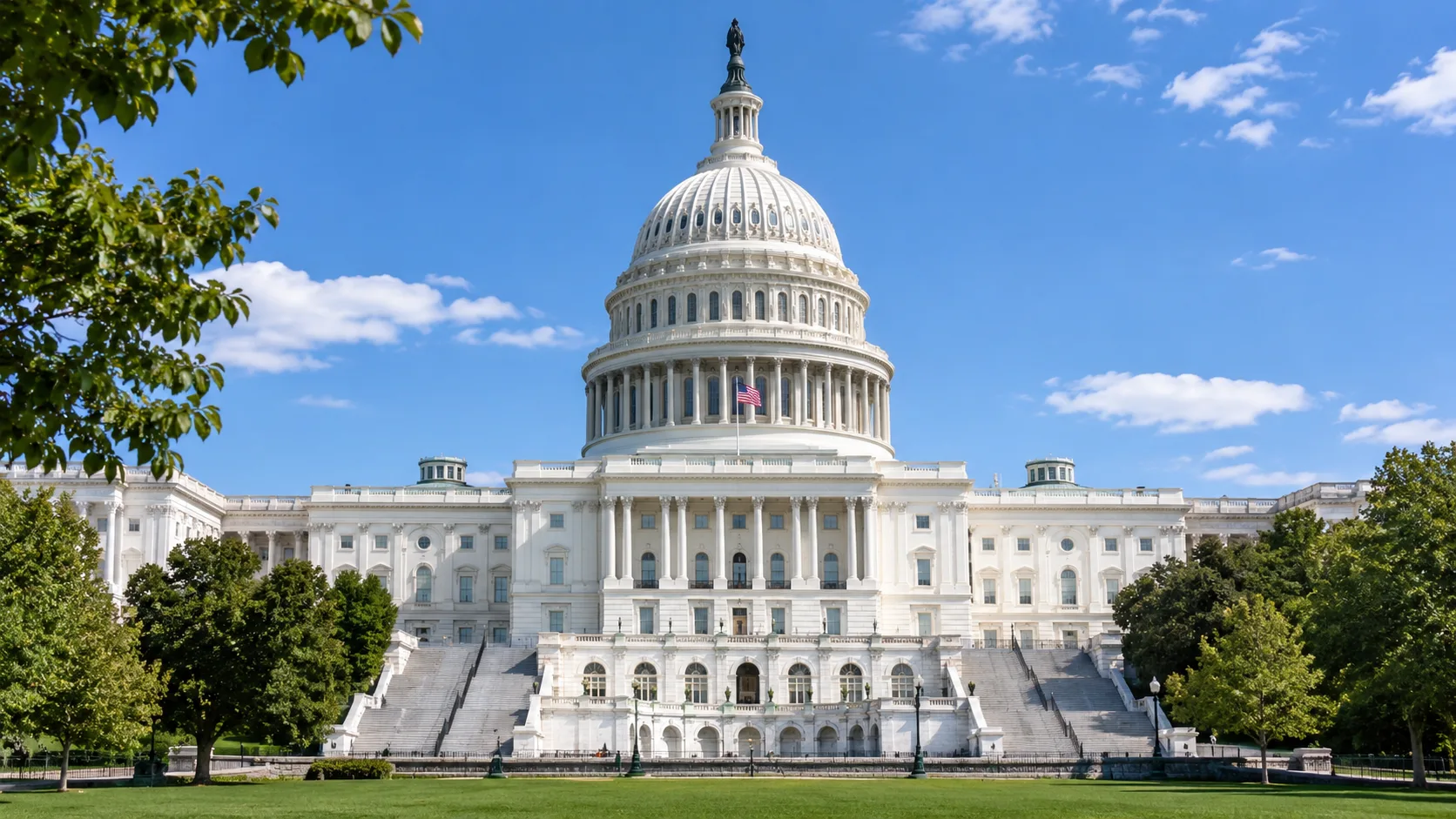
Although the incidents occurred close together, officials have pushed back against speculation that they represent a coordinated attack or broader infrastructure crisis.
Secretary of State Marco Rubio said Wednesday there was no evidence connecting the disruptions, emphasizing that the affected systems experienced separate technical problems.
Still, the explanations have done little to stop speculation online.
Videos encouraging households to prepare for extended outages, banking disruptions and other emergencies have attracted attention across TikTok and other social platforms.
For some consumers, that anxiety is translating directly into purchases.
Wall Street Sees an Unexpected Retail Opportunity
Mizuho analyst David Bellinger believes the shopping surge could meaningfully strengthen Costco’s near-term financial performance.
The firm raised its price target on Costco shares from $1,100 to $1,150 while maintaining its outperform rating.
Mizuho also believes U.S. comparable sales growth could exceed 10% in November, which would represent a meaningful acceleration from October’s already solid results.
For investors, the implications go beyond Costco.
Walmart and Sam’s Club Could Benefit
Walmart and its warehouse subsidiary Sam’s Club are positioned to capture similar demand for bulk groceries, bottled water and household essentials.
Warehouse retailers are particularly well suited to emergency stockpiling because customers can purchase large quantities of supplies during a single shopping trip.
Higher spending on essentials could support near-term revenue growth, although the ultimate benefit depends on whether consumers are increasing their total purchases or simply buying products earlier than planned.
Home Depot and Lowe’s May See Additional Demand
Home improvement retailers could also benefit as households invest in equipment designed to keep homes functioning during emergencies.
Portable generators, battery backups, flashlights, extension cords and other preparedness products represent potential sources of additional spending.
These purchases can carry substantially higher price tags than groceries and household necessities.
However, sustained sales gains would depend on demand remaining elevated after the immediate concerns fade.
The Bigger Story: Fear Is Becoming a Consumer Spending Catalyst
The most interesting development may be what this shopping behavior reveals about American consumers.
Retail spending is traditionally driven by factors such as employment, wages, inflation, consumer confidence and seasonal demand.
Increasingly, perceived risks to everyday infrastructure could become another influence.
When consumers worry about losing access to banking services, electricity, transportation or communications, they may accelerate purchases they would otherwise spread over several months.
That creates an unusual financial dynamic.
Anxiety can temporarily increase retail sales even when overall consumer confidence is weakening.
A family buying a generator, several cases of bottled water and additional groceries may spend hundreds or thousands of dollars more than usual in a single week.
For retailers, that produces an immediate revenue benefit. For economists and investors, however, it raises questions about how much of that spending represents genuinely new demand.
Some purchases are effectively borrowed from the future. A household that stocks up on three months of paper towels today may purchase fewer of them in December and January.
Other purchases, such as a first-time generator, could represent incremental spending that would never have occurred without the perceived threat.
That distinction will matter when investors assess whether the current surge can translate into sustained earnings growth.
Why Costco Could Be Especially Well Positioned
Costco has an advantage that extends beyond its ability to sell emergency supplies.
Its membership-based business model encourages repeat visits, bulk purchasing and long-term customer relationships.
If consumers who rarely visit Costco decide to purchase emergency supplies and subsequently become paying members, the company could gain a longer-lasting benefit.
That possibility may ultimately be more valuable than a temporary increase in sales of bottled water or batteries.
Membership fees generate recurring revenue and help support Costco’s low-price business model.
Higher customer traffic can also lead to purchases in unrelated categories, particularly during the approaching holiday shopping season.
There is also a potential downside for investors.
Costco already commands a premium valuation relative to many traditional retailers. Strong sales growth may therefore be necessary simply to justify expectations embedded in its stock price.
A short-lived spending surge could help quarterly results without materially changing the company’s longer-term earnings outlook.
Two Important Dates for Costco Investors
The next several weeks should provide a clearer picture of whether the unusual demand is continuing.
December 2: November Sales Results
Costco is scheduled to release its November sales figures. Investors will be watching whether U.S. comparable sales approach or exceed the double-digit growth Mizuho anticipates.
A particularly strong result would provide additional evidence that the recent buying activity has affected the company’s broader performance.
December 10: Fiscal First-Quarter Earnings
Costco will report its first-quarter fiscal 2027 financial results.
Beyond revenue and earnings, investors should pay attention to management’s comments about membership growth, shopping frequency and demand for emergency-preparedness products.
A meaningful increase in new memberships could suggest that some of the recent sales momentum has longer-term potential.
Management commentary may also reveal whether buying patterns are normalizing as concerns about technology disruptions subside.
What Investors Should Take Away
Costco’s unexpected sales boost illustrates how quickly consumer behavior can change when confidence in everyday systems is shaken.
The recent disruptions have not been shown to be connected, and government officials have repeatedly rejected suggestions of a coordinated infrastructure crisis.
Nevertheless, consumers are responding to perceived uncertainty by spending money on products that help them feel prepared.
For Costco, Walmart, Home Depot and Lowe’s, that behavior could support stronger-than-expected sales in the coming weeks.
The bigger investment question is whether today’s emergency purchases generate lasting customer relationships or merely pull future sales into the present.
Costco’s December sales report and quarterly earnings should help determine whether this is a temporary shopping frenzy or the beginning of a more durable shift in consumer spending.
About Author