
The Tesla and SpaceX billionaire is distancing himself from Trump’s political movement after a devastating midterm defeat. His sudden change in tone raises questions about his political future, his business empire, and what comes next.
Elon Musk spent more than $400 million trying to keep Republicans in power. Now, after Democrats swept the midterm elections and captured both chambers of Congress, the world’s richest man is expressing regret and making a surprising declaration: “I’m not MAGA.”
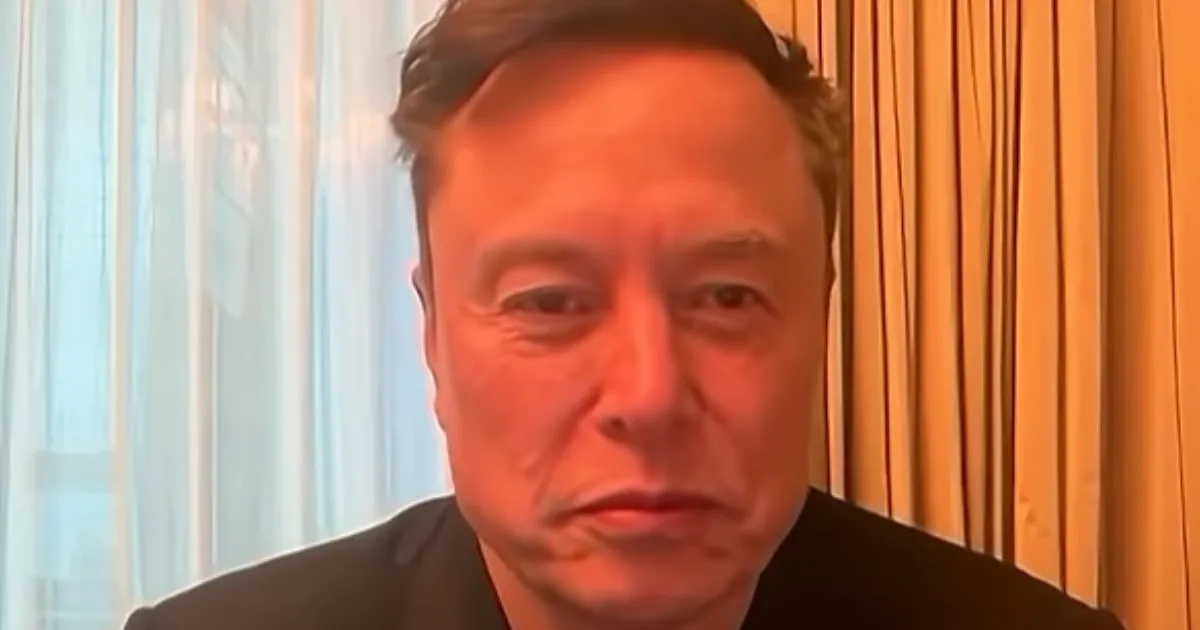
Speaking Wednesday at The New York Times DealBook Summit, the Tesla and SpaceX CEO acknowledged that his unprecedented political spending had produced disappointing results. He also suggested that divided government could benefit the country, a notable shift for someone who had become one of President Donald Trump’s most powerful political allies.
The reversal comes as Musk faces a dramatically different political landscape, including the possibility of congressional investigations into his businesses and his relationship with the Trump administration.
More Than $400 Million Spent, and Little to Show for It
During his November 18 interview with Andrew Ross Sorkin, Musk was unusually candid about his frustration with the 2026 elections.
“I feel pretty foolish about having spent so much money and not seeing much for it, or maybe it would have been much worse without that,” Musk said.
Musk reportedly spent approximately $446 million supporting Republican candidates and political organizations during the midterms, making him one of the largest individual political donors in American history. His primary objective was to preserve Republican control of Congress, particularly the Senate.
Instead, Democrats won control of both the House and Senate, flipping nine Senate seats and securing victories in several states that Republicans had long considered safe. The election results raised serious questions about how much influence even extraordinary political spending can buy.
Texas delivered one of the most striking defeats. Musk poured more than $150 million into supporting Republican Senate candidate Ken Paxton, who ultimately lost to Democrat James Talarico. Democratic gubernatorial candidate Gina Hinojosa also defeated longtime Republican incumbent Greg Abbott.
For a businessman accustomed to measuring investments against their returns, the political results represented an extraordinarily expensive disappointment.
“If I could rewind the clock I would have spent less money,” Musk acknowledged.
He also suggested that the amount of money he spent was far greater than the attention he devoted to the election, explaining that he had been focused on SpaceX projects during much of the campaign.
From ‘Dark MAGA’ to ‘I’m Not MAGA’
Perhaps the most remarkable moment of Musk’s appearance came when he appeared to distance himself from the political movement he had enthusiastically supported just two years earlier.
“I’m not MAGA,” Musk declared.
He went on to question what the movement actually represented, explaining that he did not subscribe to unquestioning loyalty to Republican policies. Musk described himself as politically moderate and suggested that both major parties had strengths and weaknesses.
The comments contrast sharply with his public position during the 2024 presidential campaign. At a Trump rally that year, Musk embraced the president’s movement and famously referred to himself as “dark MAGA.”
He subsequently became a fixture in Trump’s political orbit, attending the president’s inauguration and taking a prominent role in the new administration. Trump entrusted Musk with leading the Department of Government Efficiency, or DOGE, an initiative intended to eliminate government waste and reduce federal spending.
That relationship eventually deteriorated as Musk clashed with administration officials and publicly criticized elements of Trump’s agenda. Although the two later reconciled, their political partnership never fully escaped the controversy surrounding Musk’s government role.
Now, following the Republican defeat, Musk appears interested in redefining where he stands politically. The question is whether this represents a genuine philosophical change, a response to disappointing election results, or an attempt to adapt to a new balance of power in Washington.
Why Musk’s Sudden Political Shift May Be About More Than Elections
There is a significant business dimension to Musk’s comments that investors should consider.
Musk oversees companies whose fortunes are closely tied to federal regulations, government contracts, industrial policy, and relationships with elected officials. From Tesla’s autonomous driving ambitions to SpaceX’s enormous government contracts, decisions made in Washington can have a direct impact on his companies’ financial futures.
That makes his political positioning particularly consequential, especially with Democrats preparing to take control of Congress in January.
1. Tesla Faces a Different Washington
Tesla operates in an industry heavily influenced by decisions involving vehicle safety standards, autonomous driving regulations, energy policy, and manufacturing incentives.
A Democratic-controlled Congress could subject the company and its CEO to closer scrutiny, especially given Musk’s political activity and previous role inside the Trump administration. However, Democratic lawmakers have also historically supported policies that encourage electric vehicle adoption and clean-energy investment.
This creates a complicated political picture for Tesla. A less confrontational relationship with Democrats could potentially ease some of the political pressure surrounding Musk, although there is no guarantee that a change in tone would translate into favorable policy.
For Tesla investors, the important question is whether Musk’s political repositioning reduces distractions and allows management to concentrate more fully on vehicle sales, autonomous driving, robotics, and profitability.
2. SpaceX Has Even More at Stake
SpaceX’s relationship with Washington involves billions of dollars in government business, including NASA programs and defense-related contracts.
The company’s growing involvement in satellite communications, military technology, and space infrastructure makes federal relationships especially important. With Democrats preparing to control Congress in January, oversight of government contracting and potential conflicts of interest could become a greater concern.
Musk’s previous position within the Trump administration adds another layer of complexity because lawmakers may examine whether his government responsibilities overlapped with his private business interests.
Importantly, congressional oversight does not automatically threaten existing contracts. Federal procurement decisions generally involve established processes, and SpaceX’s technical capabilities remain a major competitive advantage.
Still, political uncertainty can create legal expenses, management distractions, and reputational risks that investors should monitor.
3. Political Spending Has Become a Business Risk
Musk’s enormous election spending also highlights a broader issue facing corporate executives who become deeply involved in partisan politics.
Political influence can offer access to policymakers, but highly visible political activity can expose businesses to consumer backlash, regulatory scrutiny, and shifts in public sentiment. For companies whose products are purchased by consumers across the political spectrum, those risks can be particularly significant.
Musk’s experience illustrates how quickly the expected benefits of political relationships can change when voters deliver an unexpected election result.
The challenge for Musk is that his companies operate across industries requiring long-term investments, regulatory approvals, and relationships with government officials whose political affiliations can change every election cycle.
From an investor’s perspective, maintaining political flexibility may be increasingly important as Tesla and SpaceX pursue some of their most ambitious projects.
The Texas Comments May Be the Most Revealing
One of Musk’s most surprising statements involved Democratic Texas Gov.-elect Gina Hinojosa.
Musk has moved major business operations to Texas, including Tesla’s headquarters and important SpaceX facilities. The state’s regulatory environment, infrastructure investments, electricity supply, and tax policies can directly affect his companies.
Given his financial support for Republicans, investors might have expected Musk to express significant concern about a Democratic governor taking office.
Instead, he offered a remarkably positive assessment.
“Everything I’ve heard about her, I think things will be fine in Texas with Gina,” Musk said.
He also suggested that Hinojosa would govern as a moderate rather than pursue an aggressively progressive agenda.
Hinojosa’s victory is historically significant. She will become Texas’ first Democratic governor since Ann Richards and the state’s first Latina governor. Her election followed a campaign emphasizing affordability, public education, and concerns about energy-intensive data centers.
For Musk, maintaining a productive relationship with the state’s next governor could be particularly important as Tesla and SpaceX pursue capital-intensive expansion projects.
There are also potential areas of disagreement. Hinojosa has questioned certain state incentives for major industrial projects and raised concerns about the impact of large technology facilities on electricity costs and infrastructure.
Those issues matter directly to Musk’s expanding operations in Texas, making his conciliatory remarks particularly noteworthy.
His comments suggest he recognizes that the companies’ long-term business interests will require cooperation across party lines, regardless of his personal political preferences.
Musk Now Says Divided Government Could Be Good for America
Another notable departure from Musk’s previous political messaging was his apparent acceptance of divided government.
After spending hundreds of millions of dollars attempting to preserve Republican control of Congress, Musk suggested that sharing power between the parties might actually produce a healthier political environment. He described having some balance of power as a positive development.
For investors, divided government can have mixed implications.
On one hand, it may make sweeping changes to tax legislation, spending programs, and industry regulation more difficult. That can reduce uncertainty for businesses concerned about dramatic shifts in federal policy.
On the other hand, disagreement between Congress and the White House can increase the likelihood of budget standoffs, delayed legislation, and political investigations.
The implications will depend heavily on whether lawmakers pursue bipartisan agreements or use their new majorities primarily to challenge the Trump administration.
For Musk’s companies, the most immediate concern could be the expansion of congressional oversight rather than the passage of new legislation.
A New Congress Could Put Musk Under the Microscope
Musk’s change in tone comes as some Democrats are already discussing investigations into his political influence and relationship with the Trump administration.
Those investigations could potentially examine his work with DOGE, government contracting, and the intersection of his political activities with his business interests. Any formal inquiry could require testimony, documents, and additional scrutiny of decisions involving his companies.
For Musk, this creates a difficult balancing act. He remains closely associated with Trump, but the lawmakers who will soon control congressional committees are increasingly skeptical of his influence.
His efforts to portray himself as politically independent may help reshape his public image. However, congressional investigators are unlikely to abandon potential inquiries simply because Musk has changed his political language.
There is also a possibility that his more moderate positioning will alienate some Republicans without winning over Democrats who remain critical of his political activities.
Arizona Democratic Sen. Ruben Gallego offered a particularly blunt response to Musk’s apparent change of heart, writing on X: “You are still getting a subpoena.”
That reaction demonstrates how difficult it may be for Musk to distance himself from his previous political involvement.
What Investors Should Watch Next
Several developments could determine whether Musk’s political repositioning has meaningful financial consequences.
1. Congressional Investigations Beginning in January
Watch whether Democratic committee leaders formally request documents, schedule hearings, or examine Musk’s government relationships. These actions could create new legal and regulatory risks for Tesla and SpaceX, particularly if investigations focus on federal contracts or Musk’s previous administration role.
2. Tesla’s Regulatory Environment
Autonomous vehicle oversight, EV incentives, and manufacturing policy will be important indicators of whether the new political balance affects Tesla’s growth plans. Investors should pay particular attention to whether federal agencies adopt a more restrictive approach toward self-driving technology.
3. SpaceX Government Contracts
NASA and defense contracting decisions could provide clues about whether political tensions are affecting SpaceX’s federal business relationships. Existing contracts may continue normally, but future awards, oversight hearings, and procurement reviews could become increasingly important.
4. Texas Under Gina Hinojosa
Decisions concerning energy infrastructure, industrial development, tax incentives, and large-scale technology projects could directly influence Musk’s expansion plans. The relationship between the incoming governor and Musk’s companies may offer an early indication of how his new political approach is working.
5. Musk’s Future Political Spending
A substantial reduction in campaign contributions could indicate that Musk intends to redirect more attention and resources toward his companies. Conversely, continued heavy political involvement would raise questions about how much his priorities have actually changed.
Perhaps the biggest signal will be whether Musk follows through on his comments. His statements Wednesday represent a notable departure from his previous political messaging, but whether they lead to a lasting reduction in partisan involvement remains uncertain.
The Bigger Lesson From Musk’s $400 Million Election Bet
Elon Musk has built his reputation on making enormous bets that others consider reckless. Some have produced extraordinary returns, helping transform electric vehicles, commercial spaceflight, and satellite communications.
His latest political gamble delivered a very different result.
After spending more than $400 million attempting to influence the direction of American government, Musk is confronting the limits of what even extraordinary wealth can accomplish at the ballot box.
For investors, his shifting political position carries a potentially important message. The success of Tesla and SpaceX will ultimately depend on their ability to execute ambitious business plans in a regulatory environment that can change dramatically with each election.
Maintaining working relationships with both political parties may prove valuable for companies operating in industries deeply connected to government policy and spending.
Musk’s comments suggest he may be reconsidering the value of intense partisan involvement following a costly election defeat.
The question now is whether his political retreat is temporary or the beginning of a fundamental change in how one of America’s most influential business leaders approaches Washington.
About Author