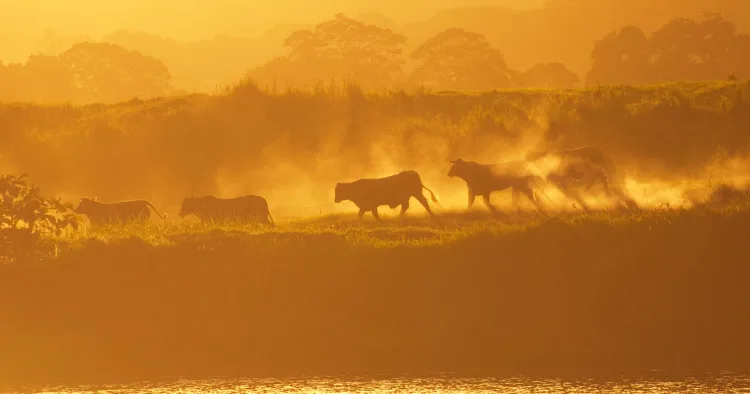
Beef prices in the U.S. have climbed to record levels in 2025, driven by drought-induced herd liquidation, constrained imports, rising input costs, and persistent consumer demand. At the same time, cattle inventories have fallen to their lowest point in more than 70 years. For investors, this is more than a culinary concern, it signals stresses across agricultural commodities, supply chain risks, margin pressures for food companies, and potential inflationary spillover into consumer spending.
What’s Driving the Beef Price Spike?
Let’s start with the raw drivers — supply constraints, cost pressures, and trade distortions — before we layer in macro and investment implications.
1. Historic Herd Reduction
- According to the USDA’s July 2025 Cattle Inventory Report, there were 94.2 million head of cattle and calves in the U.S. as of July 1, 2025. USDA
- But the more striking figure is the longer-term trend: inventories have plunged from peaks of roughly 94–95 million in prior years to levels not seen since 1951 (when the total was estimated at 82.08 million).
- In early 2025, the total inventory of cattle and calves was reported at 86.7 million head, down about 1% year over year. USDA
- The beef cow herd (i.e. cows that have calved) is also shrinking: on January 1, 2025, it was 27.86 million, down 0.5% from the prior year and near multi-decade lows. Cattle Range
Why does this matter? The beef supply is supply-chain constrained: fewer breeding cows now means lower calf production in the future, hampering herd recovery.
2. Drought and Forage Losses
The stock drop is not purely a natural cycle. Ranchers in key grazing states (Texas, Oklahoma, Kansas, Southeast U.S.) have faced multi-year droughts that decimated forage and grassland. As one rancher explained:
“The real issue here is the drought … Texas, Oklahoma, Kansas, the Southeast lost all their grass, all their forage. And when that happens, you’ve got to liquidate cows … We’ve got the lowest cow inventory since 1951, so that’s the cause of this.”
Fox Business
Without adequate grazing, ranchers often choose to cull breeding stock (sell cows and heifers) rather than maintain them, especially when costs are rising elsewhere.
3. Higher Input Costs & Overheads
Ranchers are squeezed by increasing costs for feed, labor, fuel, and equipment. Even as beef prices rise, input inflation eats into profits. In some operations, livestock revenue is the only profitable leg; crop operations may be losing money. As the same Illinois rancher observed:
“The cattle are making money, the crops are going to lose money … we need some support.”
4. Import Constraints & Tariff Barriers
Normally, reduced domestic supply could be offset by imports. But in 2025, live cattle imports from Mexico were suspended (to manage a New World screwworm outbreak). Meanwhile, Brazilian beef faces a 76 % tariff, and other source nations also face trade barriers, limiting foreign supply relief.
These trade obstacles intensify the domestic supply squeeze.
5. Demand Resilience
Despite high meat prices, demand has held firm. In late 2025, ground beef prices were up ~12.8% year over year, roasts +13.6%, and steak +16.6%, compared to only ~3.2% inflation in all food categories.
This strength underscores how deeply embedded beef is in American diets, especially steak and burger cravings. If demand remained elastic, you might expect pullback, but so far consumers are absorbing the shock.
Price Dynamics: How Extreme Is This?
Here’s a quick comparative snapshot:
| Product Segment | 2025 YoY Price Change | Commentary |
|---|---|---|
| Ground beef | +12.8 % Fox Business | Meat demand segment most sensitive |
| Beef roasts | +13.6 % Fox Business | Longer cuts, more supply reliance |
| Steak | +16.6 % Fox Business | Premium cuts feel supply squeeze most |
These gains are far steeper than overall food inflation (~3.2%) and meat inflation (~5.4%). In effect, beef is outpacing most food categories by multiples.
One industry article describes the situation bluntly:
“Beef prices at record highs as droughts leave cattle inventory depleted.” New York Post
The Cattle Cycle & Future Trajectory
To interpret where this might go, we need to revisit the concept of cattle cycles.
The 10-Year Livestock Cycle
Historically, cattle inventories follow cycles of 8–12 years: expansion, peak, liquidation, trough, then rebuilding. Wikipedia In these cycles:
- When supplies swell, prices soften, prompting producers to cull and shrink the herd.
- As inventories fall, scarcity pushes prices upward, eventually encouraging herd rebuilding.
- But because beef cattle take years to mature (2+ years), the lag between signal and supply response is long.
Current Forecasts
USDA economists project inventories will bottom in 2025, then gradually recover toward ~91.6 million head by 2034. Economic Research Service Prices are expected to peak around 2026, before softening through ~2031, and then later rising again.
On the pricing front, the five-area steer price is projected to reach record levels in 2026 before easing back.
That suggests we are entering the final stretch of an extreme price environment before a more benign (though volatile) period.
Why Investors Should Care
This may seem like an agricultural story, but the ripple effects extend into equities, inflation, consumer staples, and commodities. Here’s how this matters to you if you’re managing capital.
A. Consumer Staples & Food Processors
Companies like Tyson Foods, JBS, Pilgrim’s Pride, Hormel, and meatpackers are directly exposed. They may benefit temporarily from pricing power, but input inflation and supply tightness can erode margins or force them to pass cost on (and risk sales drop).
Investors should scrutinize their forward guidance, margins, and hedging policies.
B. Input & Feed Chains
Corn, soy, and feedstock producers benefit from elevated demand (as ranchers need more feed to maintain or rebuild herds). But rising fertilizer, energy, and transportation costs also pinch. For those in ag input sectors, this environment offers both upside and margin risk.
C. Inflation & Consumer Spending
Beef is a visible component of protein inflation. With sustained high prices, food cost pressure could erode discretionary spending in other categories. This amplifies risks for retail, restaurant chains, and consumer cyclical names.
D. Commodity Futures & Hedging
Live cattle futures, feeder cattle, and beef derivatives may benefit from volatility and trend following. Investors in commodity funds, derivatives, or commodity arbitrage strategies must account for this cycle’s extremity.
E. Land, Ranch Real Estate & Agriculture Infrastructure
As supply constraints persist, agricultural land with water access or grazing potential may increase in value. Infrastructure (feed mills, water systems) becomes relatively more valuable.
Risks and Warning Signs
No setup is without caveats. Here are factors that could blunt or reverse bullish bets on the beef complex:
- Rebuilding momentum — If ranchers rapidly retain heifers and reverse the liquidation, supply could rebound faster than expected.
- Weather turnaround — A wet year, improved forage growth, or pasture recovery could alleviate pressure.
- Import policy shifts — If trade or tariff rules ease, foreign beef could flood in and cap U.S. price increases.
- Demand destruction — At some price points, consumers may shift to cheaper proteins or reduce consumption.
- Regulatory or subsidy interference — Government may intervene (e.g. price supports, payments, livestock programs) and distort the natural cycle.
- Input cost collapse — If feed, fuel, or fertilizer costs drop sharply, that could help margin relief.
On the USDA side, they’ve hinted at rebuilding plans but said they won’t offer direct payments to cattle producers. Instead, the program will emphasize opening working lands and risk-mitigation tools. Reuters
Actionable Takeaways & Strategy Ideas
Here’s how investors can act (or at least watch) in this environment.
- Scan for agricultural midstream and input plays
Focus on fertilizer, feed, water management, precision ag tech — those enabling margin leverage from tight supply. - Evaluate meat producers’ hedging strategies
Which processors and brands have locked in input costs, have pricing power, or hold branded differentiation? Those are more insulated. - Consider commodity futures exposure
Live cattle or feeder cattle futures, or commodity funds covering livestock, may capture the upward trend (with risk of reversal). - Hedge consumer inflation risk
If beef drives food inflation, allocate to categories more resilient to consumer squeeze (e.g. discount retail, staples, value brands). - Watch policy and trade developments
Any tariff changes, import relaxations, or support programs will shift the supply outlook materially. Be nimble. - Monitor herd recovery indicators
Key metrics: calf crop size, heifer retention rates, cattle on feed reports, grazing conditions. These will signal the turning points. - Avoid overexposure to long-cycle bets
Herd recovery is long and capital intensive; don’t assume a fast rebound. Position size accordingly.
The Big Picture: Why This Matters Now
We do not often see such a confluence: a 70+ year low in herd size, record beef prices, trade constraints, input inflation, and stubborn demand. This is not just another inflation flare-up. It’s a structural cycle extreme playing out in real time.
For investors, it presents both opportunity and risk. The winners will be those who understand livestock cycles, supply constraints, and the interplay of food inflation with consumer behavior.
If you’re following ag, staples, or macro themes, beef’s burst is a signal: as commodity extremes tighten, second-order impacts (from grocery bills to consumer baskets to corporate margins) cascade through the economy.
About Author